How to Use WhatsApp for NGOs & Non-Profits: A Guide for Boosting Donations & Engagement
Use WhatsApp to keep supporters informed, build relationships with donors, and encourage people to support nonprofit campaigns.
 by Sahil Tyagi
WhatsApp for NGOs refers to using the WhatsApp Business Platform to communicate with donors, manage volunteers, reach beneficiaries, and run fundraising campaigns.
WhatsApp's near 100% open rate is particularly significant for NGOs serving communities in South Asia, Southeast Asia, Africa, and Latin America, where WhatsApp is the dominant digital communication platform. Non-profits see 32% higher conversion rates on WhatsApp broadcasts compared to other digital channels.
The four primary use cases of using WhatsApp for NGOs include fundraising campaigns, volunteer coordination, event registration via WhatsApp Flows, and beneficiary engagement through two-way conversations.
WhatsApp has billions of monthly active users, and in most markets, it isn't just a messaging app. It has become a primary communication channel for entire communities.
Despite this, NGOs and non-profit organizations are still trying to run their outreach through email newsletters and periodic social posts. This communication gap isn't a funding problem or a staffing problem, but a channel problem.
When your supporters are on WhatsApp and you're sending emails, you're not just getting lower open rates, you're also not reaching people where they are.
WhatsApp's close to 100% open rate tells part of the story. NGOs operating in South Asia, Southeast Asia, Africa, and Latin America are increasingly finding that WhatsApp is no longer an alternative channel.
That's why in this guide, I'll walk you through everything your NGO needs to know about using WhatsApp for external communication while also helping you manage beneficiary engagement.
What does using WhatsApp for NGOs mean?
WhatsApp for NGOs refers to the use of WhatsApp's messaging infrastructure, specifically the WhatsApp Business App and the WhatsApp Business API, to communicate with donors, manage volunteers, reach beneficiaries, and run fundraising campaigns. It includes everything from one-on-one supporter conversations to automated broadcast campaigns sent to thousands of opted-in contacts at once.
The distinction between the WhatsApp Business App and the WhatsApp Business API matters significantly for NGOs. The WhatsApp Business App is free, works from a single device, and lets you broadcast to a maximum of 256 contacts at a time. It's suitable for small organizations with a tight-knit supporter base and limited technical resources.
Conversely, WhatsApp Business API is designed for organizations that need to communicate at scale. It supports advanced features like unlimited contact lists, automated messaging, multi-agent team inboxes, chatbot integrations, and analytics.
Accessing the API requires working through a WhatsApp API provider and involves per-message pricing, though costs are typically low for service-category messages.
NGOs that are just getting started, with fewer than 500 active contacts and no immediate plans to scale, will often find the WhatsApp Business App sufficient.
Once your supporter base grows or your campaigns become more frequent, the API becomes the right choice. The jump is worth making before the Business App's limitations start actively limiting your outreach.
Why is WhatsApp suitable for growing NGOs and non-profits?
When it comes to why NGOs are making WhatsApp a core part of their engagement infrastructure, the reasons go well beyond open rates. Here's what makes the channel genuinely useful for social impact work:
You reach people where they are
Most NGOs operate in markets where WhatsApp is the dominant digital communication platform. Rural communities, urban low-income households, first-generation smartphone users, these are the populations NGOs serve, and they're overwhelmingly on WhatsApp.
Email requires literacy, a functional inbox, and the habit of checking it. WhatsApp requires none of those preconditions. A beneficiary in a rural district of Maharashtra or a volunteer coordinator in Lagos is far more likely to respond to a WhatsApp message than an email or a phone call. The platform's 90% penetration in emerging markets reflects a real infrastructure reality.
For NGOs serving communities where traditional outreach channels underperform, switching to WhatsApp means they can meet people on the channel they already use.
Dramatically higher engagement rates
WhatsApp messages get read. This is the single most important channel characteristic for any organization that needs its communications to produce action.
The unusually high open rate for WhatsApp messages, compared to 20 to 30% for email, changes the math on every campaign your NGO runs.
For instance, a fundraising appeal sent to 10,000 opted-in WhatsApp contacts will reach a meaningfully different number of people than the same appeal sent by email. Non-profits see 32% higher conversion rates on WhatsApp broadcasts compared to other digital channels.
Higher open rates mean every message your team sends does more work. That matters especially for organizations with limited staff where each campaign represents real effort.
Two-way communication to build supporter relationships
Donors rarely reply to email newsletters, and when they do, the reply often lands in a monitored inbox with a slow turnaround.
WhatsApp is inherently conversational, so supporters can reply, ask questions, share feedback, or express interest in volunteering from the same message thread.
This two-way dynamic is what separates transactional communication from customer engagement. In your NGO's context, it's what separates a single-time donor from a supporter who stays engaged over years.
When someone can text your organization and get a response within minutes, the relationship feels real. That kind of active two-way communication results in building stronger connections with supporters that sustain long-term commitment.
Cost-effective at scale
Budget constraints are a defining reality for most NGOs. WhatsApp Business API is priced per message. Moreover, if the recipients respond back to you, you can engage them using unlimited free-form messages within the 24-hour service window.
For an organization that might spend thousands on printed materials or physical event logistics to reach 2,000 people, a WhatsApp campaign reaching the same audience for a fraction of the cost is a meaningful operational shift.
To learn more about WhatsApp per-message pricing, check out our blog on WhatsApp pricing changes.
Rich media makes storytelling impactful
WhatsApp supports images, videos, PDFs, voice notes, and clickable buttons within a single message. For NGOs, this means a single WhatsApp message can:
- Carry a photo of a project outcome
- A short video testimonial from a beneficiary
- A link to a donation page
- A quick reply button for someone who wants to volunteer
This matters for fundraising in particular. Impact storytelling is the most effective driver of donor conversion, and WhatsApp lets you deliver that story in a format that's immediate.
For example, a 30-second video of a child receiving a meal or a before-and-after image of a community project lands differently in a WhatsApp message than it does in an email. For non-profits thinking about how to tell their story through the right customer journey map, WhatsApp gives you richer touchpoints at every stage.
How to use WhatsApp for NGOs & non-profits?
Now that you have a solid understanding of why WhatsApp works for social impact organizations, let's take a look at the specific ways to put it into practice. These strategies cover the full range of what NGOs typically need to make the most of outreach engagement:
Set up a WhatsApp Business Profile
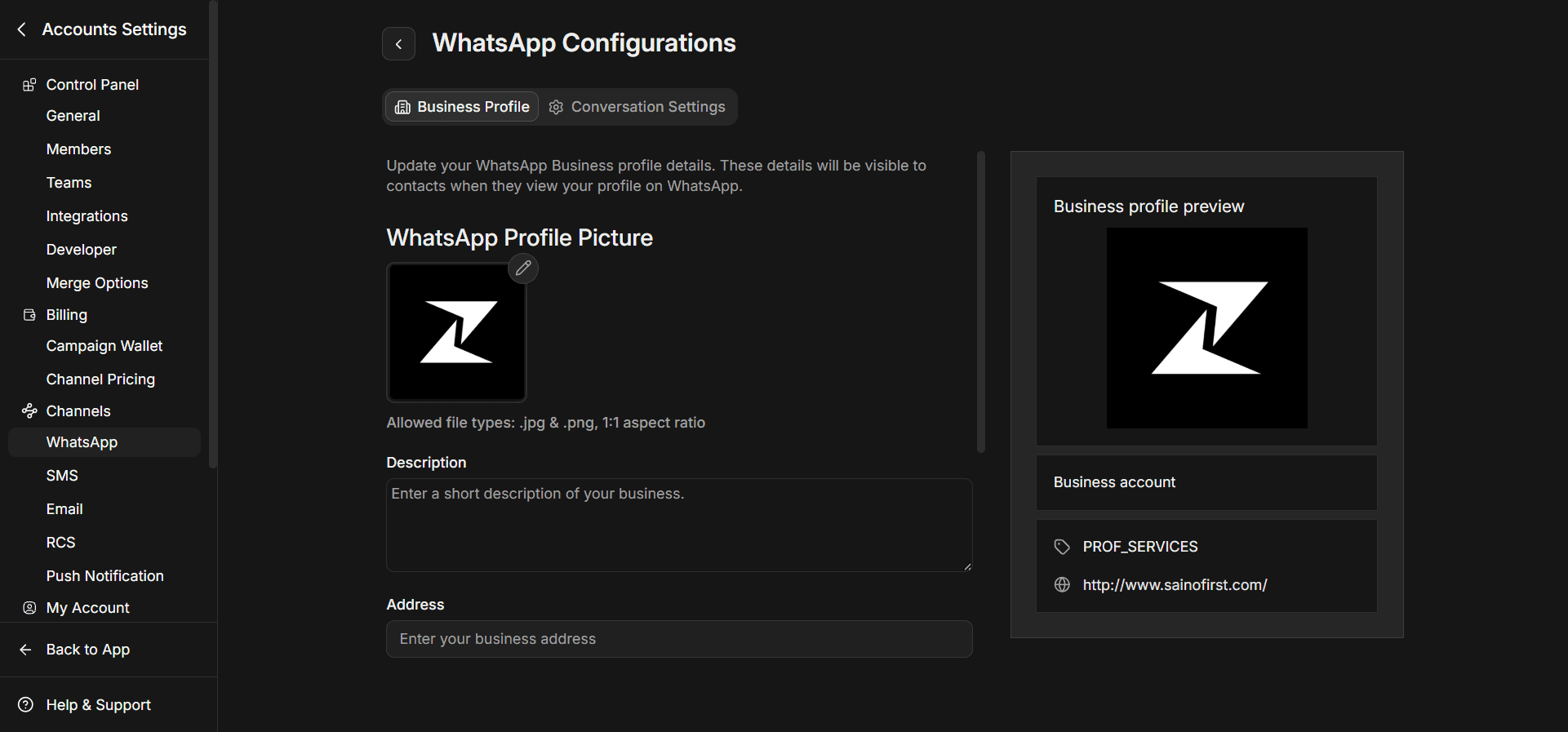
The first step for any NGO using WhatsApp at scale is establishing a business profile that clearly communicates who you are and why supporters should trust you. This is more than an administrative step. It's the credibility layer that determines whether a new contact engages with your messages or reports them as spam.
A WhatsApp Business Profile lets you display your organization's name, logo, description, website, and category. For NGOs, this means a supporter who receives a message from you can immediately verify it's from a legitimate organization rather than an unknown number.
Plus, the green verified badge adds an additional layer of trust that's especially important when your messages include donation links or requests for personal information.
Getting your profile set up correctly starts with choosing the right account type for your current stage. Register your NGO's dedicated phone number through the WhatsApp Business App if you're working with a small contact base and a single team member managing communications.
If you're ready for the API, work with a verified WhatsApp Business Solution Partner, like Zixflow, to get your number registered, set up your business profile, and complete Meta's business verification. This process typically takes a few business days and requires your organization's legal registration documents.
Run fundraising campaigns with a clear goal
Fundraising is where WhatsApp's open rates translate most directly into revenue. When a donation appeal reaches the opted-in supporter base and includes a direct payment link or button.
The mechanics of a WhatsApp fundraising campaign are straightforward. You send a broadcast message to your donor list that includes a compelling impact story and a clear call to action. Because WhatsApp supports images and video natively within the message, you can lead with a photograph or a 30-second video of the impact your organization creates before making the ask.
Time-bound appeals perform particularly well on WhatsApp because the message lands immediately and reads in real time. Pair this with a WhatsApp Pay integration or a payment link embedded directly in the message, and the supporter can complete the donation without leaving the app.
The best practice for structured fundraising on WhatsApp marketing is to run a three-message sequence:
- An awareness message that tells the story and builds context three to five days before your campaign deadline
- A main appeal message with the donation link on the campaign day
- A last reminder with an updated impact count in the final hours
This sequence uses the channel's real-time nature to create momentum rather than relying on a single message to do all the work.
Non-profits that have structured their appeals this way can see higher conversion rates on WhatsApp broadcasts compared to traditional digital outreach, making it one of the highest-ROI activities your fundraising team can run.
Coordinate volunteers without chaotic group chats
Volunteer coordination is one of the most common WhatsApp use cases for NGOs, and also one of the most frequently mismanaged. Using unstructured WhatsApp groups for volunteer communication creates noise and coordination failures that reflect badly on your organization.
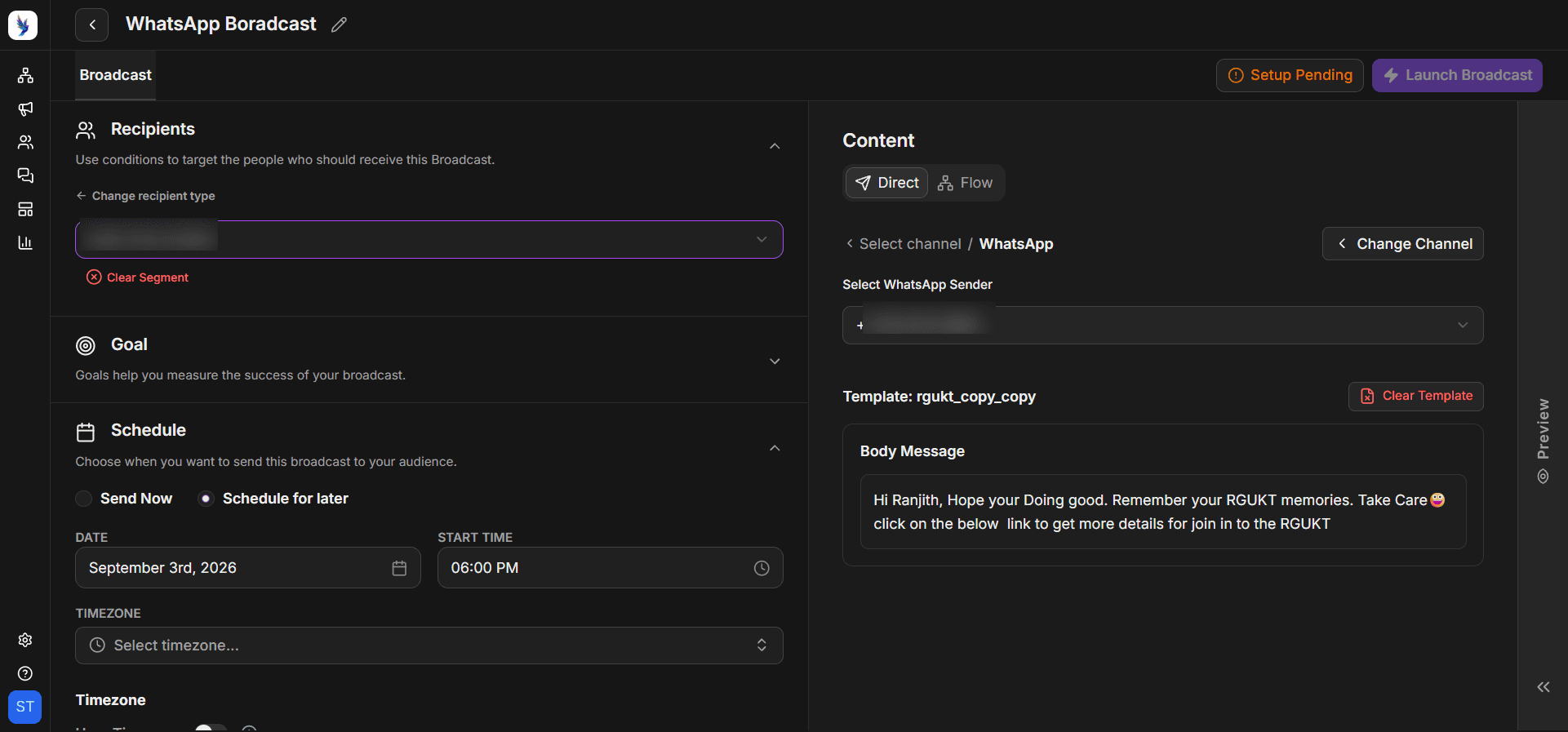
The right approach is to separate your volunteer communication into two distinct layers. The first is broadcast, where the messages go one-way from your organization to volunteers. These should be sent via the WhatsApp Broadcast functionality rather than through group chats, because broadcasts reach each volunteer as an individual message rather than getting buried in group thread noise.
The second layer is genuinely collaborative discussion, which belongs in structured groups with clear moderation rules and a designated group admin.
With the WhatsApp Business API, you can set up automated volunteer reminders that trigger based on the shift schedule. An example of this could be a volunteer who signed up for a Saturday morning distribution drive receives a confirmation message on Thursday, a reminder message Friday evening, and a brief briefing message Saturday morning with the location pin.
This kind of automated sequencing is what WhatsApp marketing automation enables for operational use cases, not just marketing ones.
Manage event registrations through automated flows
Events, whether they're awareness campaigns, fundraising dinners, community programs, or training sessions, represent a significant investment for most NGOs. Getting attendees to show up is as important as getting them to sign up.
WhatsApp is one of the most effective tools for both, because it shortens the registration path and maintains communication with registrants right up to the event.
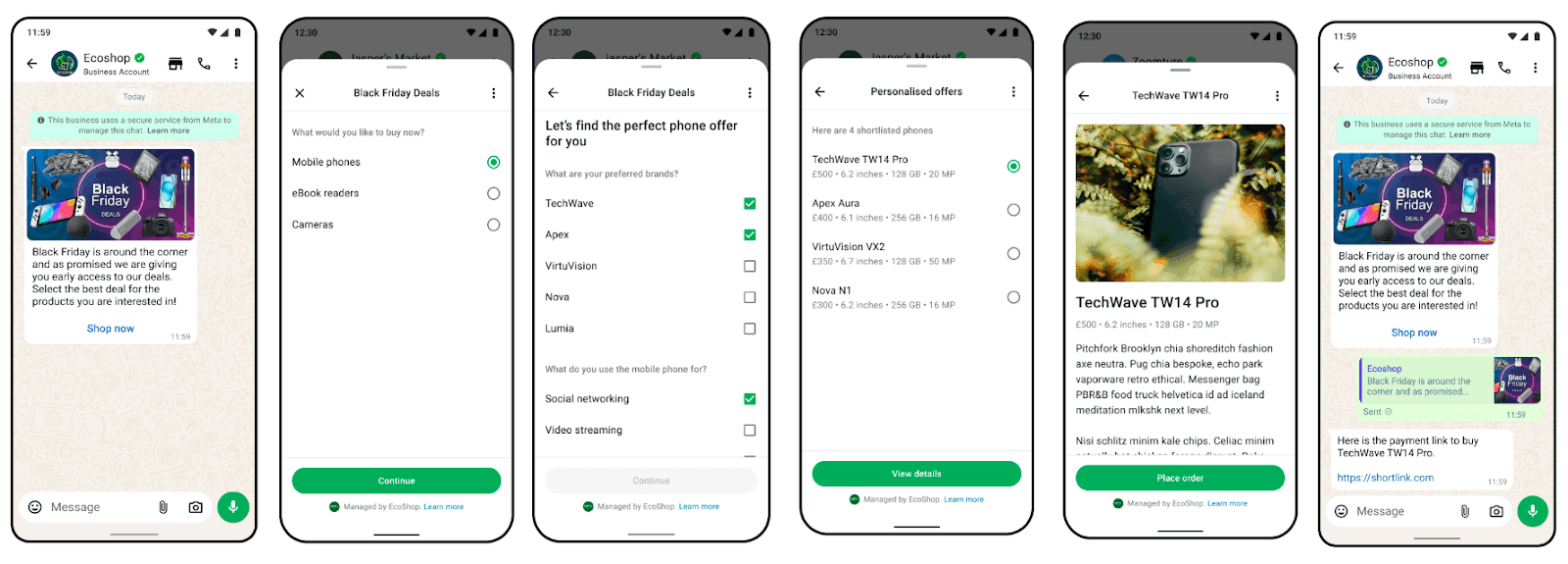
WhatsApp Flows allows you to build interactive in-app forms that registrants fill out without leaving WhatsApp. Instead of asking someone to click through to a registration website, the entire registration happens inside a WhatsApp conversation.
The user taps a button, selects from dropdown options, enters their name and contact number, and receives a confirmation, all within two minutes without switching apps.

Not just that. Attendance drop-off between registration and the event is a persistent challenge for every organization that runs programs. The way to address it is through a structured reminder sequence rather than a single reminder message.
After registration, send a confirmation immediately. Follow up with a detailed information message two days before the event. Send a shorter reminder the morning of the event with the location pin. For large events, you can even send a logistics message one hour before, reminding attendees of entrance gates and session timing.
Ready to make a difference using WhatsApp for your NGO?
This guide has covered the full range of how non-profits and social impact organizations can put WhatsApp to work, from choosing the right account type to running fundraising campaigns with clear donation paths.
The single most important thing to carry forward is that WhatsApp for NGOs isn't about one use case. It's about building a communication infrastructure that works the way your audience actually communicates.
The organizations seeing the most impact from WhatsApp aren't the ones treating it as a broadcast tool. They're the ones using it to build genuine, two-way relationships with donors, volunteers, and the communities they serve.
If you're just starting out, the right first step is simple. Register your organization's dedicated number, set up your business profile, and run a small opt-in campaign through your existing email list or social channels. Trying to build the full automation stack before you have the audience to support it is a common mistake.
For NGOs ready to run WhatsApp at scale, from multi-segment donor broadcasts to automated volunteer reminders to in-app donation flows, Zixflow's WhatsApp infrastructure covers all of it in one platform. You can start a 7-day free trial and see how it fits your organization's communication workflow.
Frequently asked questions about using WhatsApp for NGOs
Can NGOs use WhatsApp for free?
NGOs can use the WhatsApp Business App for free. However, the WhatsApp Business API, which is needed for large-scale broadcasts, is not free. It uses a per-messaging pricing model where you’re charged for every marketing and utility message you send. The 24-hour service window allows you to converse with recipients for free using free-form messages once they have responded to your messages.
How can NGOs use WhatsApp for fundraising?
NGOs can run WhatsApp fundraising campaigns by sending broadcast messages with impact stories, donation links, and clear calls to action to their opted-in donor lists. The most effective approach is a three-message sequence:
- An awareness message a few days before the campaign deadline
- A main appeal with the donation link on campaign day
- A final urgency reminder in the closing hours
WhatsApp Pay or embedded payment links allow donors to complete transactions without leaving the app.
Is WhatsApp secure enough for NGOs to use with beneficiaries?
WhatsApp uses end-to-end encryption for all messages. This means the content of conversations is not accessible to Meta or third parties. For most NGO use cases, including sharing program updates, collecting feedback, and sending appointment reminders, WhatsApp provides a level of security that is appropriate and widely accepted.
Can WhatsApp replace email for NGO donor communication?
WhatsApp should complement email rather than replace it entirely. WhatsApp is superior for time-sensitive appeals. Meanwhile, email remains useful for long-form annual reports and content where the reader needs time to review in detail.
The most effective NGO communication strategies use both channels, with WhatsApp handling high-frequency, high-urgency communication and email handling formal or document-heavy correspondence.
How can NGOs track the performance of WhatsApp campaigns?
Through the WhatsApp Business API, NGOs can track message delivery rate, read rate, link click-through rate for messages containing links, and response rate for campaigns that invite replies. For fundraising campaigns, conversion rate is the most important metric.
Integrating WhatsApp with a donor management system or CRM allows you to tie WhatsApp engagement data back to individual donor profiles and track the full customer engagement lifecycle from first message to recurring donation.