How to Create Customer Journey Maps in 2026?
Create a customer journey map by understanding customer goals, tracking key touchpoints, and identifying areas for improvement that shape buying decisions.
 by Sahil Tyagi
A customer journey map is a visual representation of every step a customer takes when interacting with your brand. It captures not just the sequence of touchpoints but the emotions, questions, and friction points at each stage.
The key difference from a sales funnel: a funnel tracks your internal conversion process; a journey map captures your customer's experience of that process, which rarely looks the same.
A complete map has five components: a research-based customer persona (behavior and intent, not demographics), journey stages (Awareness → Consideration → Decision → Onboarding → Retention → Advocacy), all interaction touchpoints including passive ones like review sites and invoices, emotional states at each touchpoint, and identified pain points. Companies that lead on customer experience achieved more than double the revenue growth of peers between 2016 and 2021, according to McKinsey research.
Most businesses believe they understand their customers. They have the contact data, email open rates, conversion numbers, and support logs. But what they don’t understand is that they don't have a clear picture of what it actually feels like to be their customer, from the moment someone first discovers the brand to the moment they decide to stay or leave.
That gap is exactly what customer journey maps are designed to close.
According to McKinsey research, companies that lead on customer experience achieved more than double the revenue growth of their peers between 2016 and 2021. The difference between experienced leaders and trend followers isn't usually a product gap. It's a gap in how well each business understands and responds to the journey their customers are actually taking.
That's why in this guide, I'll walk you through what customer journey maps are, what they need to include, how to build one from scratch, and the mistakes that make most first attempts less useful than they should be.
What is a customer journey map?
A customer journey map is a visual representation of every step a customer takes when interacting with your brand. It captures not just the sequence of steps but the emotions, questions, friction points, and decisions a customer experiences at each stage of that relationship.
The format can take many forms, such as a spreadsheet, a diagram, a service blueprint, or a dedicated mapping tool. The format matters far less than the completeness and accuracy of what it captures. A customer journey map is only as useful as the quality of the customer insight it's built on.
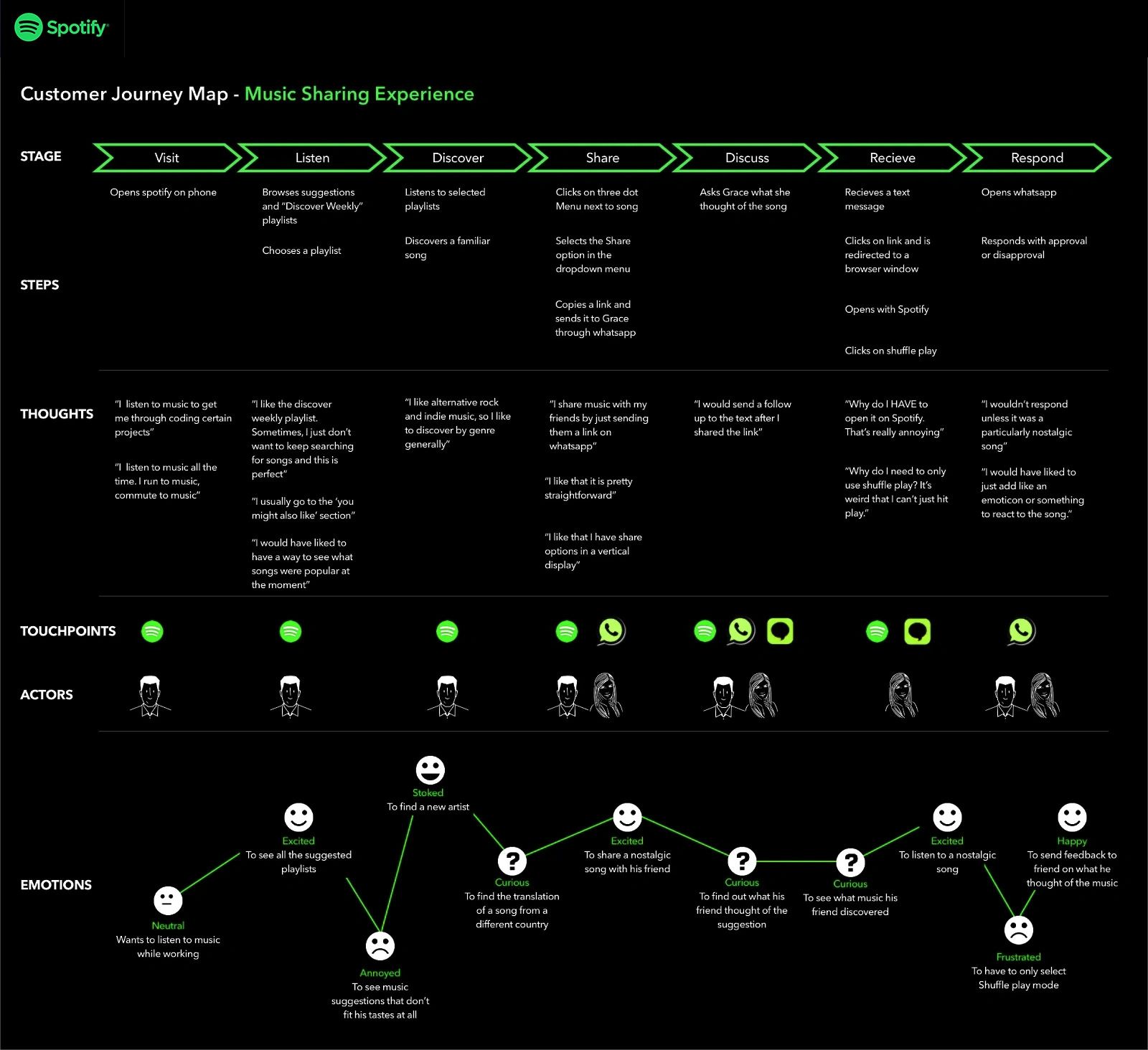
What separates a customer journey map from a standard sales funnel is perspective. A funnel describes your business process. A journey map describes your customer's experience of that process.
These two rarely look the same, and the gap between what your business thinks happens and what your customer actually experiences is where most CX problems live. If you are building a customer lifecycle marketing program, the journey map is the foundation that everything else should be anchored to.
Customer journey map vs. sales funnel: What’s the difference between them?
In simple terms, a sales funnel tracks your internal conversion stages and marketing attribution. It answers questions like Where are we losing customers in our process?
Instead, a customer journey map answers a fundamentally different question, such as 'What is our customer experiencing at each moment, and why are they making the choices they make?'
Both aspects of customer engagement have value, but they serve different purposes. Combining both gives you a complete picture of where growth opportunities exist and what's blocking them. That's the distinction worth holding onto as you move through the rest of this guide.
With that said, here is a table comparing the customer journey map and the sales funnel:
| Aspect | Customer Journey Map | Sales Funnel |
|---|---|---|
| Primary Purpose | Visualizes the complete customer experience across all touchpoints | Tracks how prospects move toward making a purchase |
| Focus | Customer needs, behaviors, emotions, and interactions | Lead progression and conversion stages |
| Perspective | Customer-centric | Business and sales-centric |
| Scope | Covers the entire customer lifecycle, including pre-purchase and post-purchase | Primarily focuses on acquiring and converting leads into customers |
| Goal | Improve customer experience and engagement | Increase conversions and revenue |
| Touchpoints | Includes every interaction across channels such as website, email, social media, support, and in-store | Focuses mainly on marketing and sales interactions |
| Teams Involved | Marketing, sales, customer success, product, and support | Primarily marketing and sales teams |
| Data Used | Behavioral data, feedback, support interactions, and engagement metrics | Lead scoring, campaign performance, and sales pipeline data |
| Post-Purchase Focus | Strong emphasis on onboarding, retention, support, and advocacy | Limited focus after the purchase is completed |
Key components of every customer journey map
A customer journey map that's missing any of its core components tends to lead teams toward incomplete conclusions. Here's what a complete map includes and why each element matters:
Customer persona
Every journey map is built around a specific customer persona. It is a research-based profile representing a distinct segment of your customer base. The persona defines who is taking this journey, including their role, goals, frustrations, buying motivations, and the context in which they're making decisions.
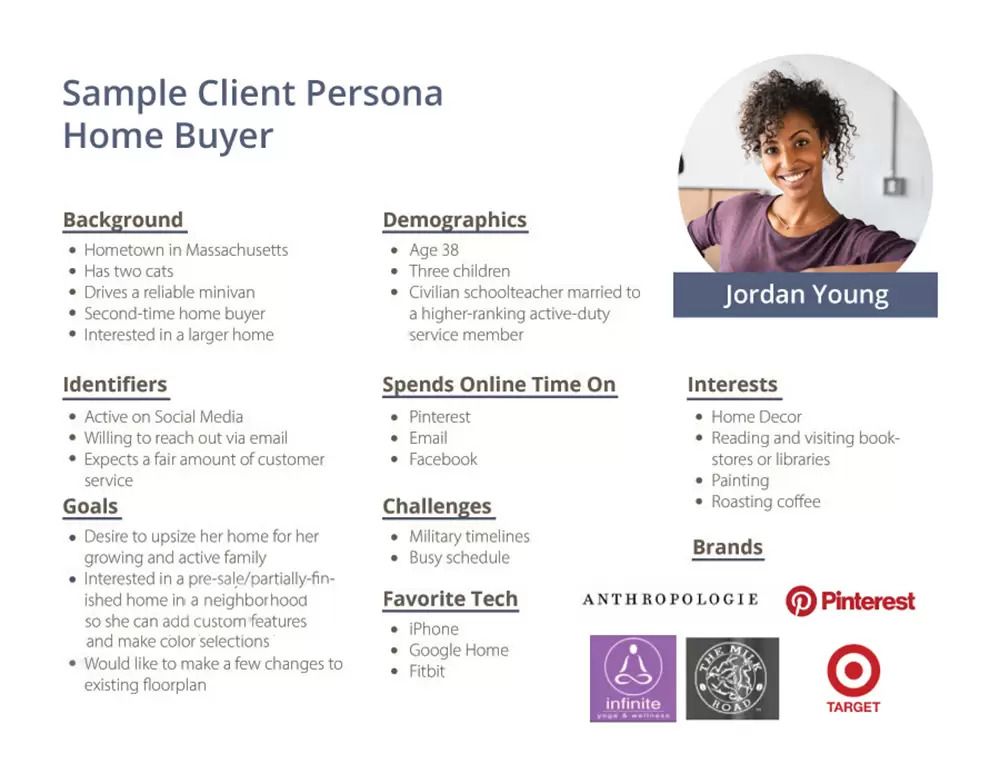
The most common mistake at this stage is confusing a marketing persona with a journey persona. A marketing persona describes demographics. A journey persona describes behavior, intention, and emotional state at each stage of the relationship.
The more precisely the persona is defined, the more useful the map becomes. A map built for 'all customers' actually reflects no customer's actual experience.
Customer journey stages
Journey stages are the high-level phases the customer moves through with your brand. The typical structure covers:
- Awareness (discovering you exist)
- Consideration (evaluating whether you're the right fit)
- Decision (committing to purchase or sign up)
- Onboarding (beginning to use your product or service)
- Retention (getting ongoing value from the relationship)
- Advocacy (recommending you to others)
Not every business needs all six stages, and some will have additional ones specific to their customer engagement model. What matters is that the stages reflect the customer's experience, not your internal process structure.
For example, a customer in the Consideration stage isn't experiencing your lead scoring workflow. They're searching for answers, comparing options, and deciding whether your brand earns their trust. Customer engagement models built around these stages deliver far more relevant messaging than those organized around internal pipeline definitions.
Interaction touchpoints
Touchpoints are points where a customer interacts with your brand. A thorough journey map identifies all of them, not just the ones your marketing team actively manages.
Additionally, your customers don't care which agent they are talking with. They view your brand as a single entity. A frustrating experience with you once doesn't stay with a single department. It colors the customer's entire perception of your company, often retroactively.
Mapping all touchpoints gives you a complete picture of where that friction can emerge, including the touchpoints no team is currently responsible for.
Customer pain points
At each stage or touchpoint, the customer is feeling something. They might feel confused about your pricing, reassured by an onboarding email, frustrated by a support wait time, or unexpectedly delighted by a well-timed check-in. Capturing these emotional states is what transforms a journey map from a process chart into a genuine diagnostic tool.
The more specific the pain point, the more directly actionable the map becomes. For example, post-purchase customer engagement workflows designed around specific post-sale pain points consistently outperform generic follow-up sequences for exactly this reason.
How to create a customer journey map for your business?
With the components clear, let's look at the step-by-step process for actually building a customer journey map. This is the part where most teams either get it right or fall into the traps that make their maps less effective:
Define the scope & the objective
Before building the map, decide what it's for. A customer journey map built to reduce post-purchase churn looks very different from one built to improve trial-to-paid conversion. The objective determines which journey stages you focus on and which touchpoints you prioritize.
Additionally, the scope question is equally important. Don't try to map the entire customer journey in your first attempt. Start with the stage where you're seeing the most friction or the highest drop-off. For example, if onboarding is where customers go quiet, start from there. Or if the consideration stage has a leaky funnel, that's where the map will generate the fastest return.
This level of specificity produces a journey map that leads to specific actions, rather than a sprawling diagram that generates more questions than answers. The more clearly you define the objective before you start, the less time you waste mapping stages that aren't relevant to the problem you're actually trying to solve.
Build your customer persona from actual data
The persona that anchors your journey map should come from real customer data, not guesswork. The most reliable inputs for doing this are customer interviews, support ticket logs, sales call recordings, onboarding survey responses, and behavioral data from your product analytics.
What you're trying to understand is not who your customers are demographically. You're trying to understand what they're trying to achieve and what they can ask in the future. The language customers use in interviews and feedback forms is significantly more valuable than any internal assumption about their intent.
A customer data platform that aggregates behavioral data from multiple sources gives you the quantitative layer to pair with qualitative interview insights. Together, those two inputs produce a persona grounded in data-backed insights. Without the quantitative layer, you risk over-indexing on the opinions of the most vocal customers rather than the typical ones.
Map every touchpoint across the journey
With the customer persona defined, now you have to list every interaction point the customer has with your brand across the journey stages. This means going beyond the touchpoints your team actively manages and including the ones that happen passively.
The most effective way to complete this step is through a cross-functional workshop across all your departments. Bring together reps from marketing, sales, product, support, and billing. Each team owns different touchpoints and holds knowledge that others don’t.
Start by asking a support team member which touchpoints consistently generate frustrated tickets. Similarly, a sales team member knows which objections surface repeatedly in early conversations.
Repeating this activity for all the departments allows you to come up with a more complete and accurate journey map compared to the one that’s built by a single team.
For businesses with WhatsApp-based customer engagement, mapping WhatsApp journeys as a distinct touchpoint layer alongside email and in-product experiences often reveals gaps that would otherwise be invisible when each channel is reviewed separately.
Understand customers’ behavior
With touchpoints figured out, highlight the customer's perspective for every touchpoint. For each touchpoint, the map should capture three things:
- What is the customer doing?
- What are they thinking or asking?
- How are they feeling?
The 'thinking' layer is where most of the diagnostic value lives. For instance, a customer in the Consideration stage is asking, 'Can I trust this company? Will this solve my specific problem? What happens if it doesn't work?'
Mapping these questions explicitly helps teams design content, support resources, and outreach that meet the customer at their actual moment of need.
This layer also reveals where the journey creates positive and negative experiences. Positive moments are worth amplifying, while the negative moments are where targeted intervention reduces churn and increases customer engagement at the moments that matter most.
Note - The highest-impact pain points are usually concentrated at high-stakes moments, like the first product login, the first billing cycle, and the first time a customer needs help.
Validate the customer journey map with real customer feedback
A customer journey map built entirely from internal workshops is just an assumption. The validation step is where you test it against actual customer behavior and feedback. Take the draft map back to your customers and ask them to confirm or change what you've captured.
A reliable validation roadmap can include:
- Presenting the draft customer journey map to five to ten customers and walking through it stage by stage
- Asking where their experience matched the map
- Where their experience differs from your insights, ask what can be done to better tailor that step
You can also pair this with behavioral data, such as session recordings, heatmaps, and support ticket themes, to see whether the pain points the map identifies align with the evidence in your product analytics.
Defining clear success metrics before validation begins matters more than most teams realize. Measuring customer engagement at each mapped stage. Without that baseline, you can't demonstrate whether changes you make after the mapping exercise actually improve the customer journey.
Common customer journey mapping mistakes businesses should avoid
Even well-intentioned customer journey mapping efforts frequently produce maps that don't get used. So to make sure your maps provide you with the desired results, here are some of the mistakes that you should take into account:
Mapping from internal assumptions rather than customer data
The most common customer journey mapping mistake is building the map from internal knowledge without grounding it in actual customer input. Even though internal teams know your processes, they don't reliably know your customers' experience of those processes.
A map built from assumptions will direct improvement efforts toward the wrong touchpoints. For instance, a team might spend significant time improving the checkout flow when the real drop-off is happening earlier, in the onboarding email sequence that never clearly explains what the customer should do next.
Building one customer journey map for all segments
Different customer segments take meaningfully different journeys. A first-time buyer behaves differently from a returning customer. An enterprise buyer has a different evaluation process than an individual subscriber. A customer who came in through a paid ad has different expectations than one who arrived through a referral.
Building a single customer journey map that tries to represent all of them produces an inaccurate representation. Build one map per meaningful persona, starting with the persona that represents your highest revenue or highest churn risk.
A single well-executed map for your most important customer segment will drive more meaningful improvements than a comprehensive map built for five segments simultaneously.
Treating the journey maps as a one-time activity
A journey map built in Q1 reflects the customer experience as it existed in Q1. Every product update, pricing change, new support channel, or acquisition channel shift changes some part of the journey your customers actually take.
Engagement marketing programs that stay anchored to an outdated journey map gradually drift out of alignment with the experience customers are actually having.
Teams that treat journey mapping as an ongoing capability, with scheduled quarterly reviews and a process for updating the map as the business evolves, get compounding value.
Skipping the action-and-owner step
A customer journey map without assigned owners and prioritized actions is simply a decoration. Every pain point the map identifies needs a person responsible for addressing it, along with a deadline. Without these elements, the map creates awareness of problems without generating the accountability to solve them.
Create actionable customer journey maps to drive business growth
Customer journey maps are one of the most practical tools available for understanding and improving the experience you deliver. When done well, they surface the friction your teams don't know about and generate a prioritized list of improvements connected to real business outcomes.
The variable that most reliably determines which outcome you get isn't the tool you use or the format you choose. If you're starting out, pick the one journey stage that's causing the most visible friction right now and build your first map there.
This kind of scoped approach generates faster insights and faster results than trying to map the entire customer relationship in one session. From there, the capability compounds as you add more stages and refine the persona over time.
For teams looking to act on what their customer journey maps reveal, particularly in delivering timely, personalized messages at key journey moments, Zixflow offers a complete customer engagement suite that lets you stay on top of your interactions across every touchpoint.
Want to see how it’s done? Get in touch with our team to see how our platform connects journey data to automated engagement flows.
Frequently asked questions about customer journey maps
What is a customer journey map?
A customer journey map is a visual representation of every step a customer takes when interacting with your brand, from initial awareness through purchase. The goal is to give your team a clear view of the experience you're actually delivering versus the one customers want, so improvements can be targeted where they matter most.
What are the main stages in a customer journey map?
The most commonly used stages are Awareness, Consideration, Decision, Onboarding, Retention, and Advocacy. Not every business uses all six stages. The map should reflect the stages that are meaningful for your specific product and customer type, not a generic framework applied regardless of context.
How is a customer journey map different from a buyer persona?
A buyer persona describes who your customer is by consisting of information like demographics, role, goals, and general motivations.
A customer journey map describes what that persona actually experiences as they move through their relationship with your brand. Personas are an essential input to journey maps, but they're not the same thing. A journey map without a well-defined persona as its foundation lacks the specificity needed to make its findings actionable at the team level.
How long does it take to create a customer journey map?
A focused journey map for a single persona and a defined scope can be completed in one to two weeks if customer interview data is already available. A comprehensive map covering all stages and multiple personas typically takes four to eight weeks.
The timeline shrinks significantly if your team has existing behavioral analytics and qualitative feedback to draw from rather than starting data collection from scratch.
How often should customer journey maps be updated?
Customer journey maps should be reviewed at a minimum every quarter and updated whenever you introduce a significant change.
A map that reflects the customer experience from a year ago won't accurately guide today's improvement decisions. Businesses that get the most from journey mapping treat it as a living document rather than a one-time project.
How do customer journey maps improve customer experience?
Customer journey maps improve CX by making invisible friction visible. A customer journey map gives every team a shared picture of the customer experience across the full relationship. That shared picture enables coordinated improvements rather than siloed optimizations that solve one touchpoint while leaving adjacent friction in place.