How to Build an AI Marketing Strategy that Drive Returns?
Table of Contents
AI is transforming today’s marketing activities by providing brands with smarter insights, greater automation, and more valuable forms of customer relationships.
According to recent studies, it is evident that AI is already in use or undergoing testing by almost nine out of ten marketing teams, whether in the form of personalized content, chatbots, product suggestion engines, or automated content creation.
AI is bridging the gap between data and taking action on it. Those companies that did not begin to develop an AI-based marketing strategy are rapidly losing their positions to those that did.
No wonder, according to a study by McKinsey that explored hundreds of actual applications, marketing was one of the fields in which AI has the greatest potential impact.
With that said, this guide breaks down the ways in which an AI marketing strategy enhances the performance of marketing through the use of better workflows and more efficient decision-making.
What is an AI marketing strategy?
An artificial intelligence marketing strategy is an organized approach that integrates the use of artificial intelligence into your marketing processes in order to analyze data, predict customer behavior, customize messages, and keep on optimizing the marketing campaigns.
Rather than traditional methods, AI-powered marketing operates on technologies such as machine learning, predictive analytics, and behavior modeling as the tools to build smarter and more personalized customer engagement.
It is not simple automation; it is a strategic system where AI potential is connected to business performance and development objectives. An effective AI marketing plan usually consists of four major aspects:
- Consolidated customer information - the basis of sound predictions and information
- Artificial intelligence models - which learn and have the ability to optimize their performance
- An integrated marketing infrastructure - making data and campaigns flow across channels
- Human judgement - to serve as a voice of the brand, comply, and direct decisions based on AI
Want Higher Returns From Your AI Marketing?
Use AI to automate campaigns and focus on actions that improve performance and generate measurable marketing returns.
Innovate with ZixflowWhy does an AI marketing strategy matter?
AI has made its way into the modern marketing landscape as it enables enterprises to automate their processes, make interactions more personalized on a mass scale, and transform data into decisions in a way that no manual process ever could.
The amount and the rate at which the customers are generating information nowadays can only be sustained with the help of AI. Recent research indicates that more than 94 percent of marketers have already implemented AI in at least one aspect of their workflow, and a substantial number of them are already experiencing sales growth at lower marketing expenses.
What is the reason why marketing is quickly becoming AI-based?
Adoption of data-driven outreach
Each customer behavior, such as clicks, purchases, and the way the customer browses, social activity, generates data (in the range of millions of terabytes). However, the vast majority of business organizations are unable to analyze or take action on such data in real-time in a traditional manner.
AI marketing tools are able to handle large volumes of data in a few seconds and reveal insights that are not easily visible. This allows smarter targeting, timing, and more precise forecasting of the next desired product by the customers.
Staying ahead of the competition
The brands that embrace AI are developing more robust insights, providing more specialized customer experiences, and getting more conversions. The ones who do not take a risk of falling behind.
Market leaders in the industry are not merely experimenting with AI, but they are also incorporating it into their fundamental strategies and applying it to make steadily smarter decisions.
Increased marketing efficiency
The marketing teams are being squeezed: the budgets are tightening, the workload is increasing, and consumer demands continue to grow.
AI marketing automation can assist brands in expanding without straining their teams. Be it content creation, customer segmentation, ad optimization, or enhancing email campaigns, AI can perform repetitive tasks so that marketers can work on strategic projects.
Leveraging predictive analysis
AI assists marketers to move away from relying on reactions and focus on predicting. Machine learning would enable businesses to predict demand, detect customer trends, and optimize campaigns as new data is received.
Rather than identifying issues after a campaign fails, AI is able to change targeting, channels, and timing automatically to ensure that your marketing remains effective in real time.
Personalizing outreach messages
Customers these days demand that a brand knows their preferences and can provide them with relevant experiences across all places, including the website, email, advertisements, etc.
AI facilitates behavior-driven real-time customization. It is able to personalize suggestions, communications, and promotions depending on what a customer is currently doing and where they are in the sales pipeline. Such relevance enhances engagement, loyalty, and the overall value of individual customers.
How to craft an AI marketing strategy?
An effective AI-based marketing plan would be based on precise customer information and well-coordinated human teams. Devoid of these pillars, even the most advanced tools will not work to their advantage.
That said, here are the step-by-step ways to create an AI marketing strategy that elevates your outreach to the next level:
Examine your current marketing activities
To begin with, review your marketing and customer engagement strategies that are already in place before adding AI to your existing operations. This assists you in identifying inefficiencies and gaps to improve your performance with the help of machine learning or automation. Audit should focus on areas such as:
- Content creation pipelines
- Targeting and segmentation strategies
- Analytics, campaign reporting, and optimization
- Personalized interactions at touchpoints
- Data storage and collection systems
These insights give you an understanding of the foundation of your marketing efforts and how incorporating AI into the infrastructure can actually drive results.
Take Advantage of a Smarter AI Marketing Workflow.
Manage campaigns journeys and analytics in one place to keep your AI marketing strategy effective.
See Zixflow in ActionBuild a customer data platform
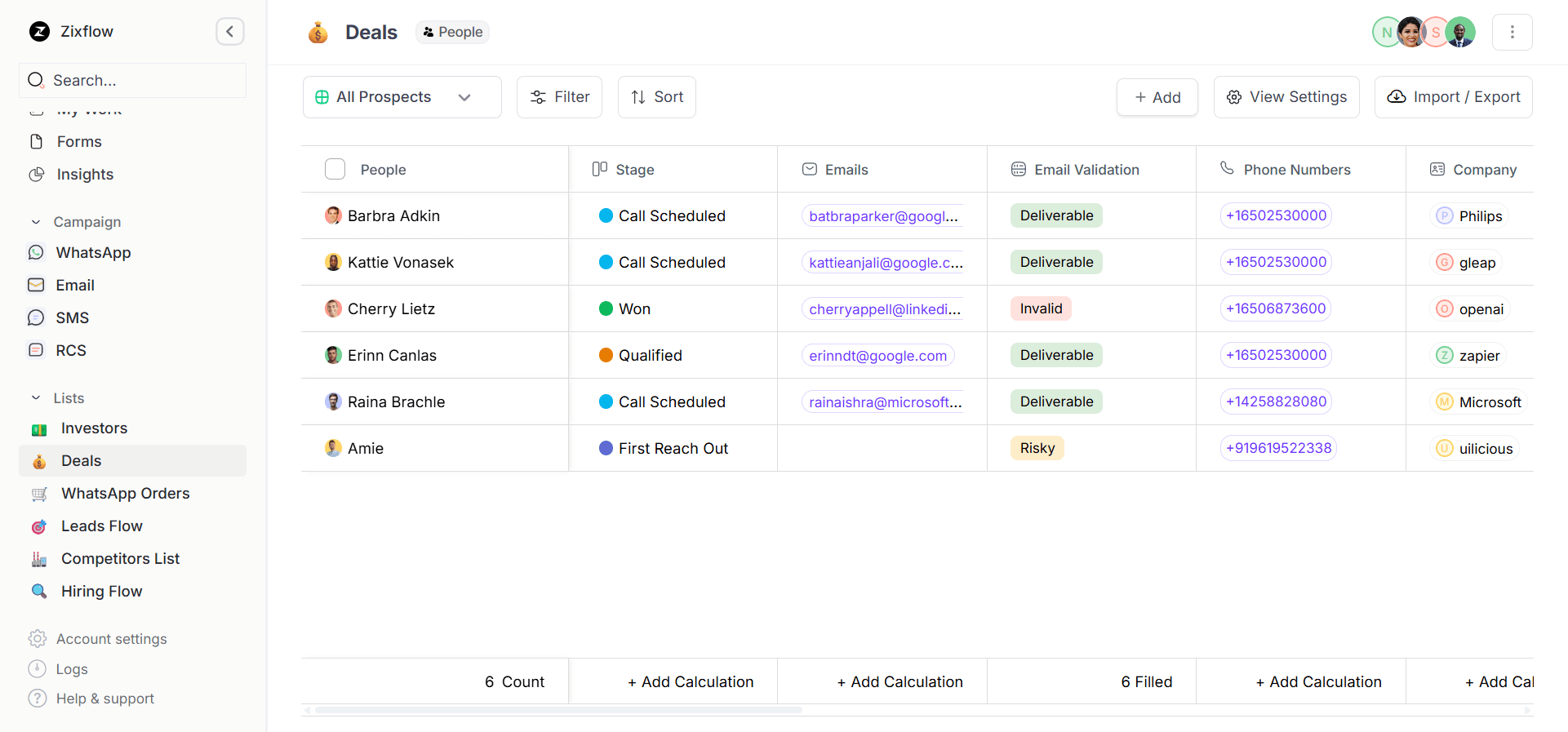
Artificial intelligence can only be as effective as the data it is fed. AI models will produce poor or inaccurate insights if your customer data is siloed, inconsistent, or duplicated across channels.
The solution to that problem is a central data repository, usually supported by Customer Data platforms like Zixflow. According to industry research by VWO, 93% of companies that have adopted CDPs have experienced a reduction in costs for acquiring new customers.
A CDP brings together customer activity, past interactions, and offline behavior to form a single correct identity. Having trustworthy first-party data, the AI systems will be able to make accurate predictions and provide better personalization.
Position AI with your marketing efforts
AI needs to be incorporated into your company’s workflow in such a way that it merges with your marketing objectives, rather than opposing them. The wise use of AI can help your team automate routine procedures and enhance overall performance.
As per McKinsey’s research, firms investing in AI and focusing on well-defined business goals are almost three times more likely to report a high revenue increase in comparison to firms experimenting without a plan.
So, choose the AI marketing tools that best complement your goals. For example, different objectives require specialized tools like:
- Predictive analysis: Pre-empt behavior and purchase patterns to better understand your customers
- Automation systems: Design cross-channel marketing workflows that get triggered automatically based on customer behavior
- Personalization platforms: Real-time recommendation of products or content to visitors for easier conversion
- AI content engines: Generate images, marketing copies, subject lines, and different message versions for A/B testing
Determine beforehand what functions AI ought to be performing. You can set up an AI to score leads or ask the tool to generate creative variations of an image or marketing copy. Also, identify in what areas human intervention is necessary so you don’t lose the human touch in your outreach activities.
Choosing tools according to the funnel gaps that really exist, instead of the ones that you think will work, assists in saving money and easier deployment across numerous customer engagement channels.
Adopt artificial intelligence in stages
Phased implementation will avoid technological overload and promote easier implementation for the marketing teams. Having a step-by-step implementation develops confidence and delivers quantifiable effects from the get-go. You can take a look at the following plan for incorporating AI smoothly:
- Initial stage: Simple tasks phase to use AI in simple tasks such as subject lines, automated responses, and chatbots
- Follow-up stage: Inclusive predictive segmentation and personalized recommendations to customers
- Integration stage: Empower AI-powered journey creation and real-time campaign optimization
In addition to that, gradually train your staff by beginning with AI literacy and involving practical training on particular tools. Make use of AI insights to make informed decisions.
Every stage must build upon the previous one, and this will establish a loop of learning that will keep on advancing your AI marketing strategy, making the adoption process more manageable than a dangerous jump.
Integrating human touch with artificial intelligence
AI must not substitute your team, but work with them to improve your marketing campaigns. Create definite rules as to who does what:
AI is good at writing content drafts, making variations of ads, anticipating the next move, and making personalized content suggestions. While human reps should focus on complex tasks and building a direction for the overall marketing strategy for your business.
Besides that, human marketers should always review and refine AI-generated content since they are familiar with your brand voice, cultural background, and emotional appeal.
On the same note, although chatbots are effective in addressing routine inquiries, complex customer problems should be forwarded to human representatives to offer personalized omnichannel customer engagement promptly.
The trick to maintaining this balance is to draw a line between when AI is useful and when it is imperative to use human judgment. As an example, AI will be able to process customer sentiment and anticipate behavioral patterns, but decisions regarding brand positioning should be made by humans.
Monitoring the effectiveness of AI
It is necessary to continuously measure to determine whether AI is providing real value to your marketing initiatives. For this reason, businesses determine KPIs that indicate improvement, including looking at the positive sites like:
- Conversion rates are increasing
- Boost in AI-enhanced campaigns
- Retention and customer interaction boost
- AI-driven interactions enhancing customer satisfaction
- Minimization of human intervention
Use A/B testing to test your marketing messages, but add machine learning insights to improve your strategy as you progress. There is no aspect of AI in marketing that is ever set and forget, as it is an ongoing process of optimization, where returns are generated in the long term.
The best way to go about this is to begin with just one controlled pilot and test its performance against your baseline data, then scale up once the uplift is confirmed.
Ready to Turn AI Insights Into Real Results?
Launch data driven campaigns faster with improved results without much manual effort or complex setup steps.
Automate with ZixflowTop use cases of an AI marketing strategy
The use of artificial intelligence is transforming the nature of the modern marketing strategy. The ability to support personalized content in automated processes enables AI-powered brands to run smarter campaigns across a ton of channels with ease.
Tailored promotions
With AI, personalized marketing is much more precise as it analyzes the behavior, patterns, and preferences of customers on a large scale. Brands can then personalize offers and experiences to users with AI-intelligent understanding.
Such tools are based on real-time, predictive information to tailor campaigns depending on both the present activities and future forecasts.
Gather useful information with data analysis
The AI-powered analytics enable companies to analyze huge chunks of data and extract insights that can be used to make improved decisions. Predictive models are used to assist marketers to refine their targeting, enhance their campaign performance, seek new opportunities, and maximize their marketing ROI.
AI-powered support chatbots
AI chatbots simplify customer service by processing high-volume and repetitive instructions to provide an immediate response. This enhances responsiveness, minimizes the wait time, and enables human support teams to attend to subtle or intricate enquiries.
A company’s social media interactions can also be improved with the help of many AI tools, which are used to optimize responses for enhanced overall customer experience.
Improve marketing content
Generative AI has changed the process of visual content creation. AI-based design and video applications assist the teams in creating high-quality creatives within a short time without losing brand consistency.
This accelerates content processes and enhances viewer interactions, allowing businesses to facilitate presence on organic and advertising channels.
Leverage an AI marketing strategy to streamline promotional activities
With the increased competition and the need for organizations to achieve greater efficiency, AI is rapidly becoming a core component of modern marketing strategies like WhatsApp marketing or RCS marketing.
Although it should not be confused that the AI is not here to remove the marketers. It is here to enhance what they are capable of accomplishing. The actual question is, will you take advantage of it wisely? Or will you give your competitors an upper hand?
Using AI in a smart way, companies will be able to attract the target audience, automate their routine, and obtain valuable benefits on the market.
And in case your team is going through the same pressures to scale, automate, and innovate, Zixflow can assist in your change. Our platform makes marketing teams smarter so you can create and deliver meaningful customer experiences making buyers become loyal advocates.
Want to see Zixflow in action? Get started for free or schedule a demo today!
Frequently asked questions about AI marketing strategy
Below are some of the frequently asked questions you might have regarding building an AI marketing strategy:
What's the first step in building an AI marketing strategy?
Begin by determining certain pain points in your existing marketing process. Look for repetitive tasks where AI can save time and improve accuracy. It is not necessary to automate everything simultaneously, but it is better to start with 1-2 areas of high impact.
Do I need a big budget to implement AI in marketing?
No. Numerous artificial intelligence marketing tools are cheap or free to use. Begin with available sources of content, such as ChatGPT and Canva AI to design promotional content. Scale up as you see returns.
How do I measure ROI from AI marketing initiatives?
Monitor metrics like time saved, cost per lead, conversion rates, and customer acquisition costs before and after the implementation of AI. Establish specific objectives in the beginning, be it 20% faster content creation or 15% more email open rates.
What types of marketing tasks work best with AI?
AI is very effective in the creation of content, customization of emails, predictive analytical systems, chatbots, advertisement placement, and scheduling on social media. Activities that need human intelligence and emotion, as well as strategy, cannot be performed without a personal touch.
Should I replace my marketing team with AI?
Absolutely not. AI is not a replacement for staff but a complement to them. Automate mundane work with AI to allow your staff to work on building client relationships. Human-AI cooperation is most effective when AI information is put into action using human intelligence.
How long does it take to see returns from AI marketing?
Quick wins, such as automated email replies, can show results in weeks. More complicated implementations like predictive analytics could require 3-6 months. It all depends on your marketing goals and the AI systems you have put in place.
What are the common mistakes when starting with AI marketing?
Here are some of the common mistakes marketers make when adopting AI into their marketing strategy:
- Automating too quickly
- Failing to educate your staff about it
- Not caring about data privacy
- Not checking the output of AI
- Not having a clearly defined plan
Begin small, test and repeat depending on the outcomes.
Sahil Tyagi
I'm a passionate content writer and SEO enthusiast who enjoys turning ideas into helpful articles. When I'm not busy with content, you'll find me enjoying sports or reading about growth strategies.