How to Design a WhatsApp Lead Routing Workflow?
A WhatsApp lead routing workflow helps businesses decide where each incoming lead should go based on information collected during the conversation.
 by Sahil Tyagi
WhatsApp lead routing is the automated process of assigning incoming WhatsApp conversations to the most appropriate reps based on predefined criteria rather than dropping all messages into a shared inbox for anyone to pick up.
A WhatsApp lead routing workflow has five steps: map all entry points, define qualification criteria, build an automated qualification chatbot that collects those signals before any human joins, set routing rules, and configure fallback rules for when the assigned agent is unavailable.
WhatsApp has crossed into a multi-billion monthly active users territory. It has allowed businesses to generate more inbound leads from it than ever. The issue with these leads is not conversion. It's what happens after they arrive.
Most brands rely on whoever is free to pick up the next conversation, which works fine when you're handling ten leads a week but falls apart the moment you're handling a hundred. Without a routing system, response speed and agent fit both suffer at once.
According to WhatsApp's State of Business Messaging report conducted across 11,056 adults in 22 markets, 73.3% of shoppers prefer messaging when communicating with a business.
That preference is driving real inbound volume. So, if you rely on WhatsApp for lead generation, you need a systematic way to handle it. A well-designed WhatsApp lead routing workflow is how you turn that volume into a pipeline.
That's why in this guide, I'll walk you through every step of building a WhatsApp lead, from mapping your entry points to setting response time rules. However, before we dive into creating a WhatsApp lead routing workflow, let’s see what WhatsApp lead routing is.
What is WhatsApp lead routing?
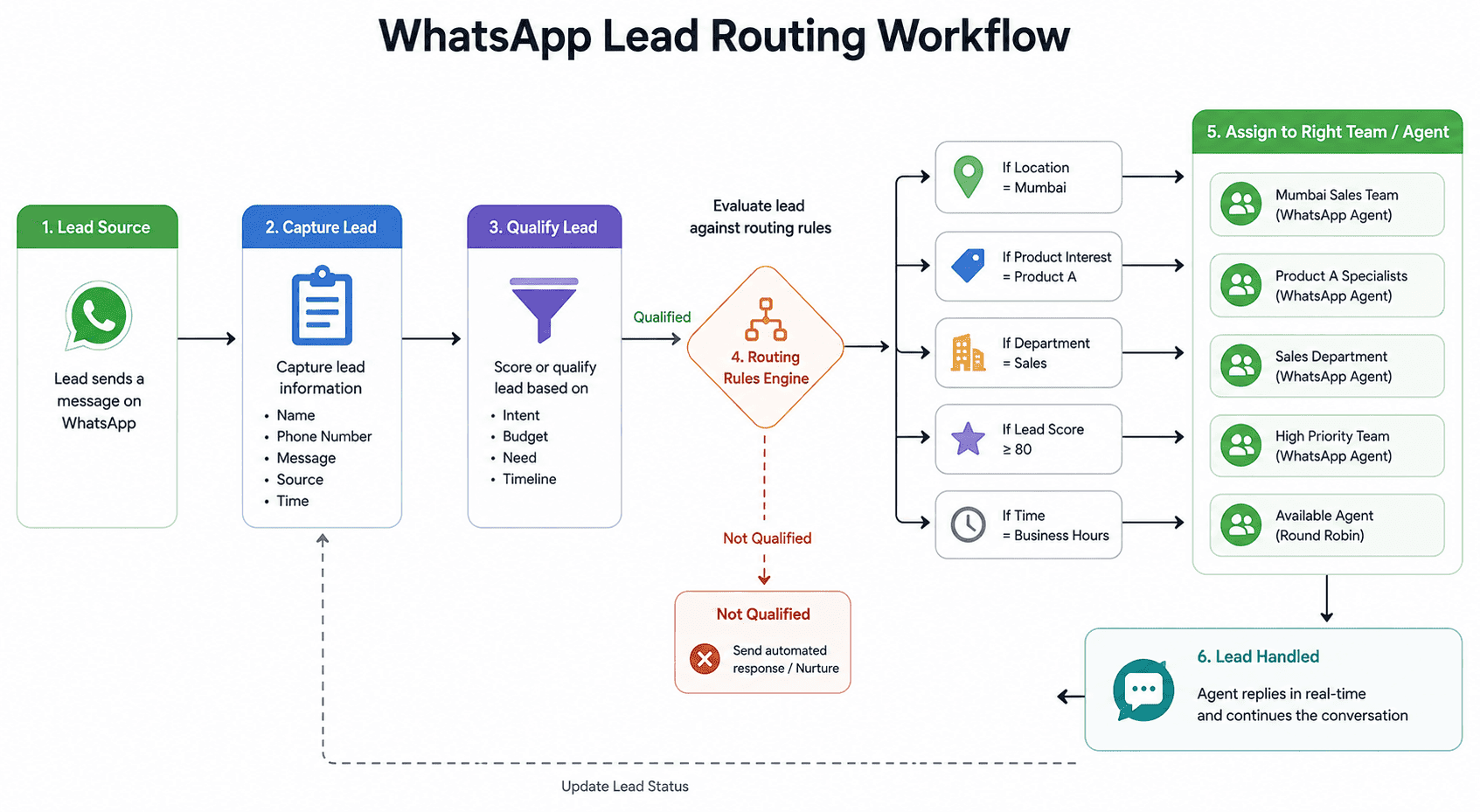
WhatsApp lead routing is the automated process of assigning incoming WhatsApp conversations from potential customers to the most appropriate agents or departments based on predefined criteria.
Those criteria can include lead details like geographic location, product interest, qualification status, conversation language, or the source that brought them to your WhatsApp number. Rather than dropping all inbound messages into an inbox for anyone to pick up, a routing system evaluates each conversation and directs it based on logic you define in advance.
The difference between lead routing and manually tracking incoming WhatsApp leads becomes clear at scale. Without routing, response quality depends on who happens to be online when a message arrives. With routing, a high-value lead from a specific city goes to the right regional rep.
This level of precision is what separates a WhatsApp sales funnel that converts consistently from one that produces sporadic results depending on who picked up the conversation.
Why do you need a WhatsApp lead routing workflow?
Understanding what WhatsApp lead routing workflows are is the first step in building one. But before I walk you through that process, here are some of the advantages of using them to streamline WhatsApp communications for your business:
Faster response times
Speed to first contact is one of the highest-leverage variables in lead conversion. The Lead Response Management Study found that contacting a lead within five minutes increases the probability of qualifying that lead by 21 times compared to waiting 30 minutes.
Without routing, that first contact depends on someone manually scanning the inbox and picking up the right WhatsApp message. Routing removes that manual triage step entirely, so the moment a lead qualifies, the assigned agent is notified.
Right agents interact better
There is a real difference between routing to the next available agent and routing to the best-fit agent. Lead routing done this way means your specialists handle the leads that match their expertise.
For instance, take a real estate business with city-wise sales teams. Routing each WhatsApp lead to the correct city team means every agent is having conversations they are built to close.
That alignment between lead profile and agent expertise consistently produces better outcomes than round-robin assignment, because the agent already understands the market and the objections before the conversation begins.
Automated qualifications save time
Routing without a qualification layer is essentially just random assignment. Your agents spend time on every lead, including the ones who will never convert.
A WhatsApp lead routing workflow should include an automated qualification step before any human picks up the conversation. This means setting up a WhatsApp chatbot that asks 3-4 targeted questions to collect basic information about their needs before rerouting them to your team.
Not just that. When qualification data is collected before routing, your agent starts the conversation with context already in hand. Those details change the quality of the first human interaction and save significant back-and-forth time that would otherwise be spent re-asking questions the chatbot already answered.
Every routing decision generates data
A routing system creates structured data about your lead funnel. Which entry points produce the most qualified leads? Which routing paths have the highest conversion rates? Which agents close fastest for which lead types? Without a routing workflow in place, this data either does not exist or requires significant manual analysis to extract.
With WhatsApp lead routing in place, every assignment leaves a data trail. Over time, that data lets you adjust your qualification criteria and rebalance agent assignments that actually produce revenue. That feedback loop is what turns WhatsApp from a reactive channel into a systematic sales engagement engine.
How to design a WhatsApp lead routing workflow?
With the fundamentals of WhatsApp lead routing out of the way, here is a step-by-step walkthrough of how to design the workflow using Zixflow. Each step builds on the previous one, so work through them in order rather than jumping to the automation pieces before the strategy is in place.
Map every way a lead can enter through WhatsApp
Before you build any routing logic, you need to know where your leads are coming from. Most businesses have between three and six WhatsApp entry points like:
- Click-to-WhatsApp ads on Facebook or Instagram
- A chat button on the website
- A WhatsApp link in email campaigns or SMS
- WhatsApp QR codes at physical locations or events
- Direct contacts where someone gets the number from a referral
Each entry point matters for routing because it tells you something about the lead's intent and context. That source tag becomes one of the first routing signals available before the lead has even responded to a question.
Define what a qualified lead looks like
Routing only works well if there is a clear definition of what it means for a lead to be qualified. This is a step that many brands skip in the rush to set up automation.
Before touching any platform, write down the 3-4 signals that tell you a lead is worth sending to a human. The BANT framework (Budget, Authority, Need, Timeline) is a useful starting point, though most teams adapt it to their specific context.
For example, for a SaaS business, company size, the current tool being used, and the specific problem they are trying to solve are the three most important pieces of information before qualifying a lead. The answers to these questions directly determine the routing conditions.
If you do not define qualification criteria first, you end up building routing logic based on arbitrary variables that do not actually correlate with conversion, and your routing workflow will not improve outcomes even if it improves assignment speed.
Build an automated qualification flow using Zixflow
With your qualification criteria defined, you can build the chatbot flow that collects those signals before any human gets involved. In Zixflow, this is done using the WhatsApp Journeys canvas, which allows you to build a multi-step conversation flow that asks questions, evaluates responses, and updates the lead's profile in AudienceIQ based on what they say.
The design principle to follow here is simple. Begin by asking only what you need for routing decisions, and nothing more. Three to four questions is the right ceiling. Every additional question is a drop-off risk, because leads who feel interrogated will disengage before reaching an agent.
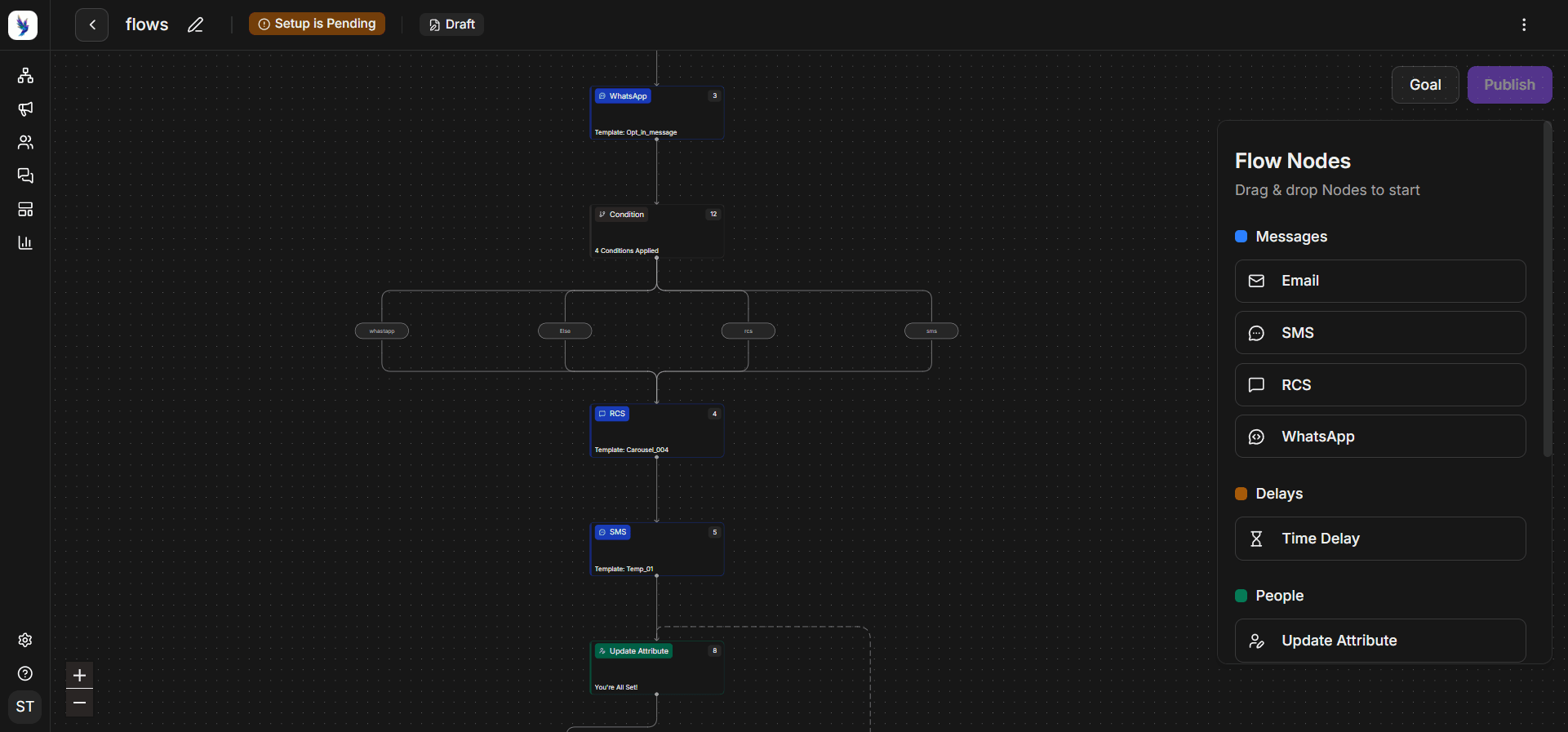
When the flow completes, Zixflow's Journeys evaluates the lead's answers against your qualification criteria and assigns a tier to the contact profile in AudienceIQ. That tier becomes the primary routing signal for everything that follows.
You can also set Zixflow Copilot to build the qualification flow by describing it in plain language. It translates that instruction into a working flow on the canvas, which you review before activating.
Set up routing rules and agent assignment
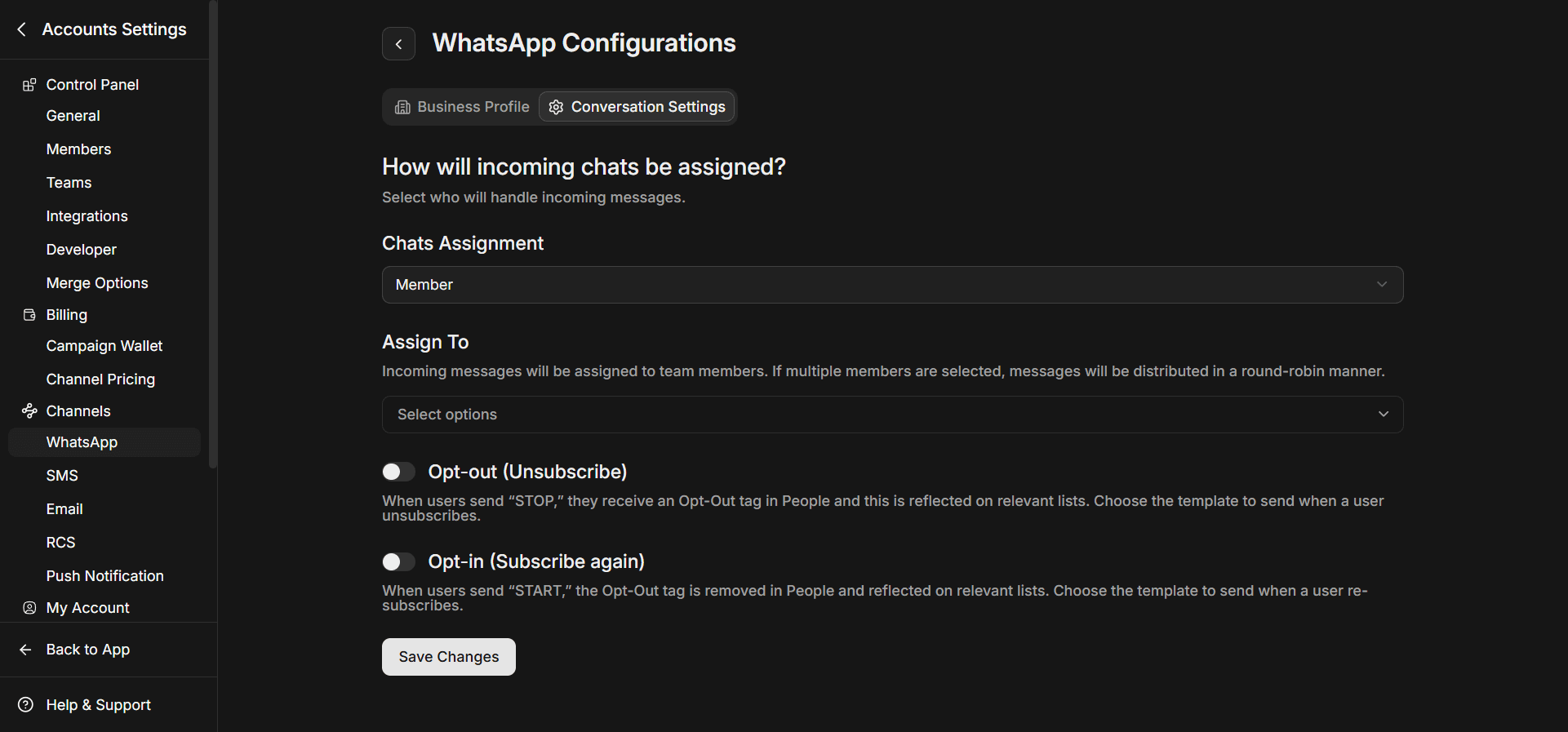
Once the qualification flow has run and tagged the lead, routing takes over. In Zixflow Threads, you define routing conditions based on the contact fields populated by the qualification flow.
Routing conditions in Threads can be layered to match your team's actual structure. You can route incoming conversations to an AI agent or a team member depending on availability.
On top of that, if your team handles multiple languages, you can route by conversation language as well, matching leads to the agent best equipped to respond in the customer's preferred language.
When the human agent picks up, the full conversation history and the lead's AudienceIQ profile are visible in a single view. That context allows the agent to open with a relevant, specific first message rather than asking questions the lead already answered in the qualification flow.
Configure fallback rules
Every routing workflow eventually encounters a situation where the designated agent is busy. Fallback rules determine what happens in each of those scenarios. Without them, leads sit unacknowledged in a queue, which is exactly the problem routing is supposed to prevent.
Set a primary response time target for each routing path. For high-value inbound leads during business hours, five minutes is a realistic and impactful target. For warm leads or off-hours contacts, 30 to 60 minutes is more practical.
In Zixflow, these escalation rules are configured directly within the routing flow, so escalation happens automatically without anyone monitoring a queue manually.
After-hours leads receive an immediate automated acknowledgment, complete the qualification chatbot if they have not already, and are queued for the appropriate agent at the start of the next business day. The timer for those leads starts when the agent's working hours begin, not when the message originally arrived.
Build your WhatsApp lead routing workflow for effective lead management
WhatsApp lead routing is a conversion infrastructure decision that needs to be implemented before you end up losing them. Each step is designed to ensure that the right lead reaches the right person at the right time.
The single most important thing to get right is the qualification layer before routing. Companies that skip this step end up routing noise to their best agents, which creates frustration and a false impression that WhatsApp leads are low quality.
So, start small with one entry point and one qualification flow. Get that working before adding complexity. Most teams that implement even a basic WhatsApp lead routing structure see results within the first few weeks, because any systematic approach is significantly better than a shared inbox with no assignment logic.
For teams that want to build this without stitching together multiple tools, Zixflow's Threads, Journeys, and AudienceIQ handle the full WhatsApp lead routing workflow in one place. You can start a free trial and configure your first routing flow in a matter of hours, using real lead data from your existing WhatsApp number.
Frequently asked questions about WhatsApp lead routing
What is WhatsApp lead routing?
WhatsApp lead routing is the automated process of distributing incoming WhatsApp conversations from potential customers to the appropriate sales agents based on predefined criteria such as location, product interest, qualification status, or deal size.
How do I automatically route WhatsApp leads to different sales agents?
To automatically route WhatsApp leads, you need a platform that supports conditional routing logic connected to a WhatsApp Business API inbox. The process involves setting up a qualification chatbot to collect lead data, defining routing conditions based on that data, and configuring agent assignment rules that execute automatically when a conversation meets each condition.
Can I route WhatsApp leads based on location or language?
Yes. Any data collected during the qualification chatbot flow can be used as a routing condition. You collect the relevant field during the qualification conversation, store it as a contact attribute, and use that attribute as the routing condition to assign the conversation to the right regional or multilingual agent. WhatsApp lead nurturing sequences can also be customized by language once the initial routing has been set up.
How many qualification questions should I ask before routing a WhatsApp lead?
Three to four questions is the practical ceiling for WhatsApp lead qualification. Every additional question increases drop-off risk, because leads who feel interrogated will disengage before reaching an agent.
How do I measure whether my WhatsApp lead routing workflow is working?
The core metrics for WhatsApp lead routing are: average time-to-first-response by routing path, conversion rate by routing condition, and qualification accuracy. Track these over rolling 30-day windows and compare routing paths against each other.
When a routing path consistently underperforms, it is usually a signal that either the qualification criteria or the agent assignment for that segment needs adjustment.
What is the difference between WhatsApp lead routing and conversational commerce?
WhatsApp lead routing is specifically about distributing inbound leads to the right agent or team for follow-up and conversion. Conversational commerce is a broader concept that covers completing transactions and driving purchases directly within a WhatsApp conversation.
The two often work together, as lead routing handles the top of the funnel, while conversational commerce handles the purchase and post-purchase experience.