How to Use WhatsApp for Your Product Launches in 2026?
WhatsApp can support a product launch by helping businesses create awareness and keep potential buyers engaged before launch day.
 by Sahil Tyagi
A WhatsApp product launch campaign is a structured multi-phase message sequence that involves:
- Pre-launch - Building waitlists and teaser campaigns
- Launch day - Broadcast announcements and automated inquiry handling
- Post-launch - Re-engagement sequences
The operational steps to use WhatsApp for product launches are:
- Creating a dedicated opt-in waitlist before launch
- Sending a teaser sequence to existing customers 1–2 weeks out
- Running Click-to-WhatsApp Ads to capture new audiences
- Broadcasting tailored launch announcements to each segment on launch day
- Automating replies to common launch-day questions
- Managing post-launch sequences for cross-sell follow-ups
Most product launches still rely on email as the primary campaign channel, despite email open rates hovering around 20% across the industry. WhatsApp, by contrast, is opened by 95 to 98% of recipients and gets read within minutes of delivery.
If your next product launch depends on getting a message in front of your audience at the right moment, the channel you choose matters as much as the message itself.
WhatsApp has crossed 3 billion active users globally, and the shift toward messaging as a commercial channel is accelerating. For product marketers, that number changes the meaning of WhatsApp from a nice-to-have channel to a core part of your launch playbook.
With that said, in this guide, I’ll tell you how to use WhatsApp for a product launch by going over the full funnel from pre-launch waitlists and teaser campaigns through to launch-day broadcasts.
So, let’s jump straight into it!
What does a WhatsApp product launch campaign look like?
A WhatsApp product launch campaign is a structured sequence of messages that moves your audience through three phases:
- Building anticipation before the launch
- Capturing attention and driving action on launch day
- Maintaining momentum through post-launch engagement
Unlike a single WhatsApp Broadcast message, it is a coordinated campaign with multiple touchpoints, each designed to advance the audience one step closer to a purchase or conversion.
The infrastructure behind it differs significantly from the WhatsApp Business App most businesses associate with the platform. A launch campaign at a large scale requires the WhatsApp Business API, which gives you access to pre-approved message templates, automation flows, segmented audience lists, and delivery analytics.
Why should you use WhatsApp for your product launch campaigns?
There are many channels out there that give you reach or engagement, but oftentimes not together. WhatsApp delivers both simultaneously, which is why it has a structural advantage for product launches where timing and attention matter at once.
Near-instant reach
A product launch has a window. Whether it is a 24-hour flash event or a new collection drop, the timing is intentional and urgency is real. WhatsApp is built for exactly this kind of time-sensitive communication.
Messages land in a personal inbox that users check more frequently than email. Most WhatsApp messages are read within five minutes of delivery, compared to email opens that often stretch hours or days.
For launches where the offer is time-sensitive, this speed of reach translates directly into conversion. The audience that sees your message in the first hour of a launch behaves very differently from the audience that sees it 36 hours later, when urgency has faded, and the strongest buyers have already converted.
WhatsApp opens two-way conversations
Unlike email or push notifications, WhatsApp is a conversational medium. When a customer receives your launch announcement and wants to know more, they can reply directly. That two-way dynamic changes the nature of the launch experience, especially for higher-consideration purchases where buyers have questions before they commit.
At scale, this is managed through automated response flows that handle the most common launch-day questions. The answers are automated, but the experience feels personal because it happens within an ongoing WhatsApp conversation.
This is one of the clearest competitive advantages of building your launch day campaign strategy around WhatsApp’s conversational touchpoints rather than broadcast-only campaigns.
WhatsApp lets you build anticipation before the launch day
The most effective product launches are not single events, but sequences. WhatsApp supports this multi-step structure naturally because contacts who have opted in already have a relationship with your brand. A well-designed pre-launch WhatsApp sequence creates a sense of momentum and exclusivity that makes launch-day engagement significantly higher.
This is especially true for existing customers who already trust your brand. Sending them a first-look teaser or early access offer via WhatsApp signals that they are valued, which increases their likelihood of acting on the launch-day message.
Most WhatsApp marketing campaign ideas around launches work best when they are seeded one to two weeks before the launch date rather than sent in isolation on the day itself.
Click-to-WhatsApp Ads amplify product launch reach
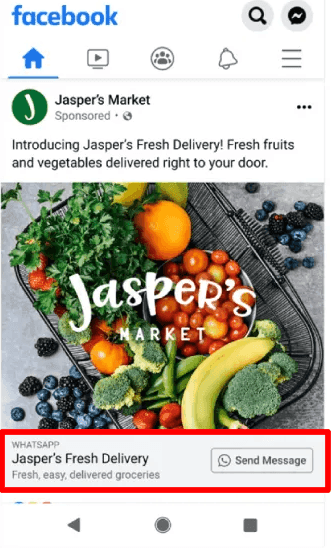
If you are looking to reach beyond your existing contact list, Click-to-WhatsApp Ads allow potential customers to start a WhatsApp conversation directly from an ad they saw on Instagram.
The contact is immediately in a conversation with your brand, without a landing page in the way, which reduces friction and improves conversion at the top of the funnel.
This format is particularly powerful for product launches because the ad creative can feature the new product, and the WhatsApp conversation that follows can capture the lead's interest before the launch date. By the launch, you have a warm audience in your WhatsApp inbox, ready to receive the launch broadcast.
How to use WhatsApp for your product launch?
A WhatsApp product launch unfolds across three natural phases: pre-launch (building your audience and creating anticipation), launch day (announcing and converting), and post-launch (sustaining momentum and deepening engagement). The seven steps below map to these phases in order. Each one is a distinct campaign action, and together they form a complete launch sequence rather than a one-off broadcast.
Build a WhatsApp waitlist before the launch
The single highest-leverage thing you can do before a product launch on WhatsApp is build a dedicated opt-in list of people who have specifically expressed interest in the upcoming product. This gives you a pre-qualified audience on launch day rather than broadcasting to your general contact list.
Build your waitlist by adding a WhatsApp opt-in CTA to your pre-launch landing page, your email campaigns, and your social media posts. The CTA should be specific to the product: "Join the WhatsApp list for early access to our [product name]" performs better than a generic "Subscribe for updates."
When contacts opt in via a click-to-WhatsApp link, your first automated message confirms their spot on the waitlist and sets expectations about what they will receive and when.
Keep the waitlist exclusive. Telling contacts they are "one of the first 500 to join" or that they will receive "launch-day pricing before anyone else" gives the opt-in a tangible value proposition.
This list becomes the first segment you message when launch day arrives, and its conversion rate will almost always exceed your general contact list because every member joined with the specific launch in mind.
Send a teaser campaign to existing customers
Your existing customers are your warmest launch audience. They already know your brand and have purchased from you before. This makes them significantly more likely to convert on a new product announcement than a cold contact.
A teaser campaign typically runs a few weeks before the launch date and consists of two or three messages spaced a few days apart. The first message introduces the product at a high level with a teaser image. The second message reveals a specific benefit to build curiosity. The final pre-launch message gives early access or an exclusive discount code that only this segment receives.
When writing these messages, make sure to keep the copy short and specific. The WhatsApp business message templates you use need Meta pre-approval, so write them far enough in advance. Avoid vague copy like "something exciting is coming." Give the audience a concrete reason to be interested.
Use Click-to-WhatsApp Ads to capture new audience
Not every launch should be limited to your existing contact list. If the product is entering a new category or targeting a new customer profile, Click-to-WhatsApp Ads on Meta platforms are a reliable way to build an engaged audience specifically for this launch.
Set up your campaign one to two weeks before launch. Use the ad creative to highlight the product and the specific problem it solves. The WhatsApp conversation that follows the click should do three things:
- Acknowledge the click
- Introduce the product in more detail
- Capture the lead's contact information or prompt them to join the pre-launch list
An automated WhatsApp flow handles this in seconds, and the contact enters your WhatsApp audience ready to receive the launch-day broadcast.
The conversion advantage of this format is significant. Research on WhatsApp advertising messages and Click-to-WhatsApp campaigns shows that removing the landing page from the conversion path consistently improves click-to-lead rates.
Instead of clicking an ad and landing on a form, the potential customer opens a conversation, which feels less transactional and more like a natural introduction to the product.
Broadcast the launch announcement
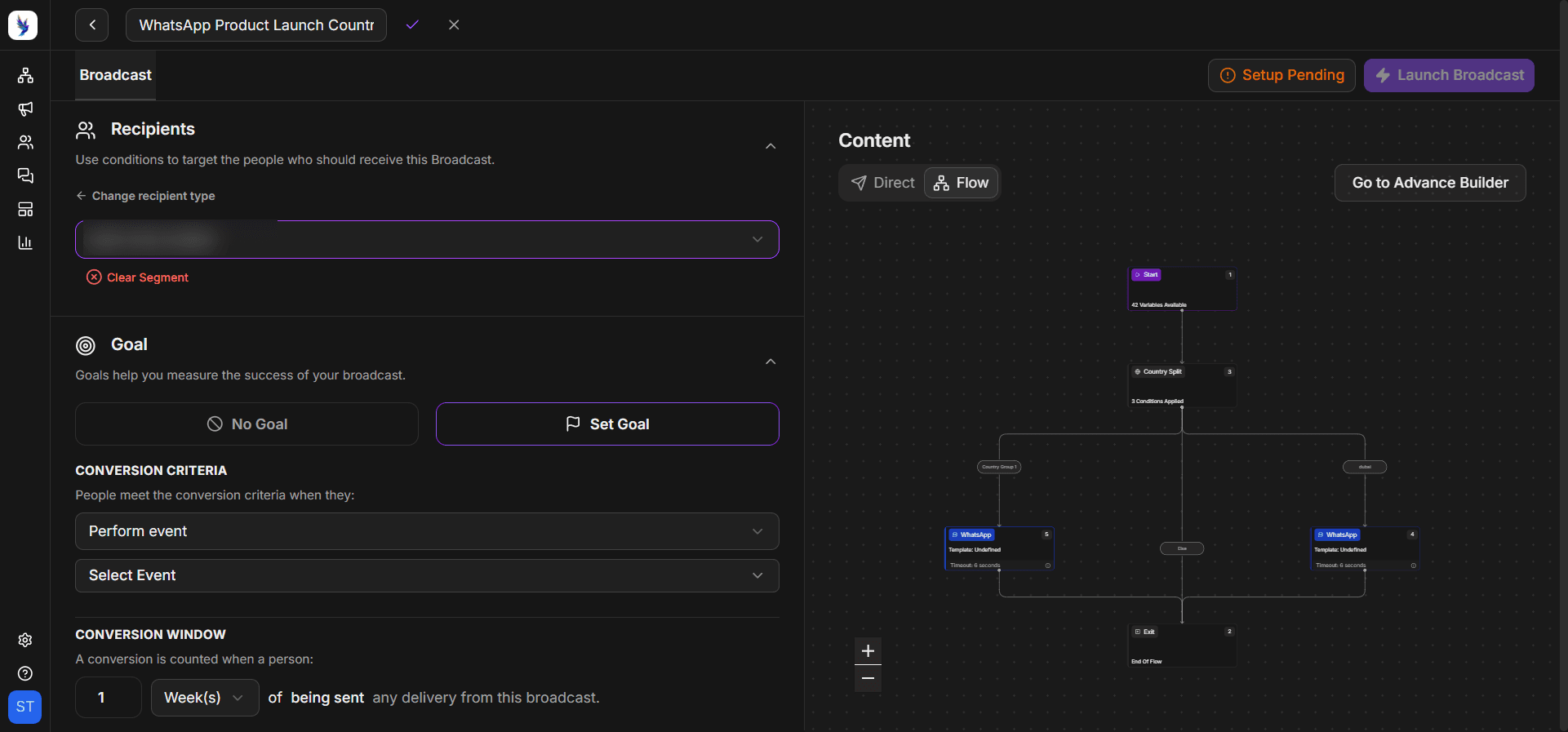
Launch day is when your WhatsApp campaign does its most important work. This is the broadcast that goes to your combined audience of waitlist members, teaser campaign recipients, and the Click-to-WhatsApp leads you have gathered in the weeks before. Each segment should receive a tailored version of the launch announcement, not an identical message.
Your waitlist members have been waiting specifically for this. Their message should acknowledge that and deliver on the promise. Meanwhile, your existing customers who received teaser messages need a message that completes the narrative you began.
The new contacts acquired through paid campaigns need a slightly more introductory version that assumes less prior knowledge about the product.
Timing the broadcast correctly matters as much as the content. For most consumer audiences, morning sends between 9 and 11 AM in the contact's local time zone produce the strongest engagement, as the message lands when the audience is active rather than after the workday when attention has dropped.
Use a WhatsApp API provider like Zixflow to schedule your launch messages and get delivery reports so you know exactly how many contacts your launch message reached in the first critical hours of the day.
Automate launch-day inquiries
A product launch broadcast will generate replies, and some contacts will ask about shipping, pricing, availability, or product specifications. Others will want to know about return policies or payment options.
Without automation, your team will spend launch day manually answering the same questions hundreds of times, which is both inefficient and slow.
Set up an automated WhatsApp chatbot before launch day that handles the ten most commonly asked questions about the product. Each answer should be concise and end with a direct link to purchase.
For questions the bot cannot answer, set up a human handoff trigger that routes the conversation to a team member with context on what the customer already asked.
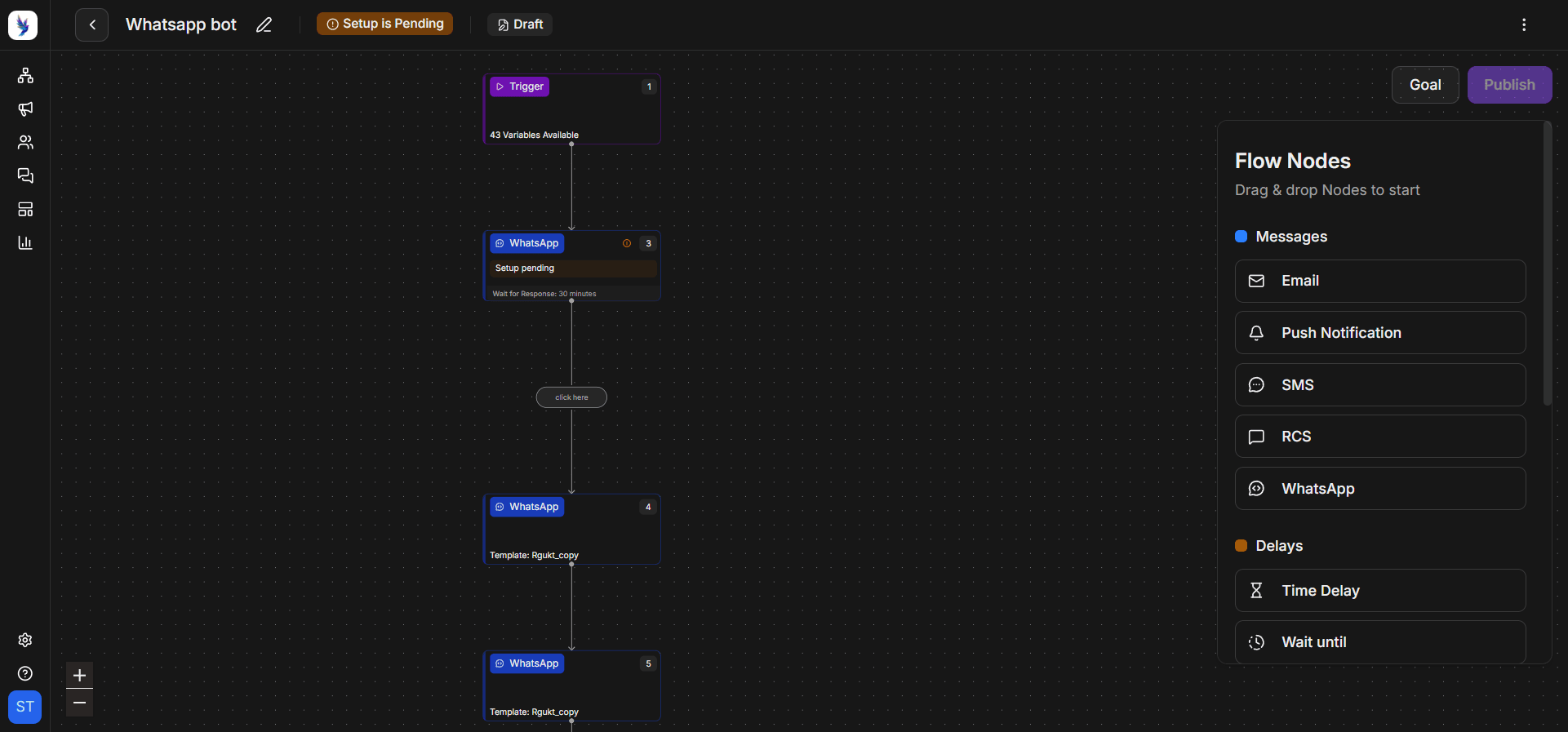
The automation handles volume without sacrificing the conversational quality that makes WhatsApp feel personal. Customers get an immediate answer while your team handles only the complex inquiries that need human intervention. This way, no lead goes unanswered during the highest-traffic period of the launch.
Run re-engagement sequences after launch
Not every contact who received your launch broadcast converted on day one. Some needed more time and some were interested but distracted. WhatsApp post-launch sequences are the mechanism for staying in front of each of these groups in a relevant way.
Divide your audience into three segments:
- For contacts who opened the launch message but did not purchase, a follow-up three to five days later with a different angle gives them a second meaningful touchpoint
- For contacts who purchased, a cross-sell message sent after they have had time to use the product is relevant
- For contacts who did not engage at all, a re-engagement message asking whether they are still interested in the product cleans your list and keeps your audience quality high
Using WhatsApp lead generation and your CDP data together is what makes these sequences precise. When your re-engagement message can reference the product the contact browsed, it reads like a relevant follow-up and not a mass send. That is what keeps your contacts engaged between launches instead of opting out after the first campaign.
Ready to use WhatsApp for your product launches?
Product launches succeed or fail in the moments when customer attention is highest. WhatsApp gives you a direct line to that attention in a channel your audience uses every day.
The brands consistently producing the strongest launch results are the ones that have moved WhatsApp from a supplementary channel to a first-choice campaign vehicle.
The most important principle across all the steps is sequencing. A WhatsApp product launch is not one message. It is a coordinated campaign that builds anticipation before the launch and sustains momentum in the week that follows.
Start with what you have. If your contact list is small, focus on building the waitlist for this launch and use Click-to-WhatsApp Ads to supplement it. If you already have a large opted-in list, focus on segmentation and personalization to ensure each group receives a message that feels written for them.
If you want a platform that handles the native WhatsApp API connection and allows you to automate WhatsApp interactions with trigger-based workflows, then you should not skip Zixflow. Try out the platform for free so your next launch has the infrastructure to deliver the results the channel is capable of.
Frequently asked questions about using WhatsApp for product launch
How do I use WhatsApp for a product launch?
Use WhatsApp across three phases: pre-launch, launch day, and post-launch. Each phase requires opted-in contacts, message templates, and access to the WhatsApp Business API through a third-party platform.
Can I send a product launch message to all my WhatsApp contacts?
You can only send marketing messages to contacts who have explicitly opted in to receive them. Sending to contacts without prior consent violates WhatsApp's messaging policy and risks your number being downgraded in quality rating or banned.
Do I need the WhatsApp Business API for a product launch campaign?
Yes, for any launch targeting more than 256 contacts. The free WhatsApp Business App caps broadcast lists at 256 contacts.
The WhatsApp Business API supports various advanced WhatsApp Business capabilities to let you make the most of your WhatsApp campaigns. It is the only viable infrastructure for a product launch campaign at meaningful scale.
How early should I start my WhatsApp pre-launch campaign?
For most product launches, the pre-launch WhatsApp campaign should begin one to two weeks before launch day. This gives you enough time to run two or three teaser messages without burning audience attention before the launch event.
How do Click-to-WhatsApp Ads help with product launches?
Click-to-WhatsApp Ads allow potential customers to start a WhatsApp conversation with your brand directly from a Meta ad. For product launches, this means you can capture interest from new audiences during the pre-launch period and move them directly into your WhatsApp contact list.
Plus, an automated welcome flow collects their contact information and adds them to your launch broadcast segment, so they receive the launch-day announcement alongside your existing customers.
How do I measure WhatsApp product launch campaign results?
Track delivery rate, open rate, click-through rate, and reply rate for each broadcast. For conversion-focused metrics, track how many contacts who received the launch message completed a purchase.
For post-launch automation sequences, track the step-level engagement rate across each message in the flow to understand where contacts convert and where they drop off.
What are the most common WhatsApp product launch mistakes to avoid?
The most common mistakes are:
- Sending to contacts without explicit opt-in consent
- Leaving template approval to the last 24 hours before launch
- Sending the same broadcast to all segments regardless of their relationship with the brand
- Running a single launch-day message with no pre-launch buildup or post-launch follow-up
Each of these can be avoided with a well-documented launch calendar that maps every campaign touchpoint at least a month before the launch.