How to Use WhatsApp for a Marketing Agency?
Marketing agencies can use WhatsApp to manage client campaigns, communicate with audiences, and run targeted marketing activities.
 by Sahil Tyagi
Using WhatsApp for a marketing agency means two things: managing the agency's own client communications on WhatsApp and running WhatsApp campaigns as a billable managed service for clients.
Both require the WhatsApp Business API, not the free app, which caps broadcasts at 256 contacts and doesn't support multiple users.
The core WhatsApp services agencies run are:
- Client communication and approvals
- Click-to-WhatsApp lead generation campaigns
- Automated drip sequences
- Broadcast campaign management
- Customer support inbox setup
- Cold lead re-engagement workflows
WhatsApp has become a solid channel for businesses and is no longer considered a secondary communication channel used only when the primary one is down.
According to Meta's State of Business Messaging report, a survey of 11,056 consumers across 22 markets, 72.4% of consumers are more likely to purchase from a brand that offers messaging as a communication channel. That number represents something marketing agencies cannot ignore.
For agencies, the implication runs in two directions. There is a growing client demand for WhatsApp campaign management as a service, and there is a direct opportunity to use WhatsApp as a business development channel for the agency itself. Teams that understand both dimensions are building a meaningful edge over agencies still anchored to email and social alone.
That said, in this post, I'll walk you through how to use WhatsApp for your marketing agency, covering the operational realities and the mistakes that cost agencies time.
What does using WhatsApp for marketing agencies mean?
Using WhatsApp as a marketing agency involves two distinct practices that are often combined but require separate strategies. The first is using WhatsApp to manage your agency's own client relationships and communications. The second is running WhatsApp marketing campaigns on behalf of your clients as a managed service.
In practice, the most effective agencies do both.
They use WhatsApp to shorten their own sales cycles and strengthen client relationships while simultaneously offering WhatsApp campaign management as a billable service that clients increasingly request. The distinction matters because the process is different for each.
On the client-side practice, using WhatsApp for marketing means accessing the WhatsApp Business API (not the free app) to handle a variety of things like:
- Managing Meta-approved message templates
- Running segmented broadcasts
- Building automated conversation flows
- Reporting campaign performance
These all should be done in a way that ties WhatsApp activity to business outcomes your client actually cares about.
Why is WhatsApp becoming a core agency service?
When it comes to deciding whether WhatsApp belongs in your agency's service stack, the case is less about the channel itself and more about what your clients want. There are multiple reasons for marketing agencies to adopt WhatsApp, and below are a few of them to give you an idea of whether you should do the same:
Client demand for WhatsApp is accelerating
Agencies follow client budgets, and client budgets increasingly point toward WhatsApp. According to research, it is estimated that by 2027, 40% of enterprises in mature markets will designate WhatsApp as a primary or a fallback customer service channel, up from roughly 18% in 2024.
That trajectory means agencies that build a WhatsApp practice today will be ahead of a wave that is still building, which is a better position than being reactive to client requests that start arriving after the market has already matured.
WhatsApp delivers campaign results other channels cannot match
Your agency’s value is ultimately measured by the results you produce for clients. WhatsApp consistently outperforms other marketing channels on the metrics that matter most. For example, where email open rates average around 21%, WhatsApp delivers a 98% average open rate for business messages.
Click-through rates on WhatsApp promotional campaigns range between 45% and 60%, compared to email CTRs that typically sit in the low single digits.
For an agency, this performance gap is a powerful selling point when pitching WhatsApp services to existing clients. The same campaign content, delivered via WhatsApp instead of email, will almost always produce a stronger performance story. That makes WhatsApp one of the highest-impact additions to your client's marketing stack that you can recommend.
WhatsApp creates a deeper agency-client relationship
Services that involve multiple parts of a client's tech stack are harder to walk away from than point solutions.
When you manage a client's WhatsApp Business API setup, their template library, automation flows, contact segments, and reporting, the client relationship becomes significantly more durable. The switching cost goes up because replacing your agency means rebuilding operational infrastructure, not just finding someone to run ads.
WhatsApp expands your offerings
For most agencies, adding WhatsApp campaign management does not require building an entirely new practice from scratch. It sits naturally alongside existing marketing, paid media, and content services as a managed channel.
The infrastructure cost is low because agencies connect to the WhatsApp Business API through a third-party WhatsApp API provider, which handles the technical layer. The agency's value-add is the strategy, campaign design, copy, segmentation, optimization, and reporting that sits on top of that infrastructure, all of which agencies already know how to do.
How to use WhatsApp for your marketing agency?
With that foundation in place, let's look at the specific ways agencies put WhatsApp to work, both internally and for clients.
Use WhatsApp for client communication
Most agency-client communication lives in email threads that are slow and difficult to search when context matters. WhatsApp gives you a direct channel for the day-to-day operations of client management.
Using WhatsApp, you can inform clients about when you are sending campaign briefs for approval, getting quick sign-off on a new message template, or flagging a time-sensitive campaign launch window.
Set up a WhatsApp Business profile for your agency with a professional display name, contact information, and a catalog or description that outlines your services. Use broadcast lists to send relevant agency updates to multiple clients at once, such as a new service announcement or a market trend report you have published.
Remember to keep it conversational and low-frequency. WhatsApp is a high-context channel, so it works best for purposeful messages rather than the newsletter-style communication that belongs in email.
For agencies managing more than five or six active clients, the WhatsApp Business App alone will not scale. The app limits broadcast lists to 256 contacts and does not support multiple users accessing the same inbox.
You will need the WhatsApp Business API, accessed through a platform, to manage client communications at any meaningful volume. That upgrade also positions you to run the API-based campaigns that make WhatsApp a billable service rather than just a communication tool.
Run WhatsApp lead generation campaigns
Click-to-WhatsApp ads are one of the most effective WhatsApp lead generation formats available to agencies. A Meta ad with a WhatsApp CTA opens a conversation directly in the user's WhatsApp app when clicked, which means the lead transitions from ad to conversation without filling out a form. The drop-off that typically happens at the form stage disappears.
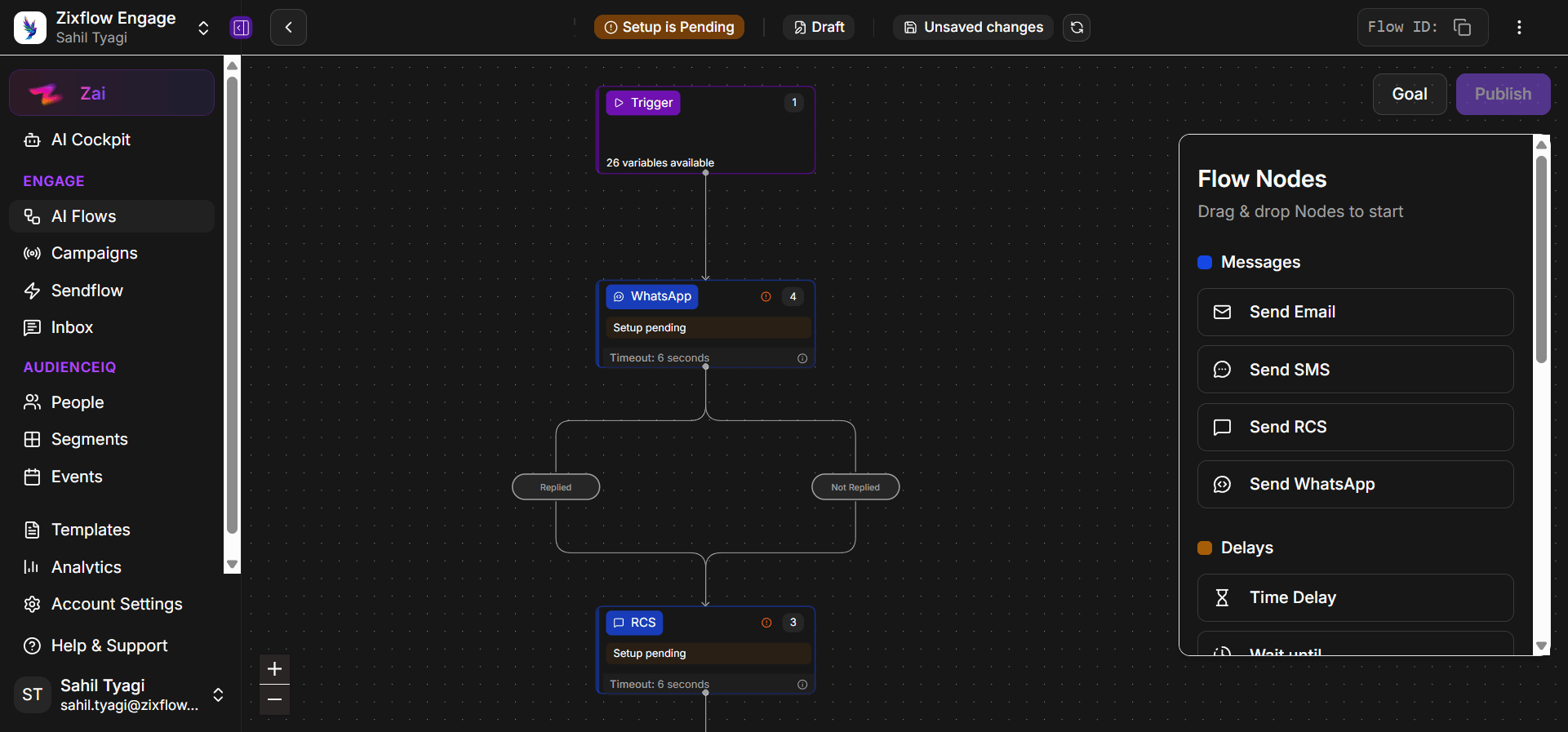
The operational workflow for agencies managing this for clients involves connecting the client's Meta Ad Account and WhatsApp Business Account in Meta Business Suite, building a welcome message that fires automatically when the conversation opens, and designing a qualification flow that captures the key information the client's sales team needs before handoff.
WhatsApp Flows, Meta's native form-within-chat product, can collect customer information in a structured format without the user ever leaving the WhatsApp interface.
For clients in verticals where lead quality matters more than lead volume, such as real estate, financial services, or high-ticket B2B services, this approach consistently outperforms standard form-based lead capture.
It reduces friction at the top of the funnel and increases the chance that the first interaction with the brand feels personal rather than procedural.
Build WhatsApp automation sequences
Once you have captured a lead or a new customer for a client via WhatsApp, the next step is keeping that conversation active through structured automation. WhatsApp drip sequences work similarly to email nurture flows, with one important difference, the open and read rates are dramatically higher. This means the content actually reaches the audience.
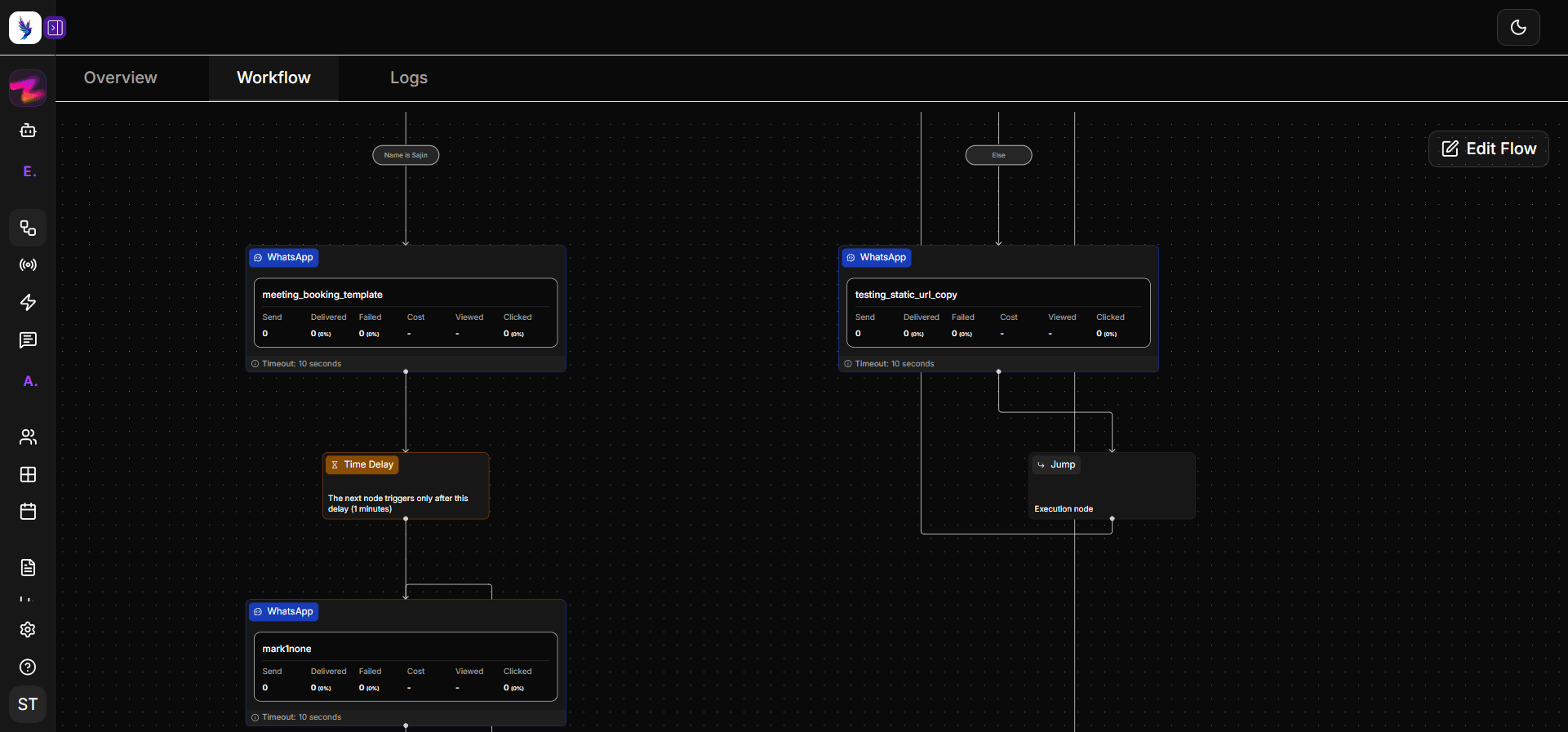
A typical agency-built WhatsApp automation sequence for a client might look like this:
- Day 1: A welcome message with an offer or relevant resource
- Day 3: A follow-up with a case study or product highlight
- Day 7: A direct CTA to book a call, make a purchase, or complete a registration.
Each step is triggered by time elapsed since the previous interaction, or by the contact's behavior, such as clicking a link or replying with a specific keyword.
The WhatsApp marketing automation setup requires a WhatsApp tool that supports trigger-based message scheduling and conditional logic. Once built, these sequences run without manual intervention, which is what makes them a high-margin service for agencies.
Manage broadcast campaigns for clients
Broadcast campaigns are the WhatsApp equivalent of an email blast, but with significantly better performance metrics. For your agency managing WhatsApp campaigns for a retail or D2C client, broadcasts are the primary vehicle for seasonal promotions, product launches, flash sales, and loyalty rewards.
The agency's job here goes beyond writing the copy. It includes managing the Meta template approval process for each message variant, maintaining the client's contact list and ensuring WhatsApp opt-in compliance, segmenting the list so different customer groups receive relevant messages, and scheduling sends at the optimal time for the client's specific audience.
Using a proper WhatsApp broadcast platform is essential for managing this at client scale. The free WhatsApp Business App caps broadcasts at 256 contacts and cannot be operated by multiple team members.
If your agency managing broadcast campaigns for clients needs a Business API provider that supports large-scale sends and multi-user access so different team members can work on different client accounts without conflicts, then check out Zixflow.
Set up WhatsApp customer support workflows
Many agencies stop at campaign management and miss the support workflow opportunity. WhatsApp is increasingly the channel where customers go when they have a question or a problem, and the brand experience in that moment has an outsized impact on retention.
If your agency has technical capability, building a WhatsApp support inbox for a client is a high-value engagement. This means setting up a shared WhatsApp inbox that the client's support team can access and building bots that route the conversation to the right team member based on the customer's query.
Similarly, WhatsApp chatbot tools power these setups, ranging from simple keyword-response bots to AI-powered agents that can handle complex queries and escalate to human agents when needed.
The key handoff point to get right is the bot-to-human transition. Customers who need to speak to a person should reach one quickly, without having to repeat information the bot has already collected. Getting this right is what separates a support workflow that improves customer experience from one that frustrates it.
Use WhatsApp to re-engage leads
Not every lead a client receives converts immediately. Some go cold after the initial inquiry, some need multiple touchpoints before they are ready to buy, and some opt out of email but remain reachable on WhatsApp. For agencies, re-engagement campaigns via WhatsApp are a recurring service that keeps delivering value across the client relationship lifecycle.
A re-engagement sequence for a client's cold leads might start with a value-first message. For example, it can be something simple like a relevant insight that gives the user a reason to re-engage.
Plus, the message should not feel like a follow-up. Instead, it should seem like a relevant update from a brand the contact already knows. Also, personalization at this stage is critical. Using the contact's name and referencing their original inquiry significantly improves response rates compared to generic broadcast copy.
WhatsApp customer retention workflows that support re-engagement campaigns require your agency to have segmented contact data for the client.
And this is where the real work lies.
Auditing the client's existing contact database and building segments that the WhatsApp tool can target. Those who invest in this data layer deliver significantly better campaign results and become harder to replace.
Choosing the right WhatsApp platform for your agency
The free WhatsApp Business App is built for solopreneurs and very small businesses. Marketing agencies managing multiple clients need API-powered platforms with capabilities the free app does not offer. When evaluating WhatsApp automation tools for agency use, here are the capabilities that matter most:
Multi-client account management: A platform that allows you to manage multiple WhatsApp Business accounts under a single agency login. Mixing client contacts or templates on the same account is a compliance and brand risk.
Shared team inbox: Multiple agency team members should be able to access and respond to conversations for a given client account without sharing a single login. Look for role-based access controls that let you assign different permissions to account managers, copywriters, and analysts.
Broadcast and scheduling: The ability to send large-scale broadcasts to segmented contact lists with scheduling controls. For client campaigns with launch-date dependencies, scheduling flexibility is non-negotiable.
Automation builder: A visual flow builder for creating triggered message sequences, lead qualification bots, and re-engagement workflows. The easier the builder is to use without developer support, the lower the delivery cost for the agency.
Template management: A clear workflow for managing WhatsApp messaging templates across multiple client accounts. Template approval delays can cascade into campaign launch delays, so a platform with a streamlined approval process saves significant operational overhead.
Analytics and reporting: Campaign-level metrics, including open rate, CTR, delivery rate, reply rate, and conversion tracking. Your agency needs these numbers to populate client reports without manual data extraction.
The WhatsApp Business Platform itself is the technical foundation all of these tools are built on. Understanding how it works, including the per-message based pricing model and the template approval process, is foundational knowledge for any agency offering WhatsApp as a managed service.
Zixflow fulfills all of these requirements by providing a centralized solution for marketing agencies to manage their clients’ marketing initiatives. Talk to our sales team to learn more about how Zixflow can help you achieve this.
Build a marketing agency with WhatsApp practice worth paying for
WhatsApp for marketing agencies is not a channel swap. It is a service capability that changes the kinds of results you can deliver. The agencies that treat it as just another broadcast channel will see incremental gains. The ones that invest in the full stack will build something that is difficult for clients to walk away from.
Start with one use case. For instance, using WhatsApp to communicate with your own clients. Or build a click-to-WhatsApp lead capture flow for one existing client as a proof of concept. Document the results and expand from there.
So, if you are looking for a platform that is an official Meta Partner and provides native WhatsApp API connection, start a free trial of Zixflow. Its Broadcast and Journeys features give agencies the infrastructure to run WhatsApp campaigns for multiple clients without stitching together separate tools for each use case.