12 Amazing Examples of Artificial Intelligence in Marketing
Table of Contents
Artificial intelligence is not a complementary feature of marketing. It is already a part and parcel of how brands plan, implement, and optimize campaigns throughout the customer journey.
As of 2025, nearly 88% of businesses use AI in some aspect of their marketing stack to either personalize messages, generate interactive content, or leverage predictive analytics to design more effective marketing campaigns.
In both the B2B and B2C space, that change has made AI more than a nice experiment, but rather a means of a functional pipeline tool to help streamline customer engagement, lower costs of acquisition, and increase lifetime value.
So, to help you understand how brands are utilizing AI in their marketing initiatives, this post curates 12 of the most interesting real-life examples of AI in marketing for you to see what is actually being practiced, not what theoretically could work.
Each example is broken into what the brand did, how AI facilitated it, and what other brands operating in the same industry can learn, even without having similar marketing budgets comparable to the brands in these examples.
Examples of artificial intelligence in marketing
When it comes to using artificial intelligence in marketing, companies can leverage it for managing a wide variety of marketing operations. That said, here are some processes along with examples of how businesses used AI to manage them effectively.
Offering personalized recommendations to customers
The AIs used to create personalization systems use very large quantities of behavioral and contextual data, such as pages accessed, products viewed, features used, location, device, and past purchases, to determine what the individual user is most likely to react to next.
Brands can have dynamic pages, emails, and in-product experiences that update in real time according to each visitor or account, rather than just a single one-time journey. To marketers, this will transform the rule-based approach, such as a user is in segment X, should see Y version, into a continuously learning model, which will be updated with new information as it arrives.
Sephora’s virtual assistant
Sephora is an example of applying AI to personalized beauty both during discovery and decision-making, most visibly through its Virtual Artist feature that allows customers to digitally try on beauty products.
Through computer vision, facial recognition, and AI-assisted matching, the app is able to scan the face of a customer to subsequently suggest shades, finishes, and routines that best suit their type. It essentially transforms the process of sampling and consultation into a digital process that can be scaled.
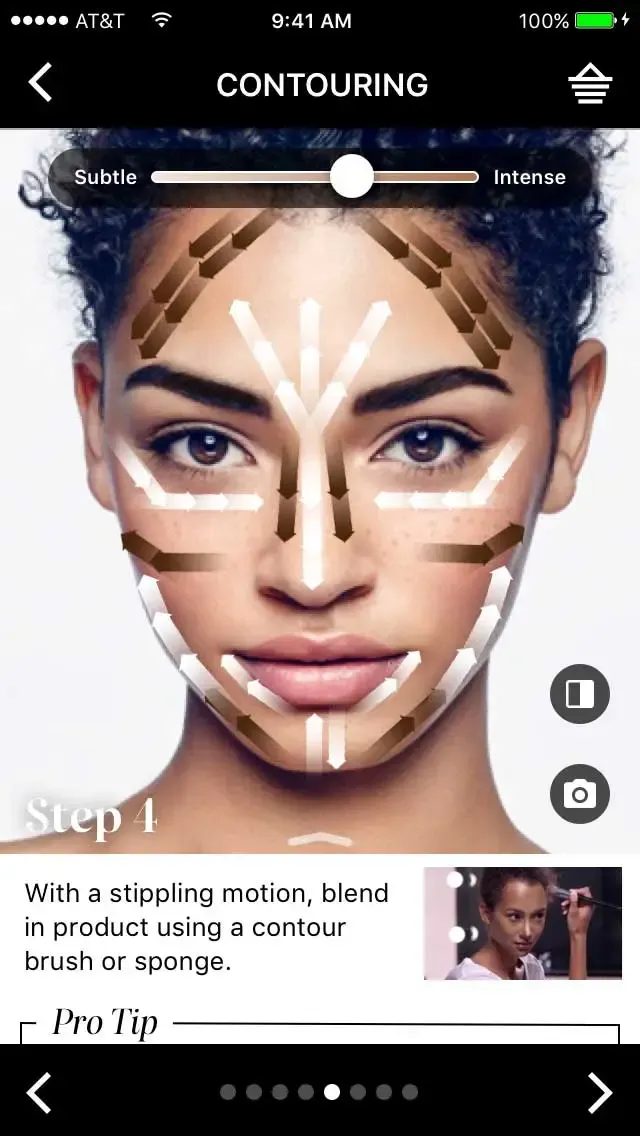
Additionally, the customer feedback collected from the app creates the first-party data on their preferences that Sephora feeds back into individual email campaigns, online experiences, and in-store support to strengthen the connection between marketing and conversion.
Glossier‑style journey personalization
Direct-to-consumer products like Glossier have based their marketing on a close customer understanding, and now are adding AI to the top of that platform to personalize experiences across channels.
AI systems divide the visitors and customers based on their behavior, responses to surveys, and purchase history to tailor on-site messages and product recommendations to each micro-segment, e.g., first-time visitors or regular loyal customers.
Such fine-grained personalization can enable smaller teams to ensure that communications remain relevant to an extremely different set of personas without having to create dozens of individual journeys manually.
Starbucks’ Deep Brew Platform
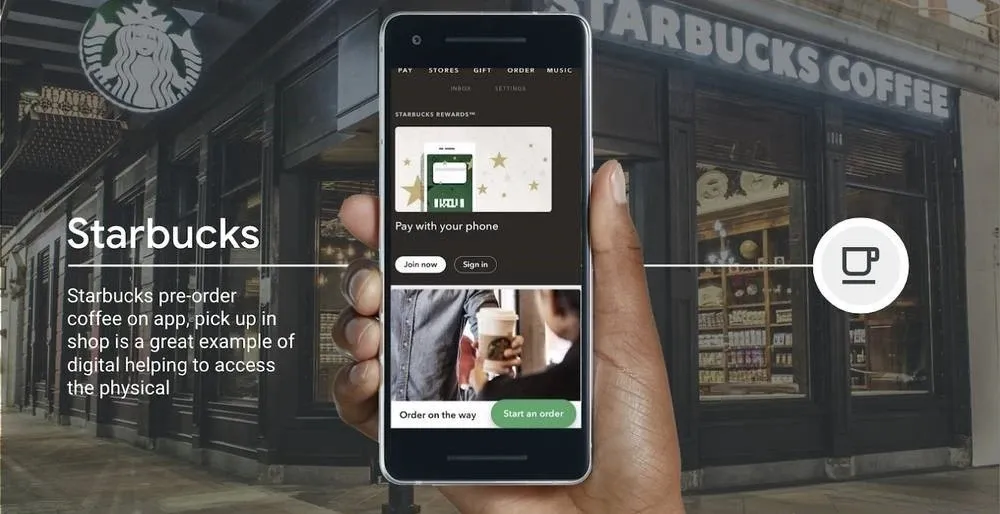
The Deep Brew platform by Starbucks demonstrates the possibilities of AI-based personalization to be applied to both marketing and operational aspects in a manner that is scalable to B2B SaaS teams.
Deep Brew processes past customer data to determine which beverages to suggest in the application and what offers to provide, making it easy for customers to order their favorite drinks.
This translates to context-aware push notifications, in-app banners, and email offers in marketing campaigns, which boost redemption rates and loyalty, reducing noise that consumers experience.
Want to Use AI in Your Marketing Today?
Apply proven AI use cases to run smarter campaigns that save time and improve marketing performance.
Leverage Zixflow TodayPredictive analysis to sell more efficiently
Predictive analytics applies AI to forecast customer behavioral patterns such as churn, lifetime value, likelihood to purchase, or campaign performance based on historical patterns.
This analysis allows businesses to predict demand spikes or next-best-offer time. B2C brands can use it to convert raw data into marketing priorities, which can be acted upon without manual speculation.
H&M's demand forecasting
In the B2C space, H&M uses AI to forecast fashion trends, stock quantities, and individualized marketing according to the sales statistics in the world, along with social indicators.
The AI predicts what fashion trends will sell in particular shops or locations, and then sends specific emails and social advertisements to sell high-velocity goods before inventory is depleted. It combines the efficiency of the supply chain with exact customer targeting to drive quick sales.
Adobe Sensei predictive insights
Adobe Sensei is a data processing tool that is used to predict customer engagement, churn risk, and the best next actions a business should take to drive personalized recommendations and campaign timing.
According to Brands operating in retail or e-commerce use Sensei have recorded a 20% increase in customer satisfaction rates through predicting individual preferences based on browsing, purchase history, and in-store behavior.
AI-powered advertising initiatives
AI is changing advertising through bidding automation, targeting, creative testing, and budget allocation. Machine learning is predicting the right channels for your business and tracking valuable KPIs that help you maximize your ROI.
BMW’s real-time digital billboards
BMW installed AI-powered outdoor billboards that scan passing car models with cameras and personalize messages instantly, like displaying electric car promotions to Tesla drivers.
The system manages vehicle information in milliseconds to provide customized image and text, combining real-life experience with digital ad technology to be hyper-relevant to the local area, which traditional out-of-home (OOH) advertising never had a chance to achieve.

Burger King’s AI-generated ads
The Burger King marketing campaign on AI Whopper relied on generative AI to create custom advertisements according to the trending topics and mentions of the competitors to create viral social buzz and contextually promote menu items.
This strategy allowed the fast-food brand to create fresh, meme-worthy pieces in large volumes, demonstrating how AI can be used to create agile B2C advertising that is culturally native, without sounding overly corporate.
Conversational AI for enhanced customer engagement
Conversational AI is used to run chatbots to manage the conversation flows and respond to inquiries, qualify leads, and encourage purchase in real time using natural language processing. B2B businesses use it to book demos, while the B2C brands use it to discover products and recover carts as it transforms passive visitors into active conversations at scale.
The North Face’s AI shopping assistant
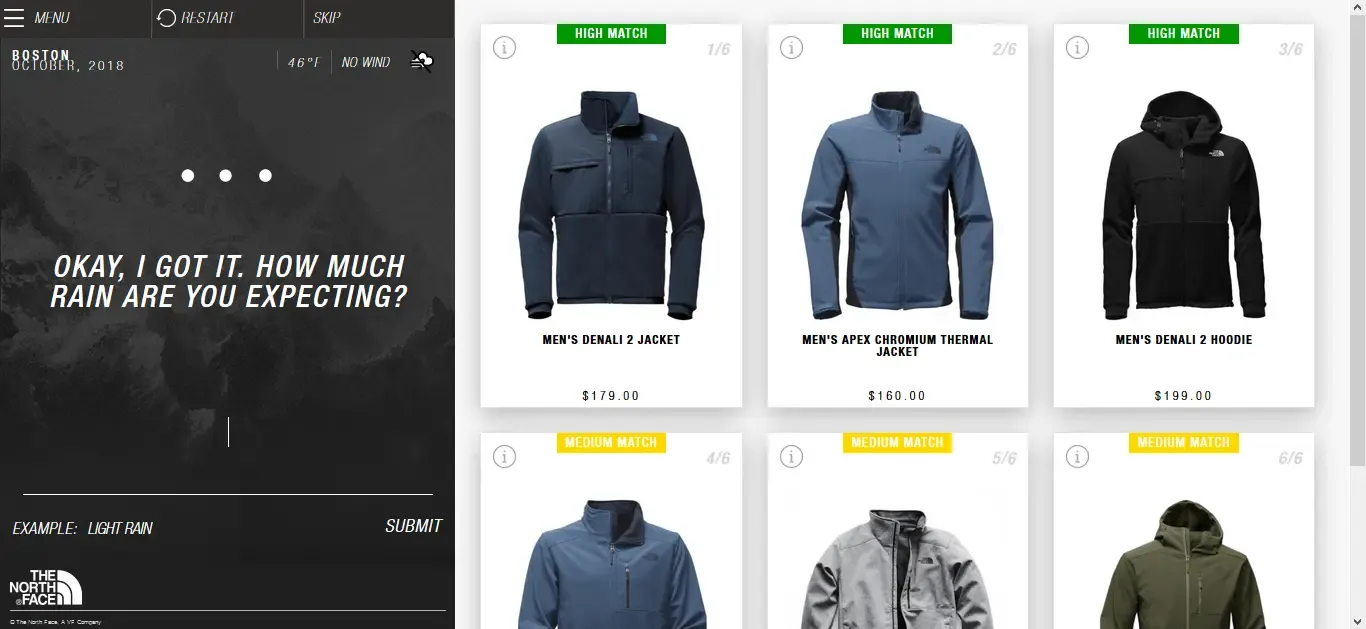
The North Face created an AI chatbot that suggests equipment depending on the user data, such as the type of activity, weather conditions, and expertise level, and imitates the behavior of a store associate.
Visitors review their hike or trip, and the bot recommends specific products to increase the conversion rate, making the process of making a complex purchase seem like a guided and easy process.
Creative content & campaign ideation
Generative AI generates copy, images, videos, and campaign ideas based on basic prompts, and helps speed up the ideation process without losing brand consistency across platforms. It is used by businesses to create customized marketing material and social content that is culturally applicable.
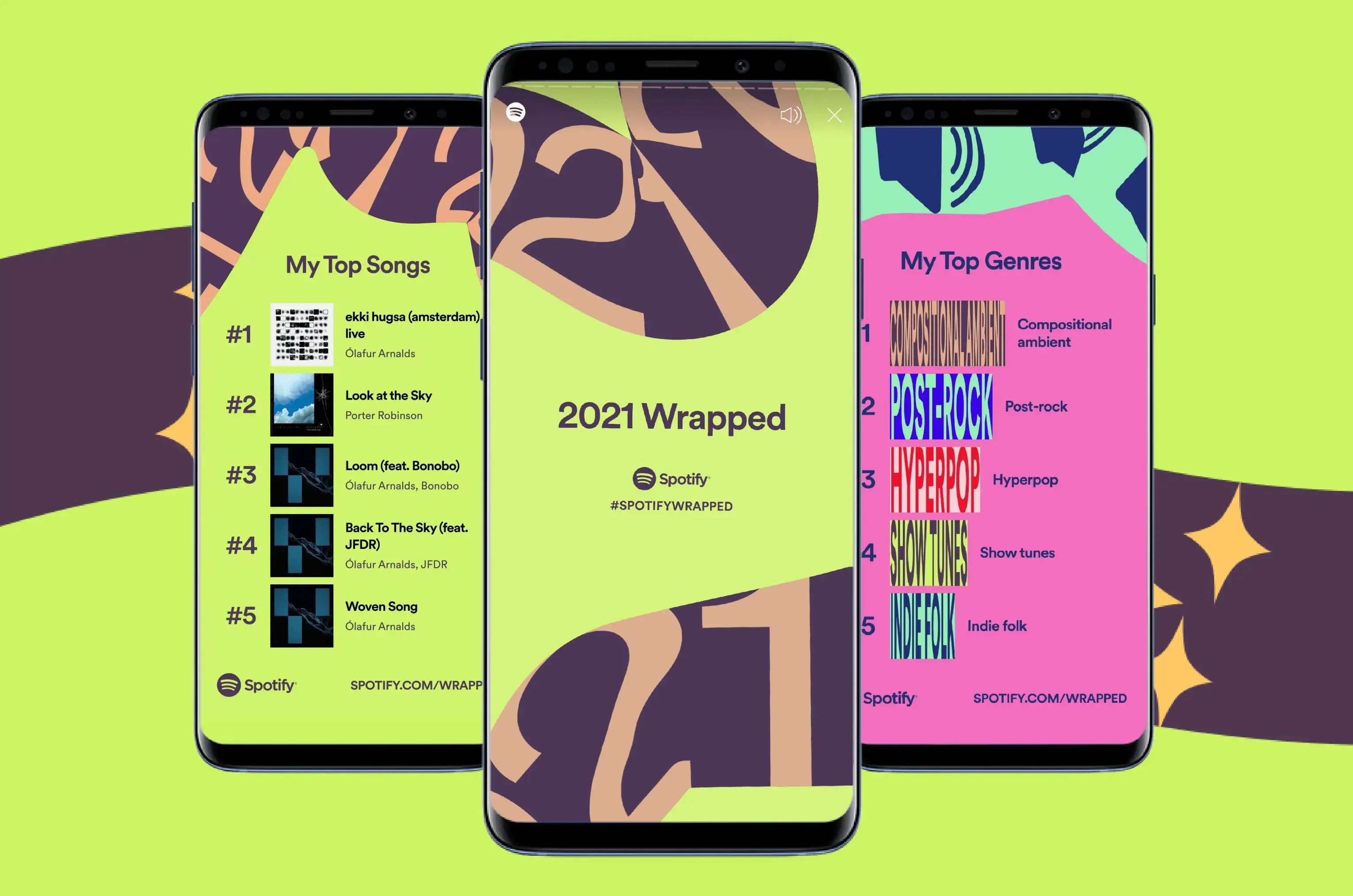
Spotify Wrapped’s personalized stories
Utilizing AI to process listening data, Spotify Wrapped creates individual and shareable lists of summaries for each user that transform the raw numbers into a social image. Each user is given a unique report, containing statistics, artist highlights, and playlist suggestions, which drives organic promotion of the brand without advertising.
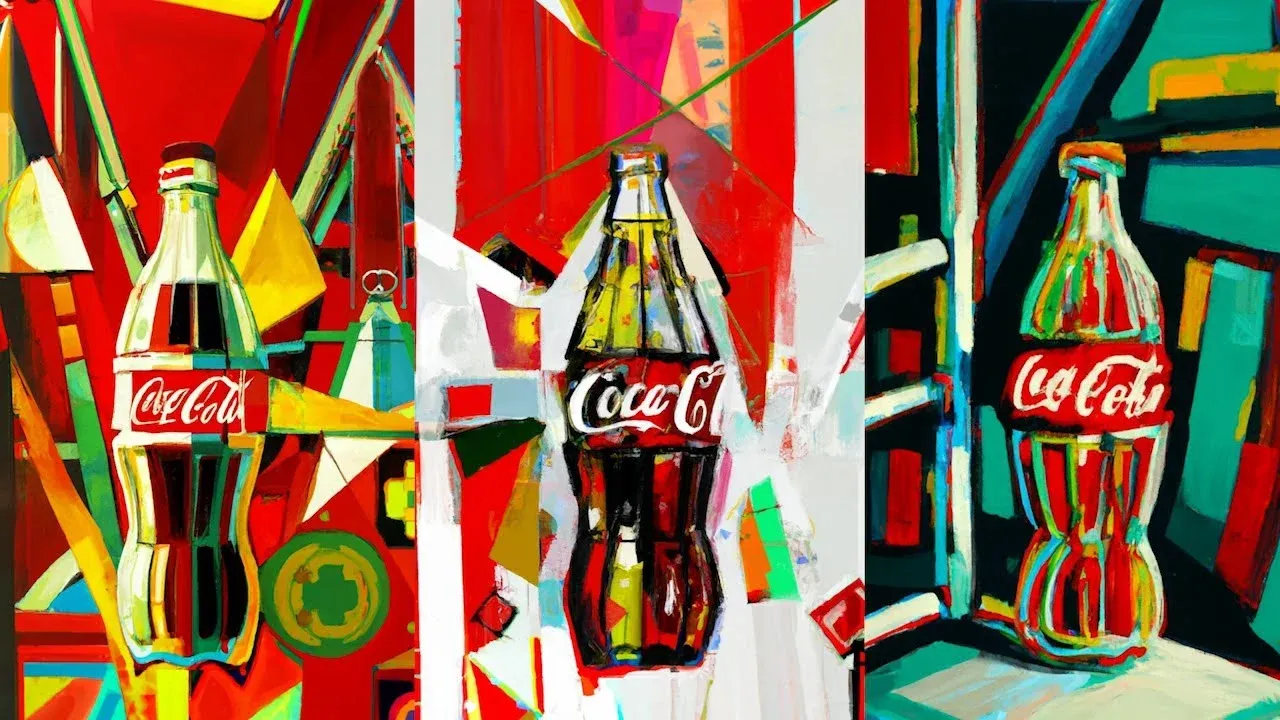
Coca-Cola’s AI-generated bottle designs
Coca-Cola used generative AI to produce customized bottle designs and interactive campaigns in which users provide preferences in terms of custom designs and messages. This way, the brand generated thousands of original creations using social challenges and limited editions, a mixture of user-created work and professional finish on a large-scale basis.
Looking for One AI Tool for Marketing Execution?
Manage campaigns messaging and automated marketing flows in one place to make AI driven marketing easier to scale.
Talk to UsOrchestrating customer journeys with AI
AI coordinates multi-channel experiences based on the prediction of best touchpoints and timing on the basis of real-time behavior by web, email, ads, and apps. ABM sequences are automated and deal with cart abandonment and loyalty triggers automatically.
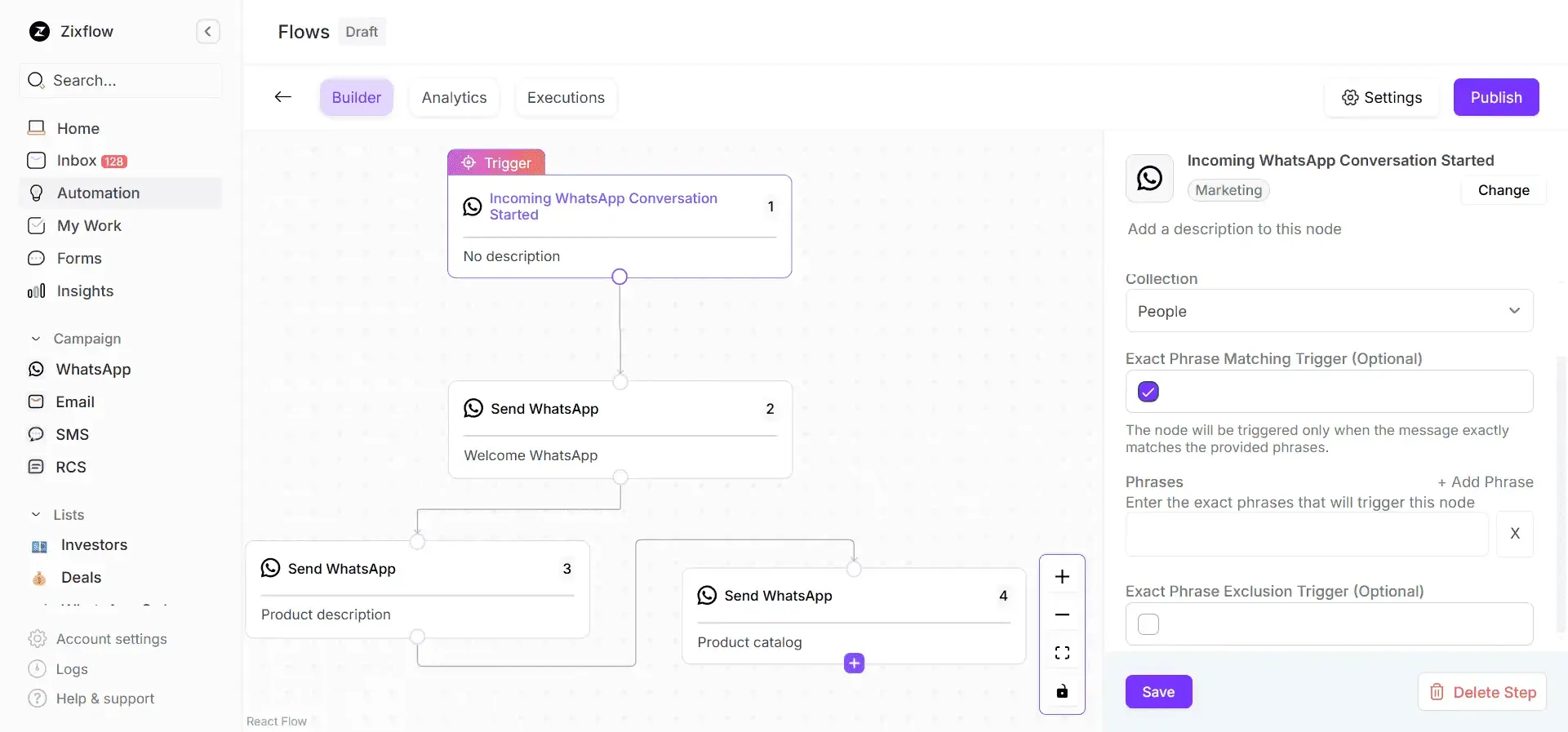
Zixflow’s AI-powered automation
Zixflow is an AI-powered tool that allows brands to automatically segment audiences, create email content, and send marketing messages across numerous channels at the same time with the highest deliverability.
Marketers can choose the channels and the messages to design an automated flow that triggers based on predetermined conditions. For example, if a customer interacts with your business and provides their phone number, you can trigger a WhatsApp messaging flow using the platform to interact with them to keep them interested in your offerings.
Social listening and sentiment analysis
AI-based social listening analyzes millions of reviews on channels in real time to identify sentiment, trends, brand health, and emerging trends. It is applied in competitive intelligence and churn signals by brands to identify viral opportunities or reputation threats that can be identified before they snowball into something bigger.
Nestlé’s real-time campaign adjustment
Nestle uses AI social listening to monitor consumer responses to product release and adapt messaging during the campaign depending on sentiment peaks or changes in trends. When the feedback reflected flavor preferences, AI surfaces this information immediately, and the follow-up content offered targeted the audience, which increased engagement by responding to the live audience.
Adopt artificial intelligence in your marketing by leveraging these examples
These 12 artificial intelligence marketing examples demonstrate that the technology has passed beyond the hype stage into becoming real revenue generators for brands. The wide range of examples, from personalized recommendations to the use of contextual billboards to viral campaigns, all share the same attribute: AI makes experiences seem intuitively personal at scale.
Marketers today will be the ones to benefit the most from these AI-driven examples. Select an aspect like personalization, predictive insights, or conversational flows, and experiment with it this quarter using AI marketing tools you already have in your stack.
What you need to propel your AI-driven funnels is to use Zixflow, which provides no-code automation that can be easily interconnected with other platforms to consolidate customer data and design marketing sequences.
You can start a free trial today and make these AI examples your reality in the form of revenue.
Frequently asked questions about artificial intelligence in marketing
Below are some of the commonly asked questions about examples of artificial intelligence in marketing:
What are the most common AI use cases in marketing today?
Personalization, predictive lead scoring, conversational chatbots, generative content creation, and social listening are some of the best AI applications in the marketing space. B2B businesses can leverage it for lead qualification and churn prediction, whereas B2C is oriented toward recommendation systems and dynamic advertising.
How can small teams implement AI without needing huge marketing budgets?
Begin with AI-native applications such as Zixflow for identifying correct lead scoring opportunities and running marketing campaigns from a centralized platform. You do not need extensive installation and utilities with your current CRM or behavioral information to provide the results right now.
Is AI personalization ethical for marketing campaigns?
Yes, when businesses are open about the use of data and concentrate on value-driven marketing. Examples like Sephora have been successful because they have personalization that can be used, but not imposed. Never use sensitive information without customers’ permission, and always add an option to opt out.
How much ROI can marketers expect from AI campaigns?
Lifts of reported CPA in advertisements fall between 15%-30%. Additionally, email open rate with personalization ranges between 20%-50% and the AI content-related engagement increased by 2-3 times.
Which AI tools are best for creative marketing campaigns?
Examples of generative tools are the visual generator Midjourney, the content generator Jasper, or the AI copy generator feature of Zixflow. For designing customized templates or running marketing initiatives, Zixflow is one of the best AI-driven tools as it offers you a wide range of functionalities, such as a native CDP, automation builder, and AI-driven framework to make the most of your AI marketing strategy.
Sahil Tyagi
I'm a passionate content writer and SEO enthusiast who enjoys turning ideas into helpful articles. When I'm not busy with content, you'll find me enjoying sports or reading about growth strategies.