6 Ways to Use WhatsApp to Reduce Product Returns
Use WhatsApp to reduce product returns by helping customers make informed purchase decisions and resolve issues before they lead to a return.
 by Sahil Tyagi
WhatsApp reduces e-commerce product returns by closing the communication gaps that are preventable with better pre-purchase and post-purchase communication. WhatsApp's 98% open rate and under-5-minute average read time mean post-purchase messages are read before return decisions solidify.
The WhatsApp tactics for reducing returns are:
- Pre-purchase sizing consultations via click-to-chat links on product pages
- Rich product education messages sent between purchase and delivery
- Proactive delivery issue alerts connected to your fulfillment system to get ahead of logistics problems
- WhatsApp Flows to capture return reasons and present exchanges or alternatives at the moment of return initiation
- Automated post-return follow-ups offering relevant alternatives after the refund is confirmed
U.S. retail returns hit $849.9 billion in 2025, and online orders are returned at a rate of 20.8%, more than double what physical stores experience. Processing each return costs between $10 and $65 once you account for shipping, inspection, and restocking. For most e-commerce brands, returns are one of the largest drains on margin in the entire operation.
The harder truth is that most returns are preventable. 50% of customers return products because of poor fit, and 42% return because the item was not as expected. Both of those reasons come back to a communication gap involving the customer not having enough information before they bought.
To address this issue, WhatsApp is one of the most effective channels available for closing that gap because it's the channel customers actually read and respond to.
There are practical reasons why a pre-purchase sizing question answered on WhatsApp prevents more returns than the same answer buried in an email. Customers read their messages on WhatsApp and act on them immediately.
That's why in this guide, I have curated concrete ways to use WhatsApp to reduce product returns, covering both the pre-purchase and post-purchase touchpoints where the channel has the most impact.
Why is WhatsApp the right channel for reducing product returns?
WhatsApp outperforms email, SMS, and web chat for return-prevention communication because of a combination of channel characteristics that are uniquely suited to the high-attention moments. Here are some of the reasons the channel performs where others don't:
Messages are read before customers decide
The window between a customer's decision to return and their action on that decision is narrow. Once they have decided, the emotional logic of keeping the product is hard to reverse. The key is reaching the customer before they decide and providing them information that changes the outcome.
WhatsApp's 98% open rate and average read time of under 5 minutes mean that a message sent within hours of delivery is almost certain to be read before the customer's post-purchase opinion has fully solidified.
For brands managing customer engagement across e-commerce touchpoints, this timing advantage is one of the clearest arguments for making WhatsApp the primary channel for post-purchase communication.
Two-way conversations resolve issues quickly
Most post-purchase communication is one-way. The customer receives it, and there is no mechanism for the customer to flag a problem in the same thread. This one-way design is part of what makes returns the default response to a problem.
WhatsApp is two-way by default. When a customer flags a problem, you or your automated system can respond in real time with a resolution that doesn't escalate to a return.
Brands that use proactive messaging to open these conversations before customers complain reduce support ticket volume by 20 to 40% and improve NPS by 5 to 15 points. The mechanism is the same in both directions, when customers have a place to raise a problem, they raise it with you instead of with the returns department.
Pre-purchase guidance produces better-matched orders
63% of online shoppers practice bracketing, meaning buying multiple sizes or variants of the same product with the intention of returning the ones that don't work. This behavior is a rational response to uncertainty because customers can't try the products before they buy, so they hedge by buying more. The best way to reduce bracketing is to eliminate the uncertainty that causes it.
A WhatsApp bot can handle specific questions a customer has about fit, material, dimensions, or compatibility that a product page can't address. When a customer gets a direct answer to their queries, they are far more likely to order the right size on the first try without
Faster issue resolution saves resources
When a customer has a problem with a product, the path they take depends on how easy you have made it to resolve the issue. If reporting a problem requires jumping through multiple hoops, the rational choice is to just initiate a return. On the other hand, if reporting a problem means sending a WhatsApp message and getting a response in minutes, the customer is far more likely to wait for a resolution before escalating to a return.
FAQ automation and support templates on WhatsApp resolve common support issues up to three times faster than email-based support. For the categories of issues that most commonly become returns, this speed advantage means more issues are resolved before the return is initiated rather than after.
WhatsApp handles the entire return journey
Even with the best pre-purchase guidance and post-purchase support, some returns will happen. When they do, a streamlined returns process managed through WhatsApp reduces friction for the customer and reduces cost for your business, all the while keeping the customer relationship intact for future purchases.
WhatsApp returns move the entire returns journey into a single chat thread. For example, the customer scans a QR code from their packaging, selects the items they want to return, chooses a return reason, and receives an ORP, all without leaving a WhatsApp chat.
A smoother returns experience doesn't directly reduce return volume, but it significantly increases the likelihood that the customer buys again after returning. When the returns process feels easy, it doesn't damage the relationship. And customers who buy again after returning are some of the highest-lifetime-value customers.
Keep the Entire WhatsApp Journey in One Chat.
Zixflow’s Threads lets you guide customers step by step with quick replies with complete context.
Begin ConversationsWays to use WhatsApp to reduce product returns
Return reduction through WhatsApp happens at two levels:
- Preventing the wrong purchase in the first place
- Resolving post-purchase issues before they become return requests
The strategies below cover how to handle both of these situations, in the order they appear in the customer journey.
Set up a pre-purchase consultation via WhatsApp
50% of online returns are driven by poor fit, and most of those poor fits were predictable. The customer wasn't sure which size to order and took their best guess. A WhatsApp sizing consultation before purchase addresses this with a personalized response.
The setup involves placing a WhatsApp click-to-chat link or a WhatsApp QR code on product pages, particularly for categories where fit is hard to judge. Online apparel, footwear, furniture, and electronics are some of the items that best fit this scenario.
Placing the WhatsApp link at that specific location captures the customer when they have an active question rather than after they have already placed an uncertain order.
Tracking the conversion and return rate for customers who used the pre-purchase consultation versus those who didn't is the most direct way to measure the impact. Companies that have done this analysis consistently find that consulted customers return products at a materially lower rate.
This data also builds the internal business case for investing more in the consultation infrastructure over time, which fits directly into your broader WhatsApp marketing strategy.
Send rich product education messages
42% of returns happen because the item was not as expected. The expectation was set at the time of purchase. If the product page didn't fully communicate what the product is or what it looks like in use, the customer arrives at delivery with a mental model that doesn't match reality.
WhatsApp lets you send rich media messages, including images, videos, and documents, to customers in the window between purchase and delivery, when the customer is anticipating the product and still open to learning more about it.
For products with a learning curve, a two-part post-purchase education sequence performs best. The first message, sent a day after purchase, covers what to expect when the product arrives and any first-use tips. The second, sent closer to the expected delivery date, covers setup steps or care instructions for the specific product category.
The content of these messages works best when it's specific to the product the customer actually ordered and not generic brand content. For example, a customer who ordered a specific coffee machine needs the setup guide for that machine.
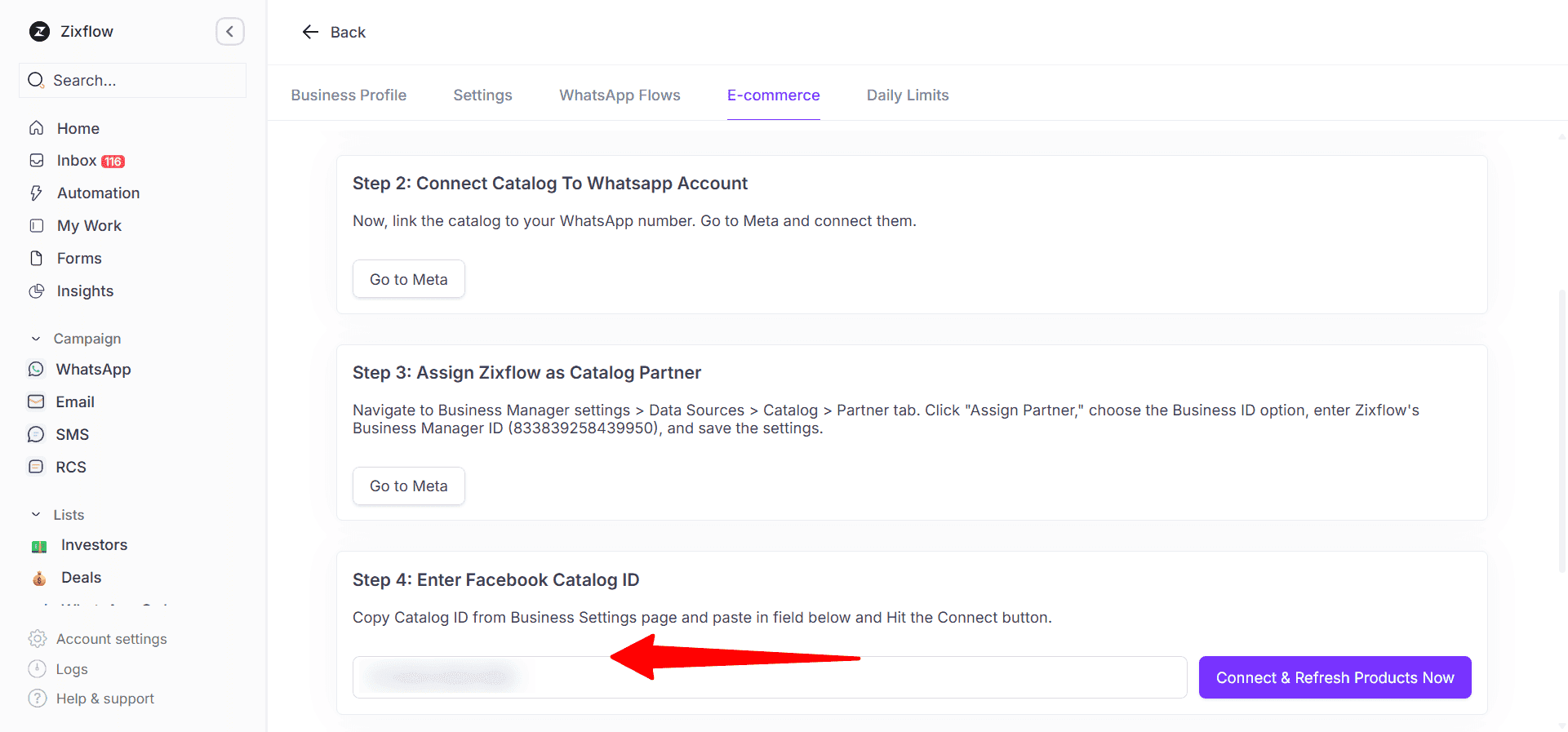
WhatsApp marketing automation tools let you trigger product-specific messages based on the item ordered, which means the education content scales without requiring a human to manually select the right content for each customer.
Send a proactive delivery check within 24 Hours
The highest-risk moment in the post-purchase journey for a return is the 24 to 48 hours after delivery. If a product arrives damaged or has an issue the customer doesn't know how to resolve, that window is when the return decision gets made.
Reaching the customer in that window is the single most impactful post-purchase action available for return prevention.
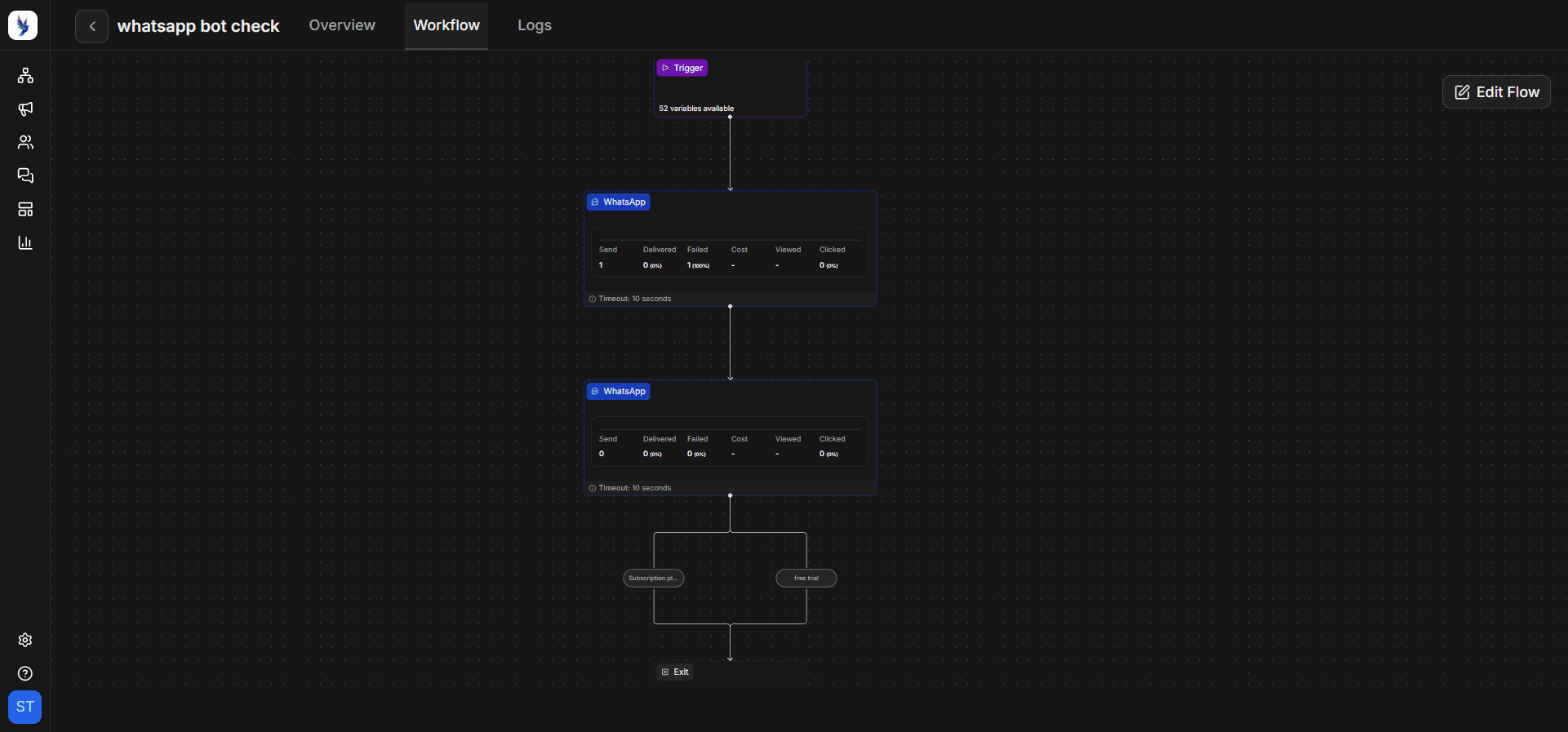
A simple message like, "Your order arrived today. Did everything come as expected?" matters because it gives customers an avenue to reach out to you before making a return decision. When a customer replies to flag a problem, you have the opportunity to resolve it before a return is initiated.
The commercial impact is documented as well. Brands that send proactive check-in messages within 24 hours of delivery and respond to replies consistently reduce the proportion of deliveries that become return requests. The alternative to this is waiting for the customer to initiate a return request, at which point the conversation is already framed as a return rather than a resolution.
Use WhatsApp Flows to capture return reasons
When a return is imminent, the last opportunity to prevent it is the moment the customer starts the return process. Most e-commerce returns portals are designed purely for processing. A WhatsApp-based returns flow creates a moment of dialogue at that exact point, which can potentially change the outcome.
WhatsApp Flows enable structured experiences within the chat. For instance, a customer initiating a return can be guided through a sequence that first captures the return reason and presents a relevant alternative.
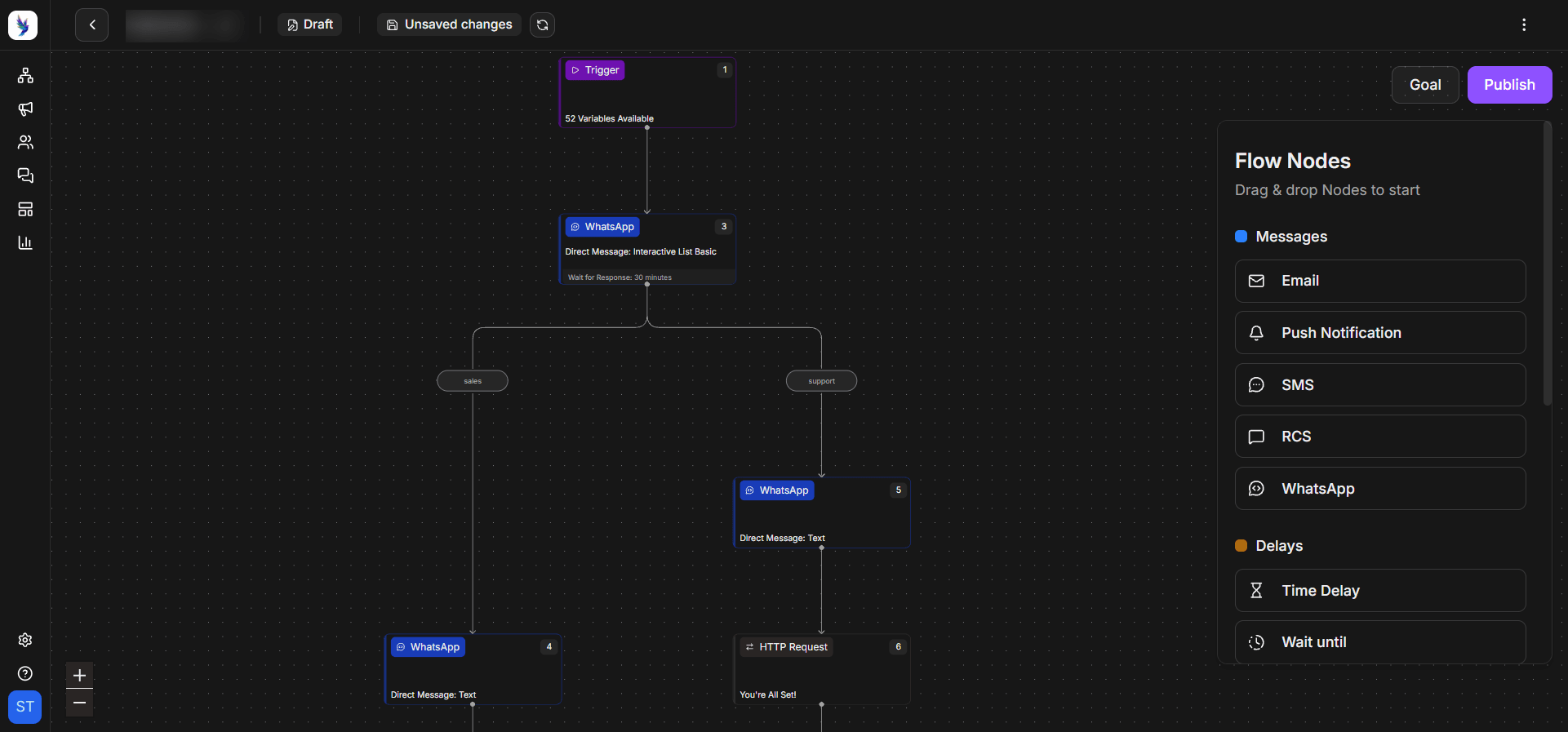
A customer returning because of poor fit can be shown the exchange option immediately within the flow with their specific size and a recommended alternative pre-selected. Additionally, a customer returning because the item was damaged can receive a replacement offer in the same conversation instantly.
The data collected from these return reason flows is one of the most valuable outputs of a WhatsApp return reduction strategy. When you know that a specific product is generating a large number of returns, you can figure out what the problem is.
Learn from Every Reply.
The platform updates the customer’s profile after every resolved chat, so the context is never lost.
ee it in ActionAutomate post-return follow ups
Your relationship with a customer doesn’t have to end at a return. The return happened because something went wrong with the match between the product and their expectations. That mismatch is often fixable, and a well-timed WhatsApp message after the return is processed is the most natural moment to address it.
A post-return WhatsApp sequence that triggers after the refund is confirmed can do several things at once. It can:
- Acknowledge the return without friction
- Offer a relevant alternative based on the return reason
- Introduce them to a product that doesn't have that issue
- Invite feedback on what could have made the original product work better
This post-return WhatsApp engagement loop generates response rates that make the feedback statistically meaningful. This is crucial for brands building long-term WhatsApp sales strategies, the post-return touchpoint is one of the highest-intent moments to re-engage a customer.
Use WhatsApp to manage delivery issue alerts
A large proportion of returns happen not because the product is wrong, but because something went wrong in delivery. The logistics problems become return problems when the customer doesn't know about them and is waiting for their order.
WhatsApp proactive alerts at key moments in the delivery journey give you the ability to get ahead of logistics problems. When your fulfillment system flags a potential issue, a well-timed WhatsApp message gives the customer advance notice and an immediate resolution path.
Connecting your WhatsApp API provider to your fulfillment systems is a prerequisite for this step. Once that is live, the alerts can be automated and triggered by certain signals from the logistics data.
Ready to start reducing your product returns with WhatsApp?
Product returns are expensive, and most of them are preventable. The strategies in this guide target the communication gaps that produce returns.
WhatsApp is effective for return reduction because it combines the channel characteristics that matter most for this problem. None of the strategies above require significant technology investments to start.
The pre-purchase sizing consultation, the post-delivery check-in, and the proactive problem-solving support number can all be activated with a WhatsApp Business number and a basic automation setup.
The right place to start depends on where your return rate is highest and why. If your returns data shows that fit and size are the primary drivers, the pre-purchase consultation and post-purchase education sequence will have the most immediate impact. Start where the data points and measure the return rate difference before and after.
Lastly, if you are looking for a platform to manage WhatsApp automation for sending timely messages at the right moment in the sales funnel at scale, Zixflow is built for exactly that use case.
You can start a free trial and see how it elevates your e-commerce stack to the next level.