Customer Engagement Channels: A Complete Guide to Choose Channels in 2026
Table of Contents
Establishing loyalty and long-term business success depends on customer interaction.
In this era of online customer engagement, the saying “meeting your customers where they are" is more applicable than ever. The usage of digital communication has increased dramatically, with the variety of channels used by both customers and businesses shooting through the roof.
A single channel is therefore insufficient to handle the ever-changing preferences of customers. To achieve your business objectives, you must use a variety of engagement channels. According to studies, a successful customer engagement strategy may account for two-thirds of a company's earnings.
But since every channel has a different user base, characteristics, and capabilities, it's important to choose the ones that best fit business goals. These channels, which range from online mediums to conventional techniques, assist companies in successfully communicating with their customer base effectively.
So, if selecting a customer engagement channel (or channels) for your business sounds like too much hassle, this guide will walk you through the process of understanding the strengths of each channel and whether they are suitable for your organization.
What do customer engagement channels entail?
Communicating via any combination of the different online platforms to both current and future consumers is known as customer engagement.
Customer engagement should not be mistaken for online promotions or ads, which are reactive in nature. Rather, they are proactive communications delivered to buyers’ inboxes.
Customer engagement channels are avenues that companies utilize to interact with and maintain constant connections with their clients. During the shopping experience, these channels promote communication, offer assistance, and create value.
Companies now employ online channels like communication apps, social media sites, website live chat, or email marketing instead of more conventional ones, such as calls and in-person encounters.
The aim that businesses want to achieve is to have valuable interactions with customers to streamline the entire customer journey on the channels they already use. With a newer, wider variety of communication channels, organizations have to implement a versatile customer engagement framework to cater to their needs.
What is the significance of selecting the correct customer engagement channel?
Prior to developing a customer engagement plan, it is essential to select the appropriate engagement channel. Here's why it's crucial:
- Connects with customers where they are: Enhanced customer satisfaction and more seamless conversations by interacting with them through the channels they currently utilize and like.
- Improves ease of use: It facilitates customers' navigation of the channel's intricacies and makes it easier for them to approach brands.
- Maximizes resource distribution: Companies can focus their promotional spends on the channels that drive results, which minimizes resource waste and increases effectiveness.
Want to Use the Right Engagement Channels?
Reach customers on the channels they prefer and improve engagement with timely and relevant communication.
Enjoy Zixflow for FreeHow to choose a customer engagement channel?
Which customer engagement metrics do you look for when trying to improve client satisfaction? Various channels could work for you, based on your response.
Usually, these features should be included in all digital interaction channels, including emails, SMS texts, push notifications, and on-site messages.
It all comes down to making sure that your communication systems are optimized and delivering personalized information to the customers at the appropriate moment. With that said, here are some aspects you should consider when choosing the channels for your business:
Bulk messaging
Choosing a channel with bulk messaging capabilities is one of the primary factors we would recommend to improve a company's customer engagement initiatives.
Bulk messaging excels for time-sensitive announcements, promotional campaigns, transactional updates, and general newsletters. It's ideal when you need to reach thousands of customers quickly with the same core message.
If you're regularly communicating with hundreds or thousands of customers, bulk messaging becomes essential for operational efficiency.
Furthermore, modern customer engagement tools come with bulk messaging features that also offer segmentation capabilities to let you divide your audience based on personalized details. This allows brands to maintain relevance even at scale.
AI-powered dynamic content templates can insert these elements, like names, product recommendations, or location-specific offers, within otherwise standardized messages to improve customer engagement.
Real-time delivery
Real-time content delivery involves connecting with your customers in real time.
Depending on every customer's past behavior, you could make sure that communications are delivered at the best times to drive conversions.
Additionally, you should be able to account for various time zones in order to prevent unsolicited 4 A.M. messages that might harm your client base.
Personalization
Customer engagement strategy must place a great emphasis on offering individualized consumer experiences. This is crucial as 59% of clients now demand tailored encounters according to their prior experiences with your company.
Additionally, according to Accenture, 33% of clients who end up looking for an alternative do so because of random, impersonalized messaging. Channels that allow for robust personalization stand out from the rest.
Using them, you can not only nudge them toward a purchase decision, but also build solid relationships that help you grow your business in the future as well.
Automation capabilities
To generate outcomes quickly and on a large scale, you have to automate your customer engagement efforts, except if you have the capacity to hire reps, which, let's be honest, nobody does.
You may skillfully guide clients to achieving their objectives again and again using smart processes that are based on clever designs. It may be sending abandoned cart recovery messages through WhatsApp to convince prospects to complete the purchase, or you can run a custom greetings flow to welcome new customers using a combination of channels.
Zixflow’s communication builder is developed with this kind of approach in mind. The workflow editor allows you to combine numerous channels into your outreach communication while also automating redundant tasks to reduce the workload on your customer-facing teams.
Best customer engagement channels you should consider
In order to connect better with your customer base, you need to strengthen relationships and improve overall revenue for prolonged business success. So, let’s start with one of the most used channels of all time, emails.
Alerts, offers, and customized communications may be sent straight to buyers via email at a reasonable cost. According to research, more than 70% of companies prefer to interact with customers via email throughout the stages of the sales pipeline.
Just a few years ago, certain economists projected that email would become outdated by the year 2020. It was predicted to be replaced by up-and-coming communication channels like WhatsApp, or that an innovative platform would emerge and completely alter how businesses engage their customers.
Because email advertising is so easy to use and has such a large audience, every business has started using it to get in touch with its customers. With businesses from all industries vying for openings in customers' inboxes.
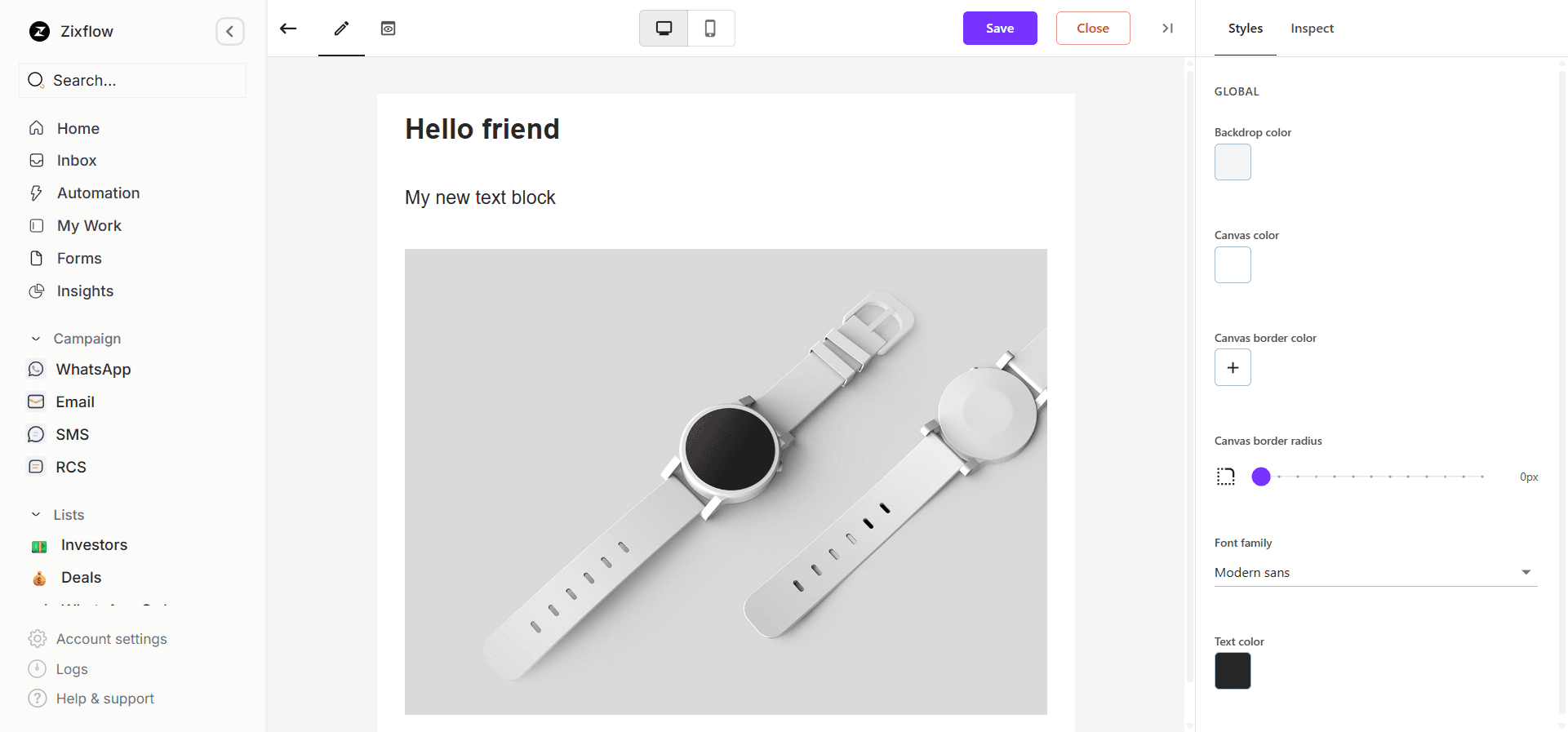
The process of creating and managing email campaigns is further streamlined by tools like Zixflow, which make it quick and simple. The visual, AI-powered email template designer enables quick setup of email campaigns while taking into account the personalization angle to make your emails stand out from the crowd.
Social media platforms
Social media turns customer engagement into a public conversation. Customers can ask questions, share feedback, and interact with your brand where they already spend their time. People browse Instagram, X (Twitter), LinkedIn, or Facebook daily. Your brand can show up in their feed naturally.
Businesses can respond quickly to comments and messages. Public responses show other customers they are attentive. It builds trust when people see you solving problems openly. Brand building works well on social media. You can share your company's personality and values. Customer service queries get resolved publicly, which demonstrates responsiveness.
For example, a cybersecurity company can leverage LinkedIn to share industry insights and threat reports. When a major vulnerability gets discovered, they post an analysis immediately. The company's security team responds publicly with guidance, with prospects watching the exchange see the team's expertise and responsiveness in action.
Although there are a multitude of social media platforms available, they serve different purposes. LinkedIn works for B2B relationships. Instagram suits visual products, and X handles quick customer service exchanges.
Choose the channel based on your audience’s preference and offerings. If your products or services are more visually appealing, then Instagram or TikTok can be great options for you. On the other hand, if you are aligned more towards B2B sales, then LinkedIn is your best bet.
Ready to Manage Multiple Channels Easily?
Run customer engagement across WhatsApp email SMS and more from one unified dashboard.
See Zixflow in ActionOnline chat
Live chat puts a help button directly on your website. Visitors can get answers without leaving the page they are on. Live chat captures people at their moment of need. They are exploring your pricing page or documentation and hit a question. Chat solves it right there, keeping momentum going instead of creating friction.
This channel is faster than traditional email back-and-forth and more convenient than scheduling a call. Customers can multitask while chatting, which matters when evaluating multiple options simultaneously.
Your sales teams use live chat to engage prospects actively researching solutions. When someone's comparing pricing tiers or looking at implementation timelines, a well-timed chat can address concerns before they bounce to a competitor.
In addition to that, lead qualification happens naturally through conversation. Live chats help businesses gather basic information about visitors before routing to the right team member.
Let’s consider a scenario where a cloud provider added live chat to their website. When prospects explore enterprise plans and have a question, they can initiate a chat with a rep within 30 seconds.
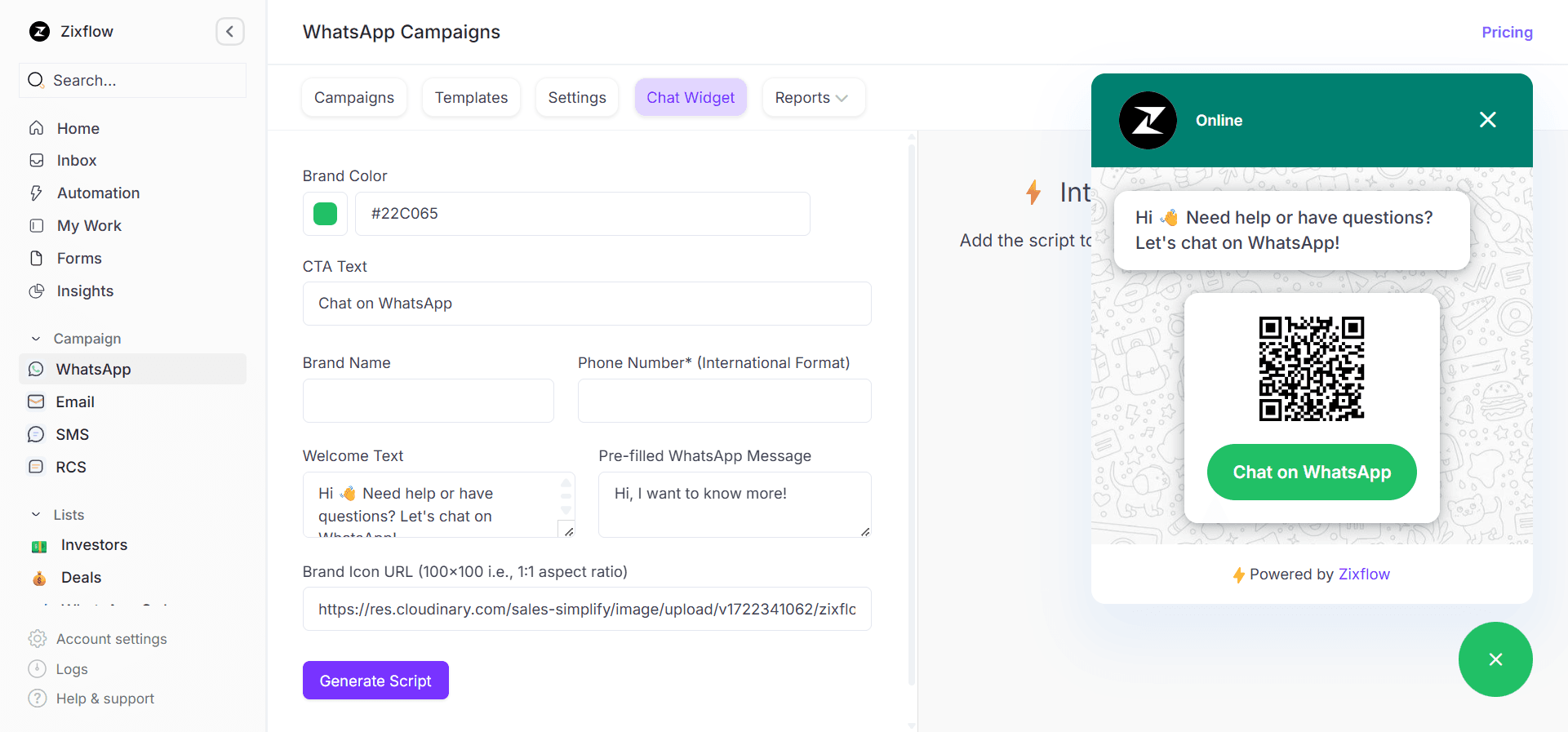
Live chat can be implemented on your website using third-party tools. You can also redirect visitors to external communication channels like WhatsApp to get started with a conversation. With the WhatsApp chat widget, you can redirect visitors with issues to initiate a WhatsApp conversation with your business.
SMS and push notifications
These brief, urgent communications work well for sending out timely reminders, marketing notifications, and transaction-related information.
SMS and push alerts are particularly well-liked in the online marketing and service-oriented industries due to their speed. On top of that, the open rates for SMS hover around 98%, compared to email's 20-30%. Most people check their phones within minutes of receiving a text, which makes SMS ideal for time-sensitive information.
Push notifications work similarly, but through your app instead of the phone's messaging system. They're less intrusive than SMS because users explicitly installed your app and opted in. You can include rich media, action buttons, and deep links that take users exactly where they need to go.
Both channels feel personal because they arrive on the device people carry everywhere. A well-timed message can prompt immediate action in ways that an email sitting in an inbox can't match. These are a very flexible and efficient way to bring customers inside the application and share useful material with them.
You must begin delivering push alerts if your company has a mobile application. However, it must be noted that this channel is restricted by permission. User permission is given by default by Android users at the time of installation, while iOS users have to do so explicitly.
Communication apps
Communication apps like WhatsApp, Messenger, or similar apps blend the urgency of messaging with richer features than SMS. Customers already use these apps daily to talk with friends and family, so engaging there feels natural.
Rich media support sets these platforms apart. You can send images, videos, documents, voice messages, and even conduct video calls from one conversation thread. This flexibility handles everything from quick questions to detailed technical discussions.
Read receipts and typing indicators create real-time engagement signals. You know when someone's seen your message or is crafting a response. This transparency reduces the "did they get it?" uncertainty that plagues traditional channels.
Moreover, international business communication benefits hugely from these apps. WhatsApp dominates in many countries where SMS might be expensive or unreliable. Your global customers may already prefer it over email or phone.
Plus, the ongoing support conversations work well in messaging apps. The threaded format keeps context intact over days or weeks. Customers can easily reference earlier messages when following up, and your team sees the complete history.
Phone calls
Phone calls remain the gold standard for complex or sensitive customer engagement. Voice carries a nuance that text simply can't match. The tone of voice matters tremendously for high-value conversations, as you can hear hesitation, enthusiasm, and frustration when talking to someone.
Some customers, particularly senior executives, simply prefer calling for important discussions. It feels more personal and signals that you're investing real time in the relationship.
Phone calls are best for B2B customer engagement, where you build rapport naturally. You hear objections in their voice before they become deal-breakers, giving you a chance to address concerns in the moment. Frustrated customers need to vent to a real person who can acknowledge their emotions. Good businesses can de-escalate tense situations through voice in ways that written responses can't match.
However, unlike messaging outreach, phone calls cost more because they require a different infrastructure and a trained staff who can think on their feet. Call recording and quality monitoring require systems and compliance awareness, especially across different jurisdictions.
Lastly, not everyone can or wants to call during standard business hours, so you need alternative channels for different situations and time zones.
Looking for One Tool for All Engagement Channels?
Track customer interactions across channels to keep communication consistent and improve response times.
Create Free Zixflow AccountWhat are the different customer engagement channels used by businesses?
Although there are many different customer engagements present, based on the business, some are more popular and favored. Let's examine which kind of channels each industry favors:
| Industry | Recommended Channels | Usage & Why It Works |
|---|---|---|
| SaaS | Email, Live Chat, Phone, LinkedIn | Email for updates; Live chat for trial support; Phone for sales and technical issues; LinkedIn for thought leadership |
| Financial Services | Phone, Email, SMS, In-person | Phone for sensitive discussions; Email for statements; SMS for fraud alerts; In-person for wealth management |
| Manufacturing | Email, Phone, In-person, WhatsApp | Email for orders and documentation; Phone for urgent issues; In-person for reviews and site visits; WhatsApp for quick international updates |
| Professional Services (Consulting, Legal, Accounting) | Email, Phone, In-person, Video conferencing | Email for documents; Phone for urgent matters; In-person for relationship building; Video for remote consultations |
| Healthcare / Medical Devices | Phone, Email, In-person, SMS | Phone for clinical support; Email for training and updates; In-person for demos; SMS for appointment reminders |
| Logistics & Supply Chain | Email, WhatsApp / Messenger, Phone, SMS | Email for documentation; WhatsApp for tracking updates; Phone for urgent delivery issues; SMS for notifications |
| E-learning / EdTech | Email, Push Notifications, Live Chat, Social Media | Email for course updates; Push notifications for deadlines; Live chat for technical support; Social media for community building |
| Cybersecurity | Email, Phone, SMS, LinkedIn | Email for threat reports; Phone for incident response; SMS for critical alerts; LinkedIn for industry insights |
| Real Estate (Commercial) | Email, Phone, In-person, WhatsApp | Email for listings and reports; Phone for negotiations; In-person for tours; WhatsApp for international investors |
| Marketing & Advertising Agencies | Email, Slack / Teams, Video conferencing, Social Media | Email for reports; Slack or Teams for collaboration; Video conferencing for presentations; Social media for showcasing work |
| HR Tech / Recruiting | Email, LinkedIn, Phone, SMS | Email for job postings; LinkedIn for candidate sourcing; Phone for screening; SMS for interview reminders |
| Telecommunications | Phone, Live Chat, Email, SMS, Social Media | Phone for technical support; Live chat for billing; Email for invoices; SMS for outages; Social media for service updates |
| Industrial Equipment | Email, Phone, In-person, Video conferencing | Email for quotes and specifications; Phone for service requests; In-person for demos; Video conferencing for remote troubleshooting |
| Wholesale / Distribution | Email, Phone, WhatsApp, EDI systems | Email for orders and catalogs; Phone for negotiations; WhatsApp for inventory checks; EDI systems for automated ordering |
| Cloud Infrastructure / Hosting | Email, Live Chat, Phone, SMS, Status Pages | Email for maintenance notices; Live chat for setup; Phone for escalations; SMS for critical alerts; Status pages for real-time monitoring |
Choose the right customer engagement channel to skyrocket your business interactions
Customer engagement channels are essential for building trust and satisfaction. Companies may foster stronger relationships that promote scale and improve client retention rates by choosing the best channels and making the most of their purchases.
However, you need to have an appropriate infrastructure to support client conversations if you wish to actually benefit from it.
For this reason, you have to get an omnichannel outreach platform that is developed to foster seamless customer engagement to provide cutting-edge sales experiences.
This is what Zixflow does!
Zixflow is an entire communication suite that provides businesses with a centralized dashboard to monitor interactions across numerous channels, such as WhatsApp, RCS, email, SMS, and push notification (coming soon). All these channels are packed with an AI layer to keep the whole infrastructure streamlined and easy to use.
Sounds interesting? Try out Zixflow for free or schedule a tailored demo to see the platform in action before committing to anything.
Sahil Tyagi
I'm a passionate content writer and SEO enthusiast who enjoys turning ideas into helpful articles. When I'm not busy with content, you'll find me enjoying sports or reading about growth strategies.