What is Customer Engagement & How to Use it Successfully in 2026?
Table of Contents
Customer engagement is a concept that is as old as time, especially in the business world. It is something that every brand wants to ace for building solid customer relationships and paving the way for long-term business success.
Although there are numerous ways to engage customers, it all boils down to figuring out the needs of your audience and identifying the best medium to get in touch with them. However, this is a massive oversimplification, and in order to execute a perfect customer engagement strategy, you need to consider a lot of things.
These days, it is particularly crucial to have a reliable customer engagement strategy to better interact with your target audience, boosting interest in your offerings and increasing the chances of getting a conversion.
Over the years, customer expectations have increased drastically. Remember the days when the standard response time would be 24 hours? Not anymore. Making a customer wait a day would not only make them lose interest in your business but also result in lost sales and reduced customer loyalty.
For this reason, you need to know how to correctly manage your customer engagement initiatives to make the most of your efforts. I’ll also cover the importance of customer engagement and explore the ways to engage customers using the right channels that best suit your business. But before we jump into that, let’s take a look at what customer engagement is in detail.
What is customer engagement?
If you look up the term “customer engagement”, you will see numerous definitions. Although the crux of customer engagement revolves around a business, you connect with your customers with the help of communication channels to build trustful relationships for enhancing the customer lifetime value.
On the surface, it seems straightforward, but it includes various aspects depending on your business. For example, which channel to choose, the type of messaging, and the industry you operate in. When done correctly, customer engagement is more than just reaching out to your customers. It is about building deep-valued connections that go beyond a conversion.
The primary objective of customer engagement is to offer all the required information a customer needs to smoothly navigate the stages of the sales pipeline and come to a purchasing decision without any issues.
Sometimes, customer engagement and experience are interchanged with each other, but they are not the same (more on this below). Customer engagement is more about maintaining a constant line of communication with customers to deliver value.
Moreover, based on the channels you use, customer engagement can transform into an omnichannel approach, interacting with customers. In addition to that, having more than one channel available for engagement makes it easier for your customers to contact you.
This way, customers send you a message on their preferred channel, allowing you to better understand their needs and tailor your future communication accordingly.
For example, sending guides and tutorials to customers using relevant channels after they have purchased your products enables you to strengthen your relationships. Also, you can ask for feedback from satisfied customers about their shopping experience to further streamline your outreach.
What’s the difference between customer engagement, customer experience, and customer satisfaction?
Customer engagement is a broad term, and because of that, people have started to mix it with other concepts like customer experience and satisfaction. However, there is a difference between each of them, and here I’ll explain what it is.
Customer engagement vs. customer experience
Customer engagement is a gauge of how engaged customers are with your brand and the extent of the relationship with you. It's all about involvement and two-way communication.
For example, when customers comment on your social media posts or open your emails, they are actually actively interacting with your brand. High engagement indicates that customers are not only passive receivers of your services but are actually very interested in your brand.
Customer experience, however, refers to the whole ride that a customer goes through with your brand, from the first time they hear of you to each and every interaction thereafter. It is the aggregate of all the touchpoints and their experience through all of them.
Imagine this analogy: you may create a great customer experience by having a seamless website and good products, but if customers do not come back or even engage with your content, your engagement is low.
You may also have a very high-engagement audience for social media, but if their real shopping experience is painful, your overall customer experience is compromised. This is a serious issue because according to PwC, 86% of clients are happy to spend more for a good customer experience.
Customer engagement vs. customer satisfaction
Customer satisfaction is how well customers' expectations are fulfilled by your products or services. It is literally a report card that informs you whether customers are satisfied with what they bought. When a person purchases your product, and it resolves their issue, they are satisfied.
Satisfaction is most often measured at particular points in time, i.e., after a purchase or during a customer service encounter. Satisfaction responds to the simple question of whether customers received what they paid for and if their needs were satisfied.
Satisfaction differs from customer engagement in that it is how a customer will see your brand in the future. A customer might be completely satisfied with the purchase they made today and never even consider your brand again. Engagement, on the other hand, is ongoing.
Think you ordered a laptop from an online retailer. It shows up on time and operates flawlessly, the way you hoped. You are pleased with your purchase, but do you interact with the store's social media posts? Not necessarily, correct? That purchase totally fulfills your needs, but you stay uninvolved with the company.
Want to Improve Your Customer Engagement?
Reach customers with timely and relevant messages that help you stay connected to improve overall engagement easily
Sign up for ZixflowWhat advantages are offered by a customer engagement strategy?
Customer engagement is a continuous process. That means there is always potential to keep enhancing it to drive more interactions. With that said, here are some of the advantages of utilizing a well-planned customer engagement strategy:
Cost of acquisition
It is a known fact that retaining current customers is much easier and cost-effective than actively looking for new ones. As per First Page Sage, the average cost to acquire new customers ranges from $274 for e-commerce to $1,450 for Fintech industries.
However, a reliable customer engagement strategy ensures that you build long-lasting relationships with your customers that are based on a customer-centric selling approach. Additionally, automating your customer engagement with real-time workflows allows you to interact with your audience around the clock. This way, you can lower the churn rate due to rate responses or missed messages.
Brand presence
In essence, customer engagement is sending meaningful messages to grab their attention and compel them to interact with your outreach. By having a presence across multiple channels, your business gets recognition from users, thereby increasing your brand awareness.
Well-thought-out customer engagement initiatives, paired with prompt customer assistance using social media platforms, can greatly boost your brand’s presence on the said platform.
On top of that, according to research, customers who receive replies to their queries via social media spend 20-40% more with the same business. This shows that maintaining a social presence not only helps in customer engagement but can boost your revenue as well.
Building a loyal customer base
The biggest advantage of a customer engagement initiative is to strengthen your relationship with customers, so they keep coming back to your business. Customer engagement lets you foster emotional connections to transform customers into brand advocates to increase sales for your business.
Not just that. Customer engagement that spans further than getting a sale allows you to enhance the overall shopping experience and improve customer satisfaction.
Solid sales engagement strategies revolve around streamlining interactions across all the touchpoints to make it easy for potential customers to come to a decision promptly.
Understanding customer requirements
Lastly, customer engagement is all about having continuous interactions with customers. That means, by constantly conversing with customers, you can better understand their needs.
Once you have this information, you can personalize your future conversations to significantly enhance your chances of getting a sale.
How to build a practical customer engagement strategy?
By now, you know the definition and advantages of customer engagement. But it is time to examine how to create a customer engagement strategy for your business. A customer engagement strategy depends heavily on your business’s goals and the resources you have to invest in terms of money or personnel.
So, let’s jump into the ways to design a customer engagement strategy that serves as a convenient roadmap to drive the anticipated results: Understand your user base First things first, before you can begin engaging your customers, you have to know who you are going after, or maybe even who is out there in general.
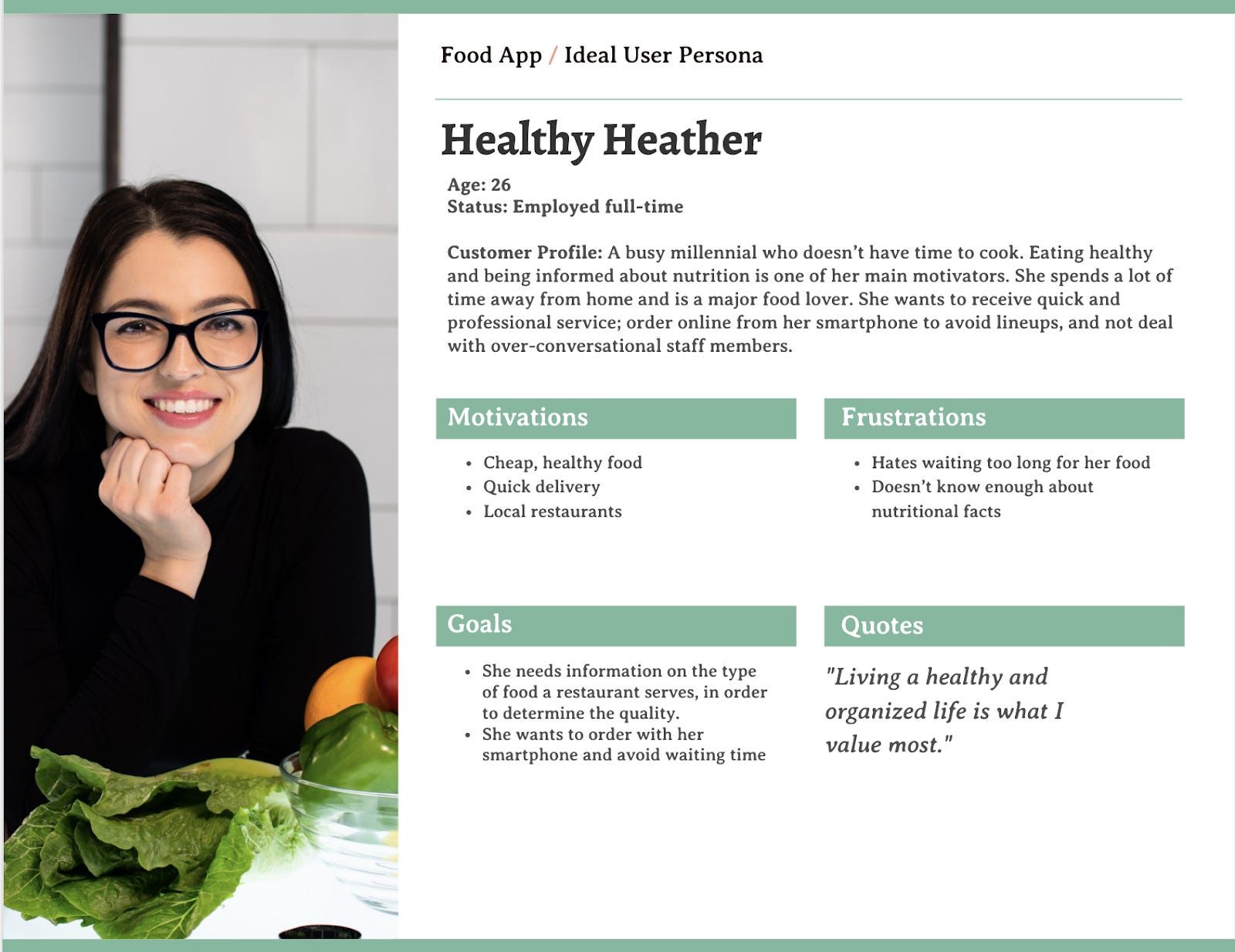
You will need to not only identify your audience as a whole, but also get an in-depth understanding of the separate segments for delivering personalized content. The easiest way to do that is by using ideal customer personas or ICP.
A well-crafted, detailed customer persona involves all the useful information about a particular segment or a group of customers that have matching interests. A typical ideal customer persona includes the following details:
- Persona name & title
- Age range
- Gender
- Demographic
- Budget
- Job title/role ( in case of B2B business)
- Decision-making power
- Key challenges/pain points
- Common objections
The more you know about your target audience, the better you can tailor your messaging to build long-term connections and boost sales. This is where customer research comes in.
Ensure you have taken a good look at your offerings and that you have built what you feel is an accurate profile of your ideal customer. Once you have this, you will be able to clearly see the benefits of customer engagement and how to target potential customers effectively.
Decide on a relevant channel
Knowing your audience is just the start. Once you have done that successfully, next comes choosing a channel they are actively using for their day-to-day communications.
Now, you might ask, “People are using numerous messaging channels. So, how should I select the right channel for my business?”
To answer your question, you need to take a look at the user bases using a channel and compare them to your ICP.
For example, if you are an e-commerce store with a target audience consisting of young adults, then you might gravitate toward Instagram, TikTok, or X. Meanwhile, B2B businesses that involve professional or industry-specific content, then LinkedIn is a channel for you.
One more aspect to consider here is that spreading yourself across every available platform typically results in a mediocre presence everywhere. Successful brands focus on two to four primary channels where they can maintain consistent, high-quality interactions rather than attempting to be everywhere at once.
So you need to evaluate your internal capabilities to ensure this doesn’t happen to you. Managing a vibrant social media presence requires dedicated personnel who can respond quickly while maintaining a consistent brand voice. Choose channels that align not just with where your audience exists, but with what your team can realistically sustain over time.
Need a Simple Way to Engage Customers Daily?
Guide every customer with automated journeys that deliver consistent communication.
Create Free accountLeverage artificial intelligence
Artificial intelligence has transformed how you maintain meaningful connections with your audiences. Rather than replacing human interaction, AI enhances your ability to deliver personalized experiences at scale.
Chatbots and virtual assistants now handle routine inquiries instantly. They provide immediate responses that keep customers engaged even outside business hours. These tools have evolved beyond simple FAQ responses to understanding context, recognizing sentiment, and escalating complex issues to human representatives seamlessly.
Not just that. Predictive analytics powered by AI helps you understand customer behavior patterns and deliver relevant content at precisely the right moment. AI allows you to automate your redundant operations while streamlining customer engagement initiatives that help customers make informed decisions.
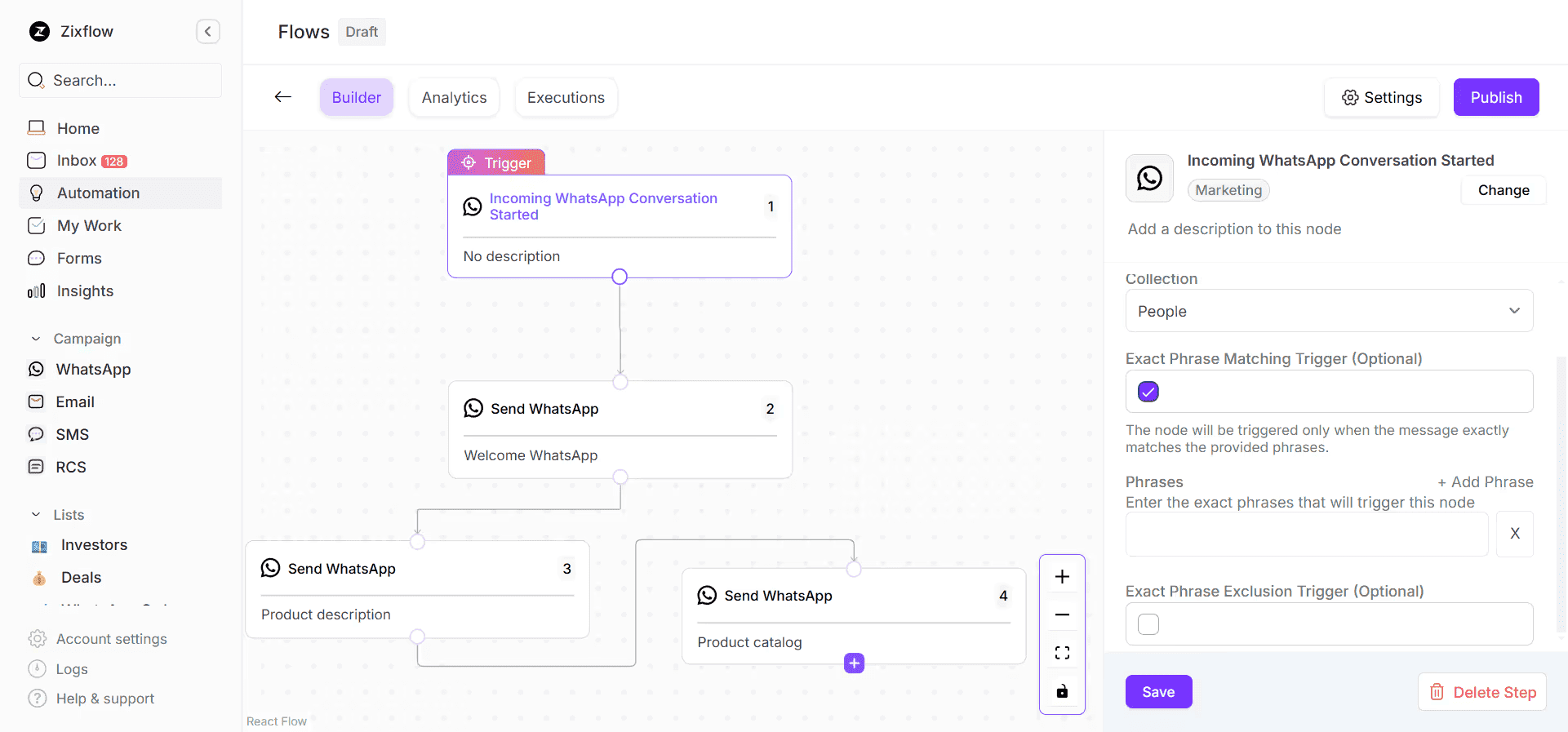
AI-driven tools like Zixflow let you leverage the full capabilities of this system to design personalized outreach campaigns to deliver real-time interactions. This kind of proactive approach allows you to stay on top of your conversations, which leads to building strong customer relationships.
Tailored customer interactions
Let’s be real, customers don’t want to waste a second on random marketing messages that have nothing to do with them. They know what they want, and they expect you to know it too. Studies say about 75% of people only engage with messages that align with their interests. Personalization has become a necessity for your business if you actually want your audience to interact with your content.
That said, personalizing customer engagement isn’t just about flashy strategies. It can be as straightforward as simply asking customers what they prefer. Customer engagement tools are super effective for gathering the details you need to actually deliver a tailored experience.
Also, keeping an eye on how customers interact with your brand allows you to optimize your efforts. When you reference customers’ previous purchases or browsing habits in your communications, it shows you truly understand what matters to them. That kind of attention can turn a regular customer touchpoint into a memorable one, and that’s where real loyalty starts.
Using chat widgets
Real-time messaging not only lets you interact with customers in real time, but it also provides a passive advantage to your business. It knocks down those purchase hurdles and keeps your brand on customers’ radar, even after work hours.
With these widgets, your team can actually have real conversations with customers. Someone’s stuck on a product detail or stressed about shipping? Your support staff can jump in right away and clear things up before frustration builds.
Having responsive support on standby sends a clear message that you value your customers. When shoppers pick up on that commitment, they’re more likely to stick around and trust your company.
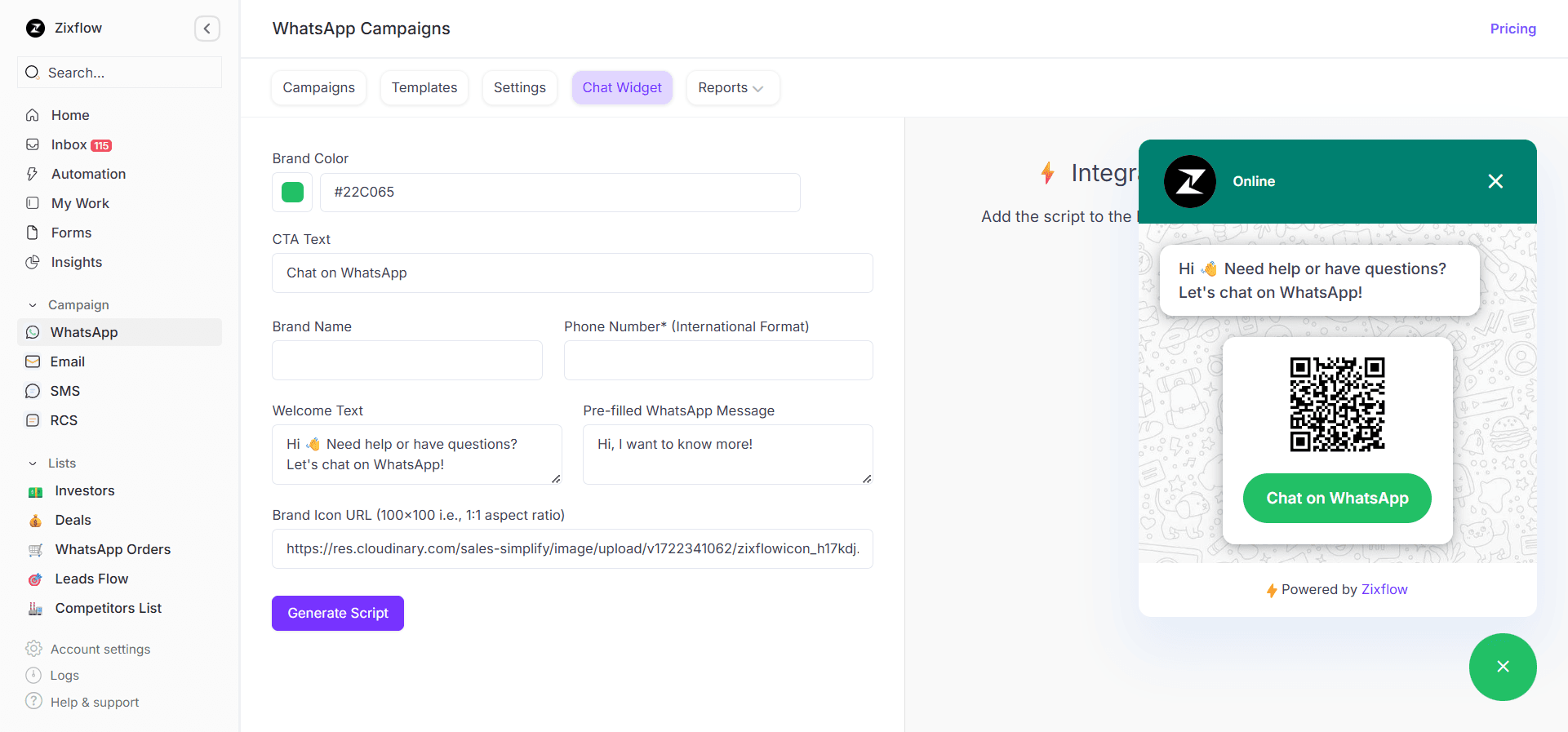
In addition to that, having a chat widget on your website enables visitors to get in touch with your sales team directly. For instance, adding a WhatsApp chat widget on your website will instantly open a direct chat between you and your customers. This way, you can keep interacting with them even after resolving their initial query.
Ask for customer feedback
Customer engagement doesn’t have to be marketing in nature. Sometimes, asking what your customers think about your brand can be a great way to build emotional connections.
Now, there are a couple of ways to obtain feedback from customers. You can implement pop-up surveys or feedback widgets to collect real-time insights about user experiences. Design these touchpoints to be swift and straightforward, allowing you to gauge customer sentiment without interrupting their activities.
On top of that, you might also welcome public reviews on your website and social channels. Just be sure to monitor and manage all incoming feedback appropriately. If you run a physical store, you can:
- Position comment cards near checkout areas
- Train employees to inquire about customer experiences during transactions
- Include feedback contact details on receipts and marketing materials
Whatever approach you choose, ensure these feedback mechanisms are customer-friendly to minimize any negative reactions.
How to monitor the success rate of your customer engagement?
Measuring how you connect with customers is more than just crunching numbers and is more about understanding both the data and the real feedback you are getting from the people you serve. Here’s what you should be tracking to really know if your customer engagement is working:
Churn rate
This number tracks how many customers leave your business within a set time frame. Since keeping existing customers costs less than acquiring new ones, monitoring churn helps you spot issues before they become bigger problems. The formula to calculate your churn rate within a timeframe is:
Churn rate = (Customers Lost During a Time Period ÷ Total Customers at the Start of the Time Period) x 100
So, if you lost 100 customers within a month and you had 1,000 customers at the start, your churn rate will be:
Churn rate = (100/1000) x 100 = 10%
Customer Satisfaction Score (CSAT)
CSAT gets straight to the point: are your customers happy after they interact with your business? A quick survey results give you immediate insight into whether your offerings are hitting the mark or if your teams are on top of incoming conversations.
Net Promoter Score (NPS)
Think of this as your company’s word-of-mouth score. If your NPS is high, customers are willing to recommend you, which means you have earned their trust. If it’s low, there is a trust gap you need to address.
Behavior analyzing
Looking at raw behavior tells you what customers actually do, not just what they say. You need to be constantly analyzing website traffic patterns, app usage, purchase frequency, and engagement rates to uncover hidden opportunities.
Start by asking yourself these questions:
- Are you losing users at a particular step during the checkout?
- Is your loyalty program seeing sign-ups but no real engagement?
- Are they returning to your website?
- New users signing up for your emails?
These insights help you refine your customer experience to better match the needs of customers. Businesses operating in competitive spaces tie behavioral data directly to outcomes and use it to inform their decision-making at every level.
Customer Effort Score (CES)
This metric tells you how easy it is for your customers to get what they need. CES measures the level of effort required to resolve issues or complete tasks. Fewer obstacles mean more satisfied customers and a higher chance they will stick around for a long time.
Optimize your customer engagement for enhanced business success
In this guide, I’ve explored the fundamentals of customer interaction and suggested various strategic approaches to enhance your customer engagement.
The path ahead requires you to build a roadmap for your customer engagement efforts and decide on the tool that can help you achieve your goals.
A practical starting point involves evaluating the available customer engagement platforms that can support your engagement initiatives. Among the various platforms, one worth exploring is Zixflow. It provides a no-question 7-day trial period allowing you to assess its suitability for your specific requirements.
By leveraging Zixflow’s AI-first infrastructure, you can streamline almost all of your customer interactions with the ability to intervene whenever necessary. So, if you want to discuss specific use cases as to how Zixflow can assist you with your outreach, you can book a personalized demo with our experts.
Sahil Tyagi
I'm a passionate content writer and SEO enthusiast who enjoys turning ideas into helpful articles. When I'm not busy with content, you'll find me enjoying sports or reading about growth strategies.